Electrical Enclosure

Electrical Enclosure Enclosures for Australian Coastal and High-UV Sites

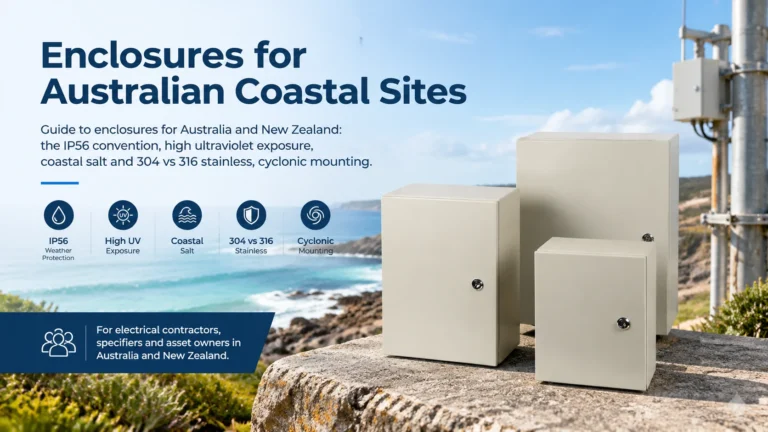
Enclosures for Australian Coastal and High-UV Sites

Australian and New Zealand specifications read differently from European or Asian ones, and the difference is not just terminology. Outdoor enclosures here are frequently specified to IP56 rather than IP65, salt air destroys the wrong grade of stainless within a few years, and ultraviolet levels are high enough to make coating choice a maintenance decision. […]
Electrical Enclosure Enclosures for West African Solar and Backup Systems
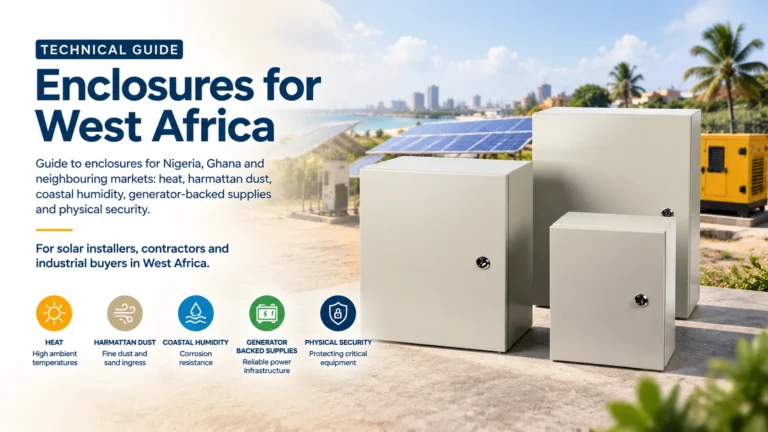
Enclosures for West African Solar and Backup Systems

In Nigeria, Ghana and neighbouring markets, an enclosure rarely fails because of one condition. It fails because heat, dust, humidity, an unstable supply and physical security all arrive at the same box, and the specification only addressed one of them. This guide covers what to specify for West African installations, where the priorities differ from […]
Electrical Enclosure Enclosures for Typhoon-Exposed Sites in the Philippines

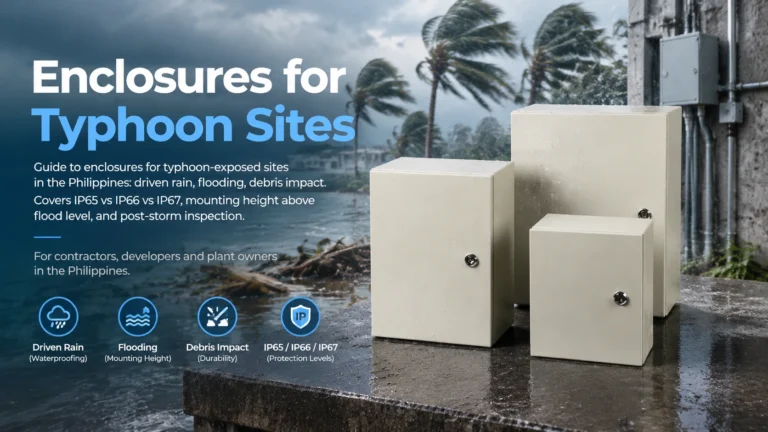
Enclosures for Typhoon-Exposed Sites in the Philippines

The Philippines gets around twenty tropical cyclones a year, and the ones that matter for electrical equipment are not only the violent ones. A week of horizontal rain driven by 60 km/h wind finds every gland that was sized loosely, and a flooded street finds every enclosure mounted at ground level. This guide covers what […]
Electrical Enclosure Enclosures for Southeast Asia: Humidity and Condensation

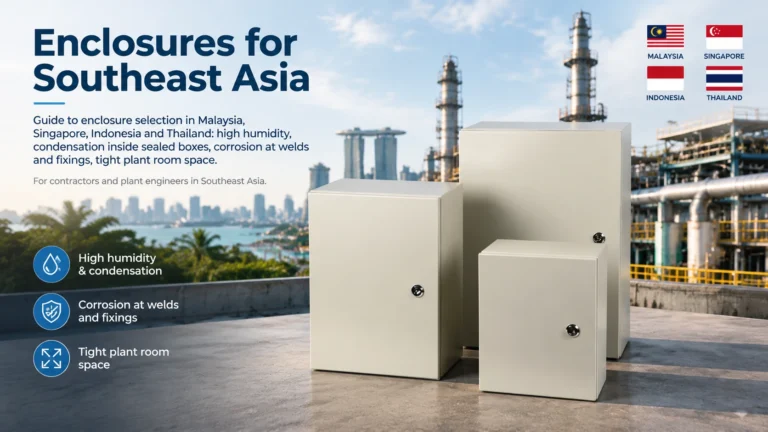
Enclosures for Southeast Asia: Humidity and Condensation

In Malaysia, Singapore, Indonesia and southern Thailand, the enclosure problem is rarely rain. Relative humidity sits above 80% for most of the year, and the failure that shows up in service is corrosion and condensation inside a box that was never actually wet from outside. That changes the specification: sealing alone does not solve it, […]
Electrical Enclosure Enclosures for Indian Sites: Monsoon, Dust and Coast

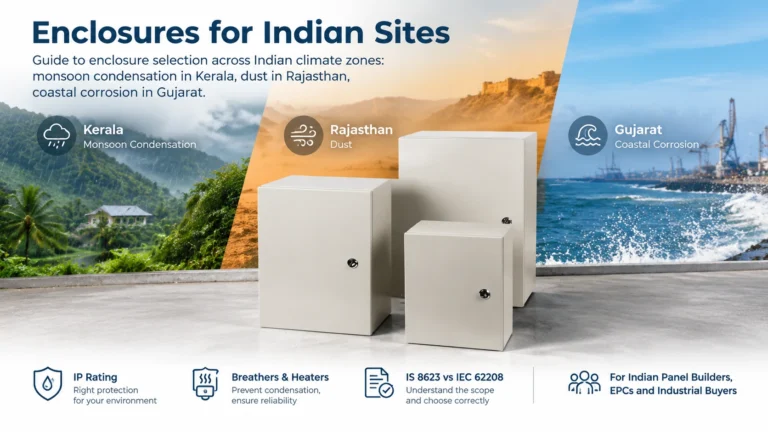
Enclosures for Indian Sites: Monsoon, Dust and Coast

India is usually described as one market, but for an enclosure it behaves like at least three. A box specified for Kerala’s monsoon is not the right box for Rajasthan’s dust season, and neither is the right box for a coastal chemical plant in Gujarat. The IP rating that gets written into a tender often […]
Electrical Enclosure Specifying Enclosures for Gulf Heat, Dust and Salt

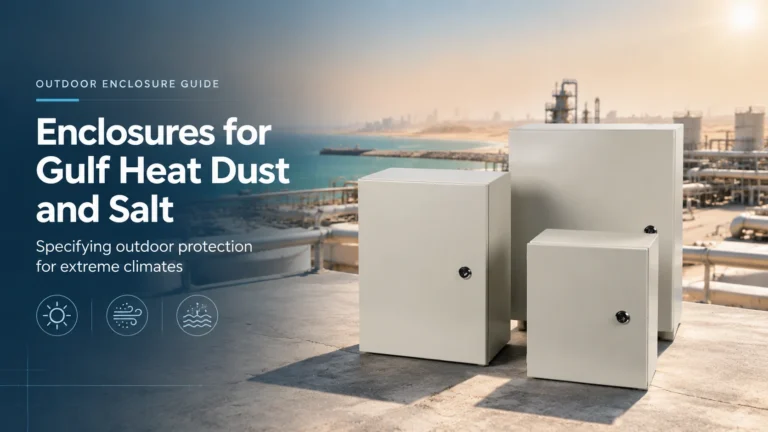
Specifying Enclosures for Gulf Heat, Dust and Salt

Specifying an enclosure for the Gulf is not the same exercise as specifying one for a European site, even when both are described as “outdoor, IP65”. Ambient temperatures of 45°C to 50°C, fine airborne sand, and salt-laden air along the coast change which materials survive and which fail in two summers. This guide covers what […]
Electrical Enclosure Choosing an Inverter Enclosure for a South African Installation

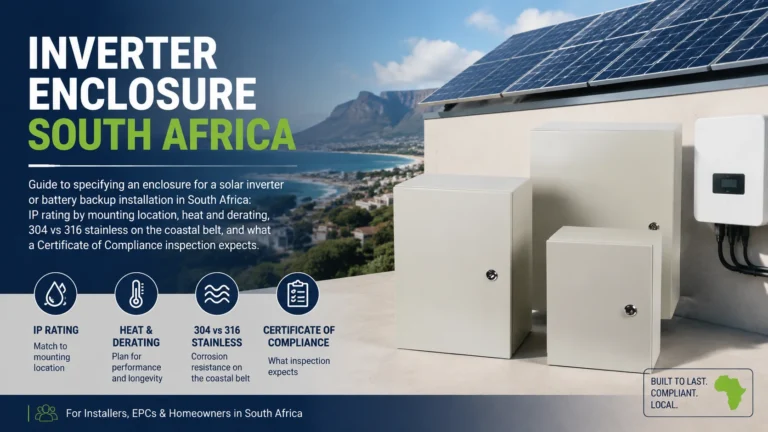
Choosing an Inverter Enclosure for a South African Installation

South Africa’s electricity story changed course. Load-shedding has not been implemented since May 2025, and Eskom reported more than 450 consecutive days without it by mid-2026. Yet the demand for inverter and battery enclosures has not gone away, because the reasons for installing a system have shifted from surviving outages to managing a tariff that […]
Electrical Enclosure DB Box vs Distribution Board vs Panelboard vs Switchboard

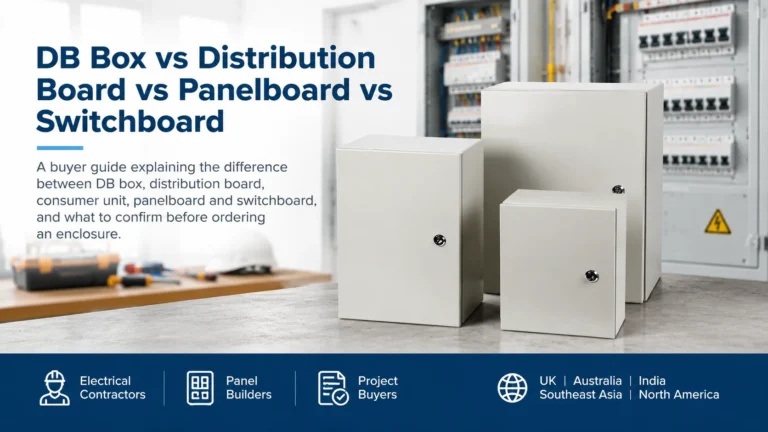
DB Box vs Distribution Board vs Panelboard vs Switchboard

A buyer in Manchester asks for a DB box. A buyer in Texas asks for a panelboard. A buyer in Brisbane asks for a distribution board, and a homeowner in Leeds asks for a consumer unit. In most cases they are describing the same object: a steel enclosure with breakers inside, splitting one supply into […]
Electrical Enclosure Fire Safety of Solar Combiner Boxes: What Actually Prevents a Fire

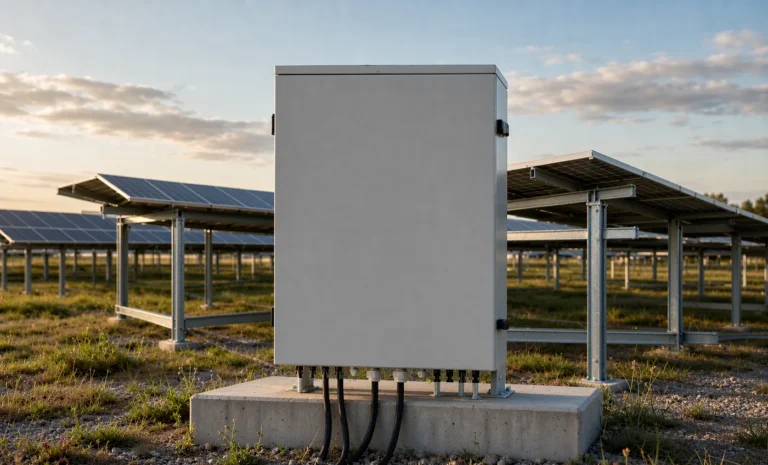
Fire Safety of Solar Combiner Boxes: What Actually Prevents a Fire

Most solar fires are not caused by panels failing in daylight. They start in the wiring between the array and the inverter — and the combiner box is where that wiring is concentrated, terminated and fused. Because PV circuits stay live whenever the array is illuminated, a fault there does not clear itself the way […]
Chat on WhatsApp +86-15658653733 aectanlei@163.com