Three-Phase Distribution Box Enclosures

Home›Three-Phase Distribution Boxes

Three-Phase Distribution Box Enclosures for Industrial Power

Sheet-steel and stainless steel enclosures for 400/415 V three-phase distribution. Sized to your outgoing ways, with DIN rail, gland plates and door hardware to match the installation — supplied as a housing, or fitted to your component schedule.

IP65 / IP664 to 24 outgoing waysWall or floor standingCustom sizes
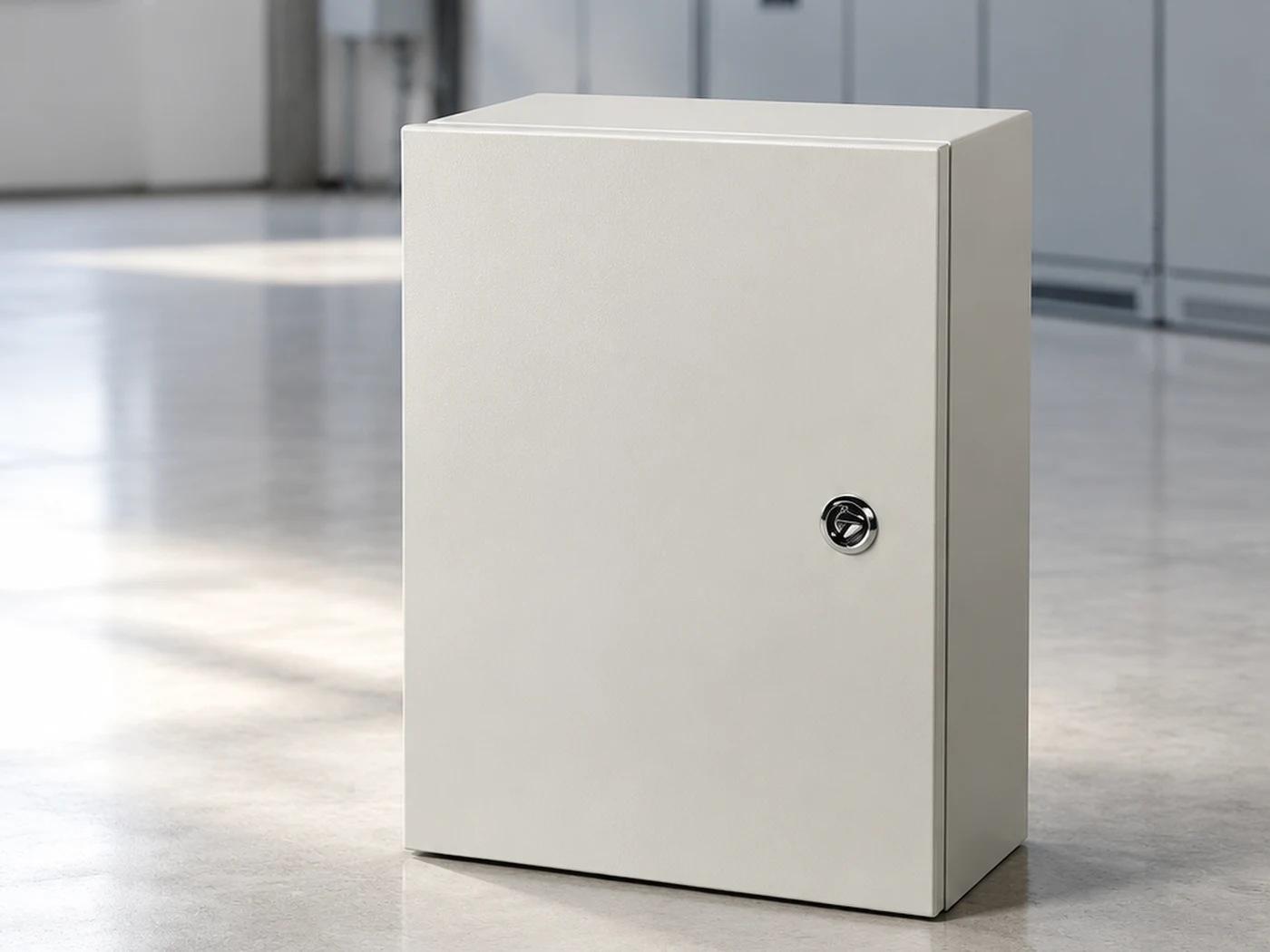
Single grey powder-coated steel distribution enclosure with quarter-turn latch standing in an industrial switch room

What decides whether a three-phase enclosure works

It is rarely the enclosure itself — it is whether the size, sealing and internal space match the distribution design.

Sized to the ways, not the other way round
Enclosure dimensions follow your outgoing ways and device schedule, so devices are not squeezed into a standard box.
Sealing that survives outdoor mounting
IP65 or IP66 with a compressed gasket and matched cable entry. Coastal and washdown sites justify stainless steel.
Internal space for four-pole devices
DIN rail height, mounting plate depth and cable bending radius are set at drawing stage, not discovered on site.
Sheet metal to your drawing
Thickness, cut-outs, gland plate layout and finish are specified per project; OEM branding available.

Specifications and configuration

Two decisions drive the quote: what the enclosure has to survive, and what has to fit inside it.

Enclosure specification
Housing materialGalvanised steel · stainless steel 304/316 · aluminium
Protection gradeIP54 · IP65 · IP66 (IP65 tested)
FinishPowder coated (RAL on request) · brushed stainless
MountingWall mounted · floor standing on plinth · pole
DoorSingle or double, hinged left or right
LockQuarter-turn latch · key lock
Cable entryGland plate, bottom or top, cut to gland sizes
InternalDIN rail · mounting plate · busbar supports
DimensionsCustom, to drawing
Configuration range
Outgoing ways4 · 6 · 8 · 12 · 16 · 18 · 24
Devices accommodatedMCB · RCBO · MCCB (customer-specified brands)
PhasesThree-phase 4-pole, or mixed 4P and 1P
System voltage400 / 415 V AC
BusbarSupplied to drawing, or customer-supplied
AssemblyEmpty housing, or fitted to component schedule
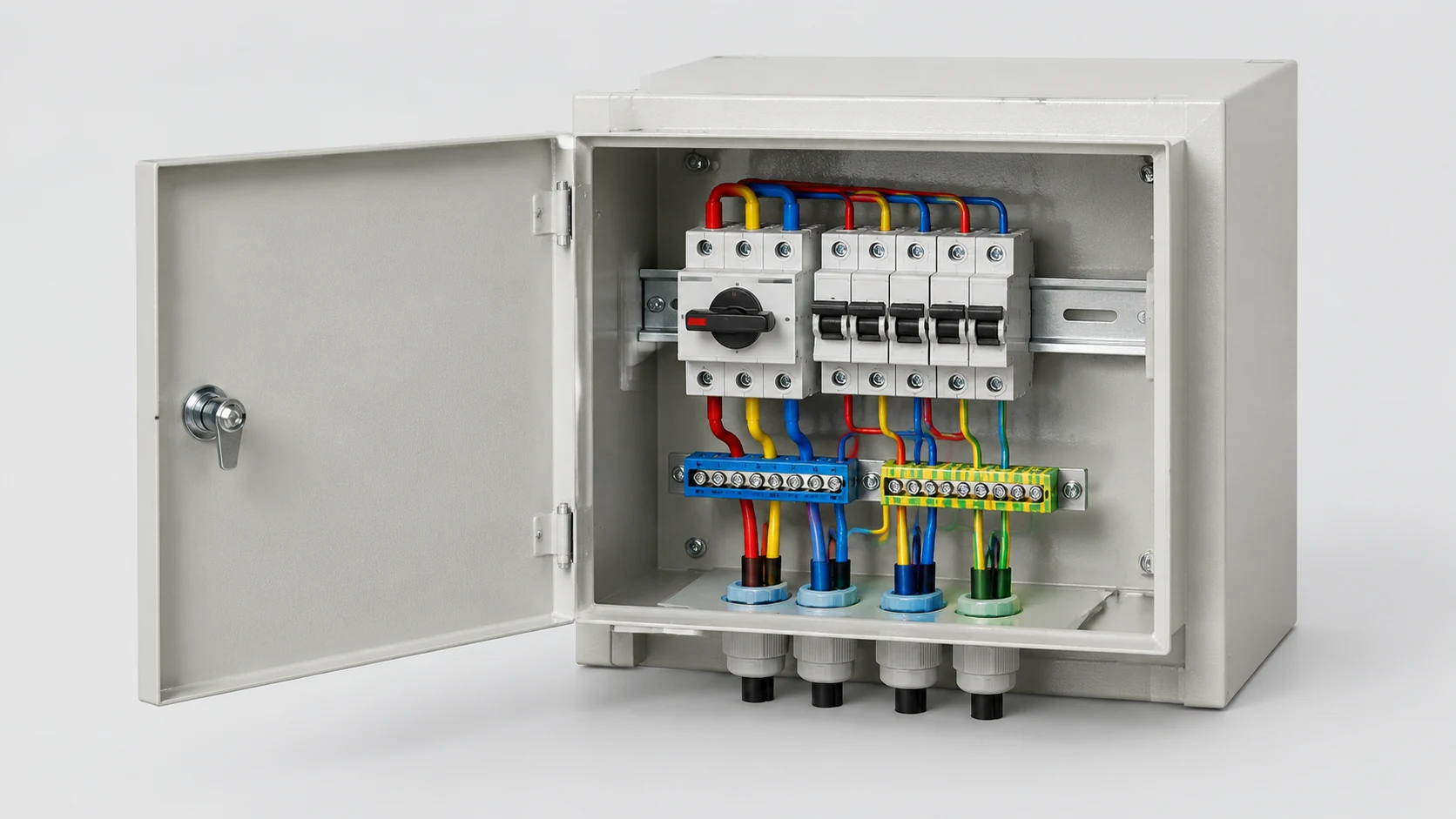
Inside a three-phase distribution box enclosure: DIN rail with main switch and four-pole MCBs, neutral and earth bars, wiring to cable glands at the base
Inside a three-phase enclosure: main switch on the DIN rail, four-pole breakers, and neutral and earth bars above the gland plate.

Dimensions, sheet thickness and cut-outs are confirmed against your drawing before production. IP65 compliance, the CE LVD report and the type test report are available on request. The same process applies across our distribution box enclosures range.

How many outgoing ways does a three-phase distribution box need?

Count the final circuits, then add spares. In a three-phase distribution box the real constraint is rarely the way count on its own — it is the total pole count. A 12-way box filled with four-pole devices needs four times the rail length of the same box filled with single-pole MCBs, and the enclosure depth has to leave room for the cable to bend.

As a working rule: list each outgoing circuit with its device type, add about 20 percent spare capacity, and size the enclosure from the resulting rail length. If the schedule is not fixed yet, tell us the expected ways and device type — we will quote the next size up rather than a box that has to be replaced in two years.

Mixed 4-pole and 1-pole ways are common in workshop distribution, where motors take four-pole breakers and lighting circuits take single-pole.

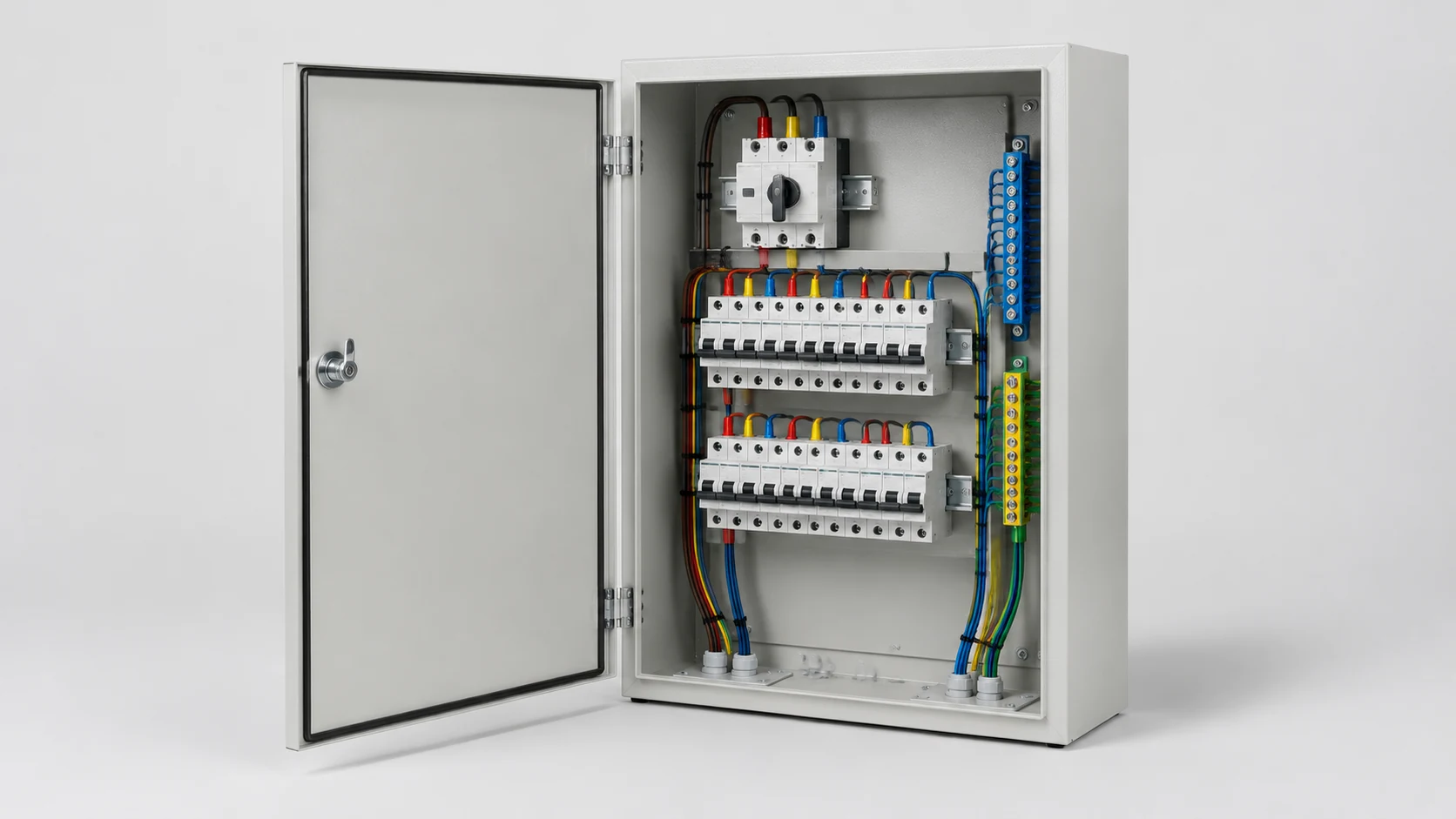
Inside a floor-standing three-phase distribution enclosure: main switch at the top, three rows of four-pole MCBs, neutral and earth bars, wiring to the gland plate

Where three-phase distribution boxes are installed

The enclosure has to suit the room, the cable route and the people who will open it.

Workshops and machine shops
Feeds for motors, compressors and welding equipment, with balanced load across three phases.
Commercial and industrial buildings
Sub-distribution to lighting, HVAC and tenant supplies, wall-mounted in plant rooms.
Pump and compressor rooms
Enclosures sited beside the equipment they feed, with cable entry from below.
Site and temporary distribution
Rugged enclosures for construction power, moved between locations without losing sealing.

Outdoor and process environments

For most outdoor sites a powder-coated steel housing at IP65 is enough. Where salt, chemicals or constant washdown are present — coastal installations, chemical plants, water treatment and food processing — specify stainless steel instead, because a coated surface will corrode and expose bare metal. Either version can be supplied with a rain hood and bottom entry to keep water away from the gland plate.

If the enclosure is fixed to a wall in a washdown area, specify IP66 and confirm the gland sizes before production — the most common sealing failure is a gland that does not match the cable.

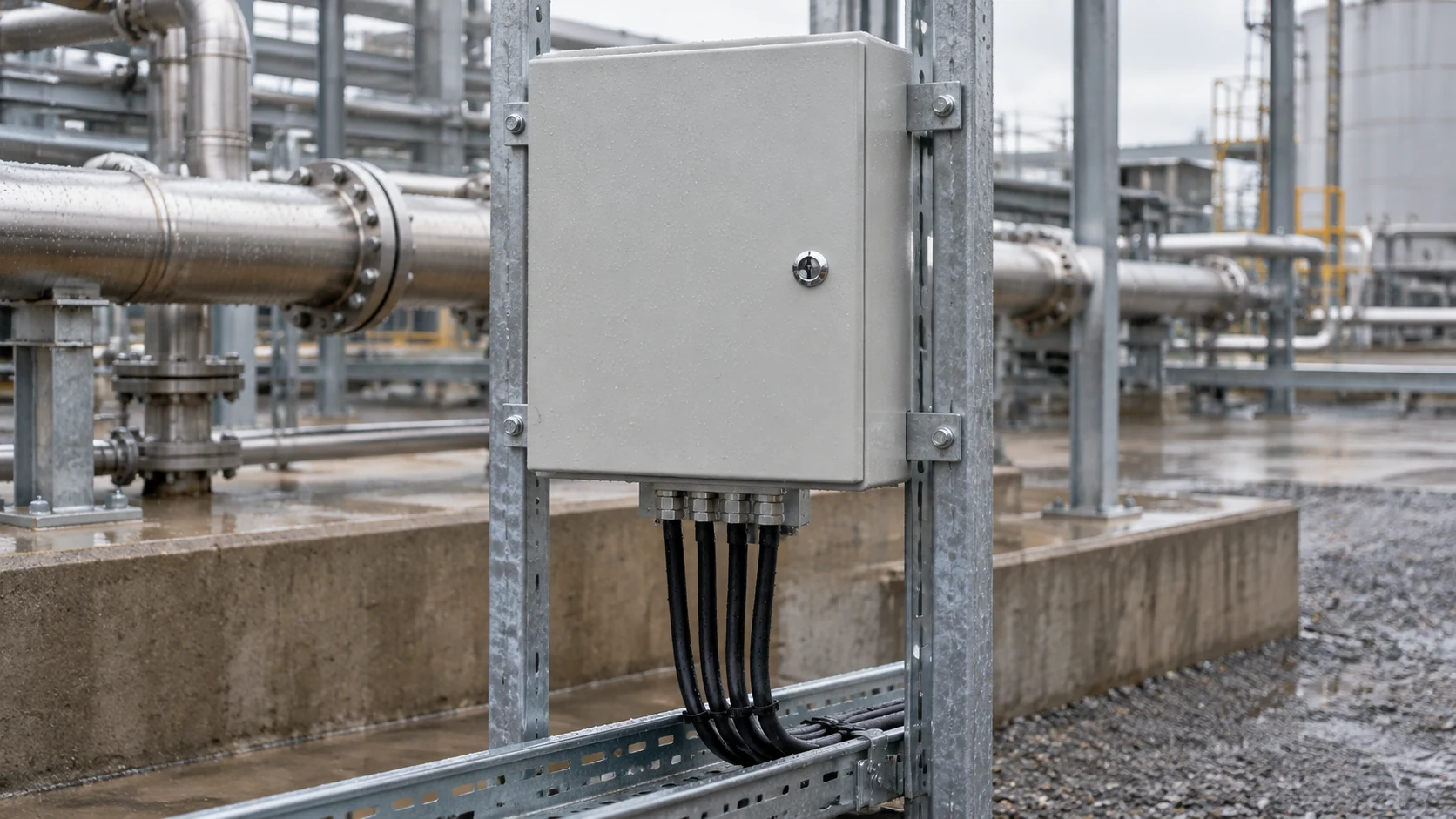
Single grey powder-coated distribution enclosure mounted on a galvanised frame at an outdoor process plant, cables entering through glands at the base
Single brushed stainless steel enclosure mounted on a galvanised post at a coastal site, with the cable entering through a stainless gland

Steel, stainless steel or aluminium?

Galvanised steel with powder coating covers most installations, indoors and outdoors, at the lowest cost per unit. It is the default for wall-mounted distribution boxes in plant rooms, workshops and commercial buildings.

Stainless steel is specified where the coating would fail: coastal sites, chemical plants, water treatment, food processing and anywhere chlorides are present. Grade 304 handles most coastal work; grade 316 is the safer choice where chlorides are concentrated or the enclosure is regularly washed down.

Aluminium is lighter and suits pole mounting where weight matters, but it needs isolation from steel structures to avoid galvanic corrosion at the fixing points.

What can be customized

Every quotation starts from your drawing or a sketch with the ways marked — not from a catalogue size.

Dimensions
Height, width and depth set to the device schedule and available wall space.
Material grade
Galvanised steel for inland sites, 304 or 316 stainless for coastal and process areas.
Door and lock
Single or double door, hinge side, quarter-turn latch or key lock.
Gland plate
Entry from bottom or top, cut to the gland sizes you actually use.
Internal layout
DIN rail runs, mounting plate, busbar supports and neutral/earth bars.
Finish and labelling
Powder coat colour, engraved or printed circuit identification, OEM branding.

Documentation supplied with the order

CE declaration
Declaration of conformity supplied with shipments for the applicable standards.
RoHS
Material declarations available on request for procurement files.
ISO 9001
Factory quality system covering incoming material, fabrication and final inspection.
Export documentation
Commercial invoice, packing list and certificate of origin prepared for each order.

Frequently asked questions

What is the difference between a three-phase distribution box and a single-phase one?+

A three-phase box distributes across three live conductors plus neutral, so it takes four-pole devices and can supply motor and HVAC loads that a single-phase board cannot. The enclosure is usually larger because the same outgoing ways need more pole space.

How many outgoing ways do I need?+

Count the final circuits you must feed, add spare ways for future load, then confirm the device type. Mixed 4-pole and 1-pole ways are common, and the enclosure is sized on the total pole count rather than the way count alone.

Can you supply the enclosure empty?+

Yes. Many customers buy the housing only and fit their own devices on site. We supply the sheet metal, gland plate, DIN rail and door hardware to the drawing, and can also assemble to a component schedule if required.

What IP rating should I specify for outdoor mounting?+

IP65 is the practical minimum for an outdoor wall-mounted enclosure. Specify IP66 where powerful jets or washdown are expected, and confirm that the gland sizes match the cables before production.

Do you make double-door enclosures?+

Yes. Double doors are used once the way count or internal height makes a single leaf impractical, and they are supplied with a centre post and removable gland plate.

What do you need in order to quote?+

A drawing or sketch with dimensions and ways, the device schedule or pole count, the protection grade, mounting method and site environment. If a drawing is not ready, a marked-up photo of a similar installation is enough to start.

Send your ways, drawing or device schedule

We confirm the enclosure size, protection grade and cable entry, then quote against your specification. If the drawing is not ready, a marked photo of the installation is enough to start.

Grey powder-coated three-phase distribution enclosure with quarter-turn latch

Send Your Requirements

Tell us the ways, device type and site conditions. We reply within 48 hours with a configuration and a quotation.

Fields marked * are required. Your details are used only to answer this enquiry.

Chat on WhatsApp +86-15658653733 aectanlei@163.com