How Much Does a Custom Metal Enclosure Cost? 7 Key Pricing Factors
The cost of a custom metal enclosure depends on much more than its external dimensions. Material selection, sheet metal thickness, design complexity, manufacturing processes, surface finishing, and order quantity all influence the final quotation.
For OEM buyers, electrical equipment manufacturers, and industrial procurement teams, understanding these factors can make it easier to compare supplier quotations, control production costs, and select the right enclosure design.
So, how much does a custom metal enclosure cost, and what should you consider before requesting a quotation?
This guide explains the main cost factors involved in custom metal enclosure manufacturing and provides practical suggestions for optimizing your design without compromising quality.
1. How Much Does a Custom Metal Enclosure Cost?
There is no universal price for a custom metal enclosure. Each project has different material specifications, dimensions, manufacturing requirements, and production quantities.
For example, a small aluminum electronics housing and a large stainless steel electrical cabinet may require completely different materials, fabrication processes, and finishing operations.
Even two enclosures with similar dimensions can have different manufacturing costs because of differences in:
- Material grade and sheet thickness
- Cutting and bending requirements
- Welding and assembly complexity
- Door hinges, locks, and other hardware
- Surface treatment and finishing
- Production quantity and order frequency
A reliable quotation should therefore be based on the actual engineering drawings and project requirements rather than dimensions alone.
When requesting a price, provide as much technical information as possible. This allows the manufacturer to evaluate the design and identify the manufacturing processes required.
2. Seven Key Factors That Affect Custom Metal Enclosure Cost
Understanding the main cost drivers helps buyers make better decisions before placing an order.
1. Material Type and Material Grade
Material selection is one of the first factors affecting enclosure manufacturing costs.
Common materials used for custom metal enclosures include carbon steel, galvanized steel, stainless steel, and aluminum.
Each material has different mechanical properties, corrosion resistance, weight, and processing characteristics.
Carbon Steel
Carbon steel is commonly used for industrial electrical enclosures because of its mechanical strength and suitability for general fabrication. It usually requires an appropriate protective finish, such as powder coating, depending on the operating environment.
Galvanized Steel
Galvanized steel has a zinc coating that provides additional corrosion protection. It is often considered for electrical cabinets and applications where moisture exposure is a concern. You can review our galvanized steel enclosures for typical cabinet constructions.
Stainless Steel 304 and 316
Stainless steel is suitable for applications requiring corrosion resistance and durability. Grade 304 is commonly used in general industrial environments, while grade 316 offers improved resistance to certain corrosive environments, particularly those involving chlorides. Our stainless steel enclosures cover both grades.
Aluminum
Aluminum offers a lower weight than steel and good corrosion resistance. It is useful for electronic housings, lightweight equipment enclosures, and applications where weight is an important consideration. See aluminum enclosures for laser-cut and formed housings.
| Material | Main Characteristics | Cost Considerations |
|---|---|---|
| Carbon Steel | Strength and general fabrication suitability | Material and protective finishing |
| Galvanized Steel | Zinc-coated corrosion protection | Material grade and coating specification |
| Stainless Steel 304 | General corrosion resistance | Stainless steel material cost |
| Stainless Steel 316 | Enhanced resistance to certain corrosive environments | Higher material specification |
| Aluminum | Lightweight and corrosion resistant | Alloy, thickness, and fabrication requirements |
The most expensive material is not necessarily the best choice for every project.
Selecting a material based on the actual operating environment can help avoid unnecessary material costs.
2. Sheet Metal Thickness and Material Consumption
Sheet metal thickness directly affects raw material consumption and manufacturing requirements.
A thicker panel generally requires more material and may need different cutting, bending, and welding parameters.
For example, an enclosure made from 2.0 mm steel will generally consume more material than a similar enclosure made from 1.2 mm steel, assuming comparable dimensions and construction.
However, choosing thinner material simply to reduce costs is not always appropriate.
Insufficient thickness may cause:
- Excessive panel deformation
- Reduced structural rigidity
- Door misalignment
- Problems around mounting points
- Increased vibration under certain operating conditions
The correct thickness should be determined by enclosure dimensions, unsupported panel areas, equipment loads, mounting conditions, and applicable requirements.
In some designs, folded edges, reinforcement ribs, and internal support structures can improve rigidity without increasing the thickness of every component.
For more information, see our guide to electrical enclosure sheet metal thickness.
3. Enclosure Size and Design Complexity
Larger enclosures generally require more raw material, but external dimensions are not the only factors influencing manufacturing costs.
The geometry and complexity of the design can also significantly affect production.
Consider the following design features:
- Multiple bending angles
- Complex panel structures
- Large or irregular cutouts
- Custom mounting brackets
- Multiple access doors
- Special cable entry arrangements
- Additional internal supports
A simple rectangular enclosure may require fewer manufacturing operations than a customized housing with multiple compartments, mounting structures, and irregular openings.
Complex designs may also require additional engineering review and production preparation.
For OEM projects, simplifying unnecessary structural features can help reduce manufacturing time and improve production efficiency.
4. Cutting, Bending, and Welding Processes
Custom metal enclosure manufacturing involves several fabrication operations.
The specific processes required depend on the enclosure design and material specifications.
Laser Cutting
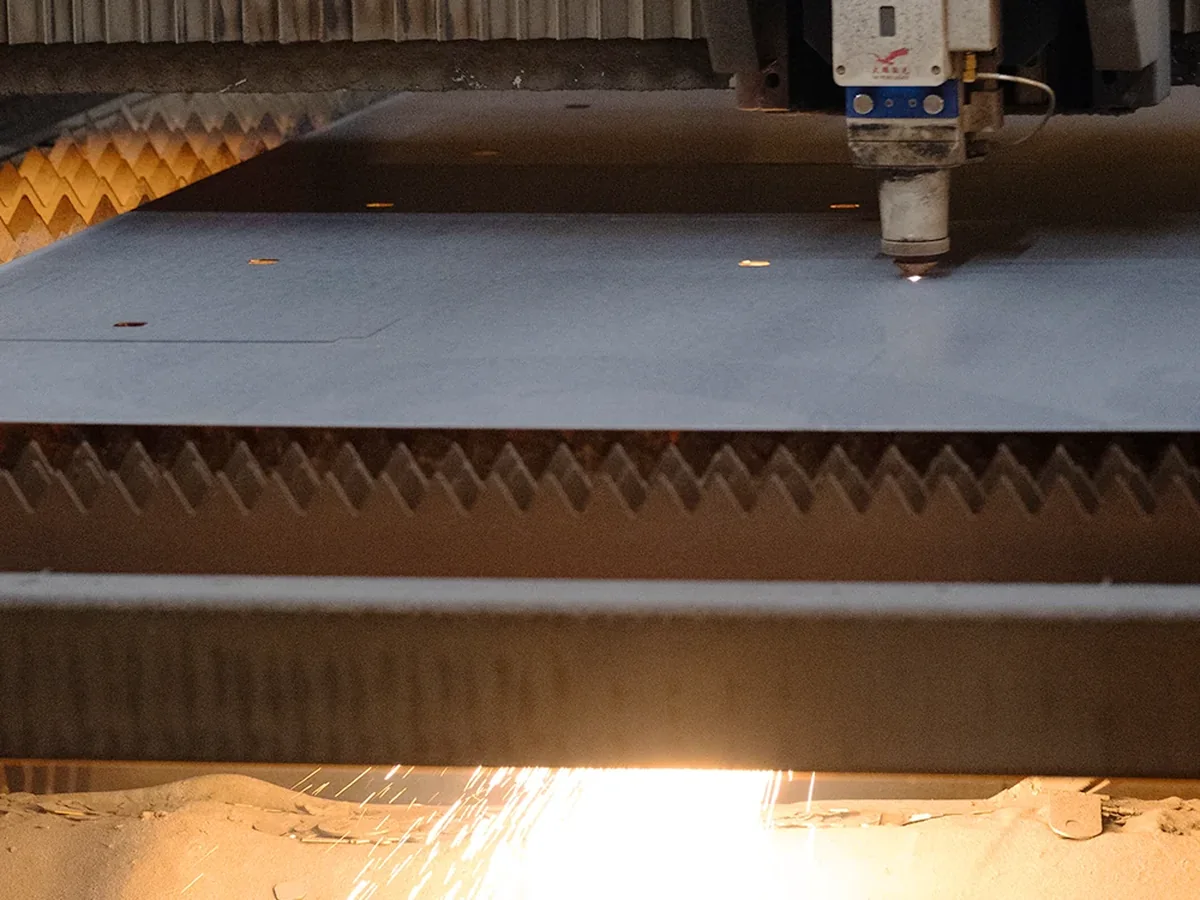
Laser cutting is commonly used to produce enclosure panels, mounting plates, holes, and customized openings. The number, size, and complexity of cutting features can influence processing time and production costs.
Sheet Metal Bending
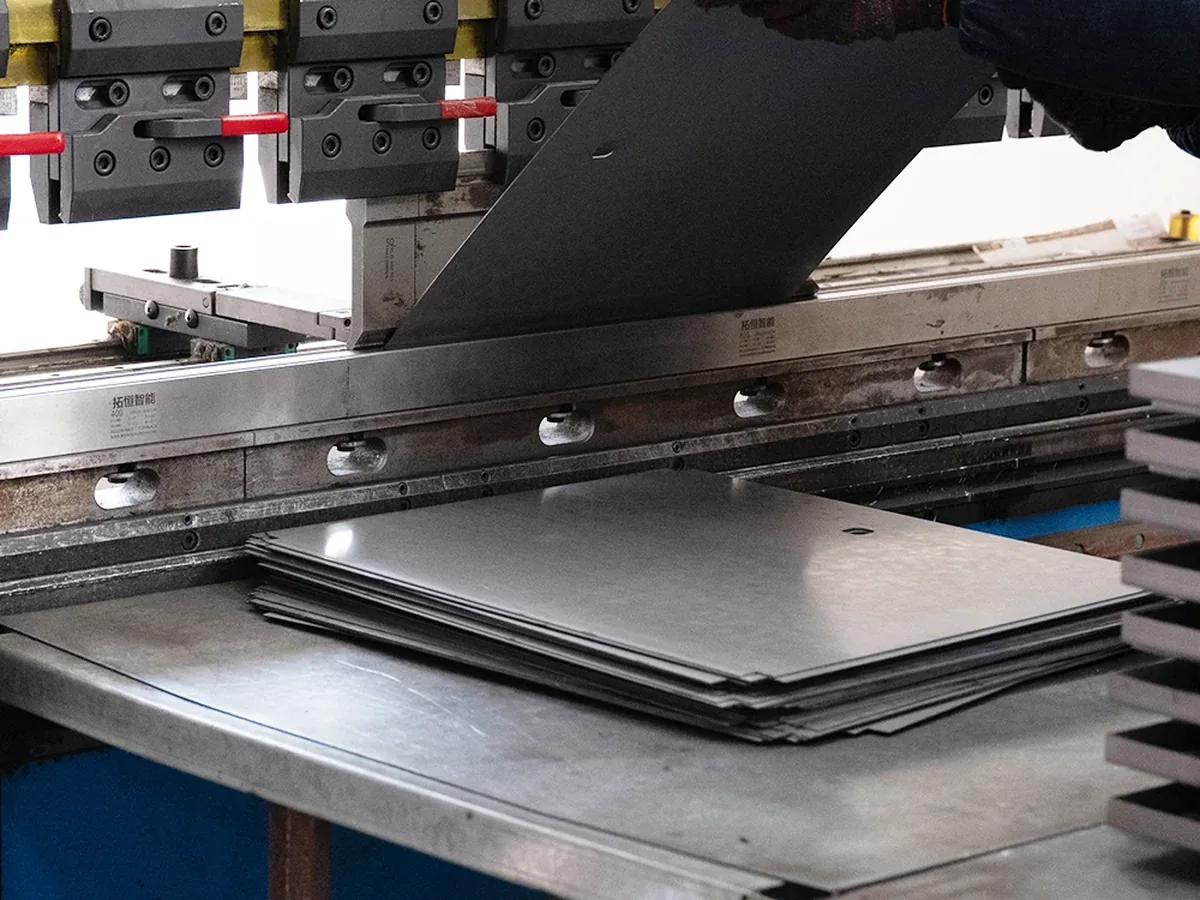
Press brake bending forms flat metal sheets into the required enclosure structures. The number of bends, material thickness, bending angles, and tooling requirements can affect fabrication time.
Welding
Welding may be required to join enclosure panels, brackets, frames, and other structural components. Complex welded structures may require additional labor and finishing operations.
Assembly
Some custom enclosures require additional hardware installation, fitting, and assembly before delivery. The more manufacturing operations involved, the more important it becomes to review the design for production efficiency.
5. Hardware and Assembly Requirements
Hardware is another important component of custom enclosure costs.
Depending on the application, an enclosure may require:
- Hinges
- Door locks and latches
- Mounting brackets
- Fasteners and screws
- Cable gland plates
- Mounting plates
- Handles
- Sealing gaskets
The type, material, quantity, and installation method of these components can influence the final quotation.
For example, a basic enclosure cover requires fewer components than a cabinet with multiple doors, locking points, mounting brackets, and customized accessories.
Buyers should specify whether hardware is included in the required supply scope.
If certain accessories will be installed by the customer, this should also be clearly stated in the technical drawings or quotation request.
6. Surface Finishing and Coating
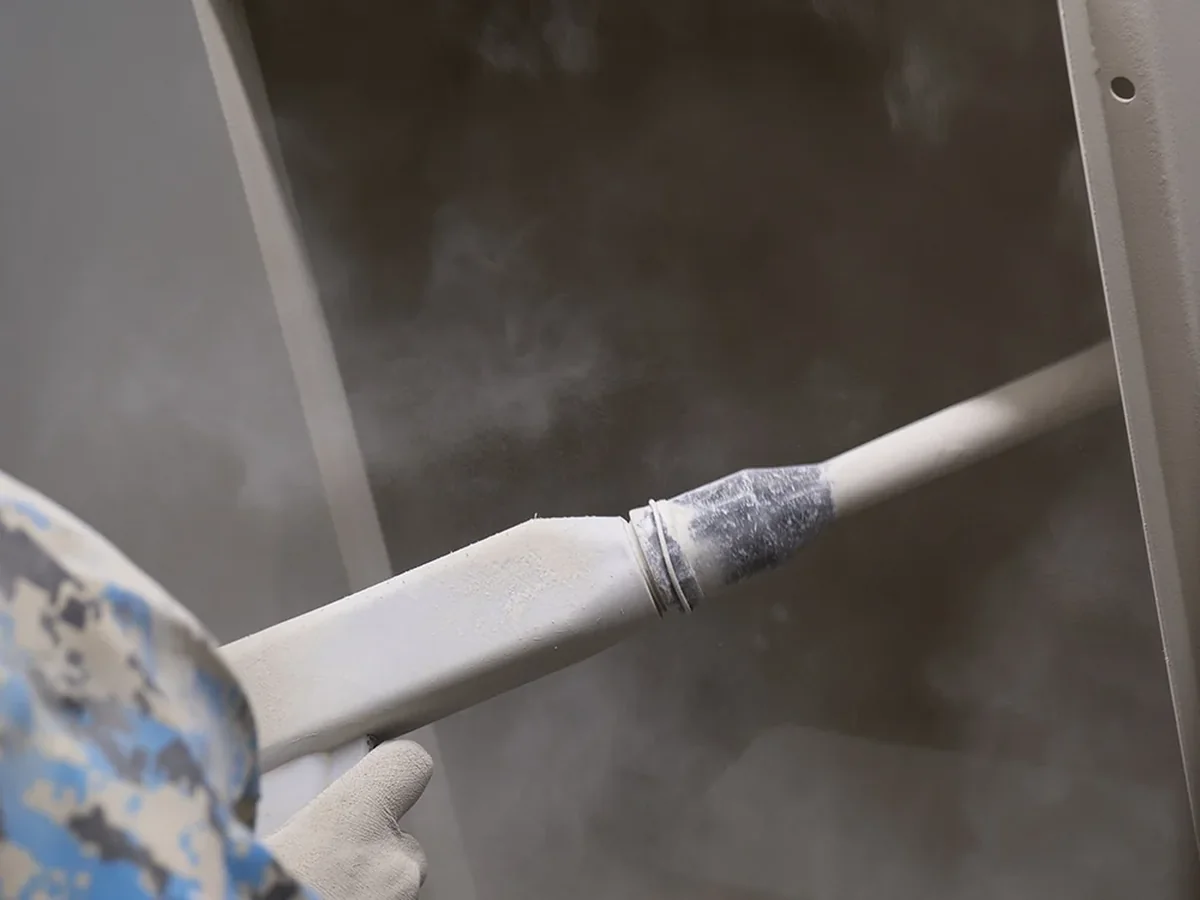
Surface treatment affects both appearance and environmental protection.
Common finishing options for metal enclosures include:
- Powder coating
- Brushed stainless steel finishing
- Polishing
- Protective surface treatments
- Other specified coating processes
Powder coating is commonly used for carbon steel and suitable galvanized steel enclosures to provide a durable finished surface.
The cost may depend on the required color, coating specification, surface preparation, masking areas, and overall production requirements.
For stainless steel enclosures, brushed or polished finishes may be specified according to appearance and application requirements.
When requesting a quotation, provide the finishing requirements clearly, including color codes where applicable, gloss level, and any areas that must remain uncoated.
Avoid specifying unnecessary finishing requirements that do not contribute to the product’s functional or environmental needs.
7. Order Quantity and Production Volume
Order quantity can have a significant impact on the unit cost of custom metal enclosures.
A prototype or small production order may involve engineering review, programming, tooling preparation, and machine setup costs that are distributed across relatively few units.
When production quantities increase, certain preparation costs can be shared across more units.
| Production Type | Typical Cost Considerations |
|---|---|
| Prototype | Engineering review, design preparation, and initial setup |
| Small Batch | Setup costs distributed across a limited quantity |
| Medium Batch | More efficient production planning and material purchasing |
| Large Batch | Potentially improved production efficiency and unit cost |
However, larger quantities do not automatically guarantee a lower total project cost.
Material availability, production scheduling, design changes, packaging, and finishing requirements must also be considered.
For buyers with recurring orders, discussing expected annual demand and delivery schedules with the manufacturer may help improve production planning.
3. How to Reduce Custom Metal Enclosure Manufacturing Costs
Reducing manufacturing costs does not necessarily mean choosing cheaper materials or thinner sheet metal.
A better approach is to optimize the enclosure design and production requirements.
Simplify the Enclosure Structure
Avoid unnecessary bends, complicated cutouts, and excessive structural components where they do not provide functional value. A simpler design can reduce fabrication time and improve manufacturing consistency.
Select Materials According to the Application
Choose the material based on actual environmental and mechanical requirements. For example, stainless steel may be appropriate for corrosive environments, while carbon steel with a suitable protective finish may be sufficient for many general industrial applications. Using an unnecessarily expensive material can increase project costs without providing meaningful additional value.
Avoid Unnecessary Tight Tolerances
Tight dimensional tolerances may require more precise fabrication, additional inspection, and greater process control. Specify tight tolerances only where they are functionally necessary, such as mounting interfaces, assembly positions, and critical openings.
Standardize Hardware and Accessories
Using common hinges, locks, fasteners, and mounting components across multiple enclosure models may simplify purchasing and production. Standardization can also make future replacement and maintenance easier.
Plan Surface Finishing Early
Clearly define coating colors, surface finishes, masking requirements, and other finishing specifications before production. Late changes can result in additional preparation, rework, or production delays.
A design review with the manufacturer before production is often a practical way to identify opportunities for cost optimization.
Planning a Custom Metal Enclosure Project?
The right design and material selection can make a significant difference in manufacturing costs. Share your project requirements with our team to discuss a suitable enclosure solution.
4. What Information Is Needed for an Accurate Enclosure Quote?
A manufacturer needs sufficient technical information to understand the project and calculate the required manufacturing processes.
The more complete the information, the easier it is to prepare an accurate quotation.
2D Engineering Drawings
Provide PDF, DWG, or DXF drawings showing the enclosure dimensions, material thickness, bending details, holes, and mounting positions.
3D CAD Files
STEP files can help manufacturers understand the overall structure, component relationships, and assembly requirements.
Material and Thickness Specifications
Identify the material grade and nominal thickness for the enclosure body, doors, mounting plates, and other components.
Surface Finish Requirements
Specify the required powder coating, brushed finish, polishing, color, or other surface treatment.
Hardware and Assembly Details
Indicate the required hinges, locks, brackets, fasteners, gaskets, and other accessories.
Estimated Order Quantity
Provide the expected quantity for the initial order and, if available, estimated recurring demand. This helps manufacturers evaluate production planning and quotation requirements.
For a more detailed checklist, see our enclosure drawing package checklist.
5. How to Compare Custom Metal Enclosure Quotes
Receiving quotations from multiple manufacturers is common in OEM purchasing.
However, the lowest quotation does not always represent the best overall value.
Before comparing prices, confirm that each manufacturer is quoting the same technical requirements.
Compare Material Specifications
Check the material grade, sheet thickness, and material requirements. A quotation based on a different material specification may not be directly comparable.
Review Manufacturing Scope
Confirm whether cutting, bending, welding, hardware installation, assembly, and finishing are included. Different manufacturers may quote different production scopes.
Check Quality and Inspection Requirements
Review the applicable dimensional tolerances, surface finish expectations, inspection requirements, and any required testing.
Confirm Packaging and Delivery Terms
Check whether packaging, shipping, insurance, and other delivery-related costs are included or quoted separately. Also confirm the quotation validity period and payment terms.
A detailed quotation comparison helps procurement teams evaluate not only the purchase price but also the actual supply scope and project requirements.
When choosing a supplier, you can also read our guide on how to choose a metal enclosure manufacturer.
Frequently Asked Questions
How much does a custom metal enclosure cost?
The price depends on material, dimensions, sheet thickness, design complexity, fabrication processes, surface finishing, and order quantity. A manufacturer needs to review the drawings and project specifications before providing a reliable quotation.
What is the biggest cost factor in custom metal enclosure manufacturing?
There is no single biggest cost factor for every project. Material consumption, fabrication complexity, finishing requirements, hardware, and production quantity can all influence the final cost.
Does stainless steel cost more than carbon steel for custom enclosures?
Stainless steel generally has a higher material cost than standard carbon steel. However, the total project cost also depends on thickness, fabrication requirements, finishing, and the intended application.
Does thicker sheet metal increase enclosure manufacturing costs?
Generally, yes. Thicker material increases raw material consumption and may require different cutting and bending parameters. However, the appropriate thickness should always be determined by structural and application requirements.
Does ordering more custom metal enclosures reduce the unit price?
It can. Larger production quantities may distribute certain setup and preparation costs across more units. Actual savings depend on the design, material availability, manufacturing processes, and order schedule.
Why do different manufacturers provide different quotations?
Quotation differences may result from variations in material specifications, manufacturing methods, hardware, finishing processes, quality requirements, and included services. Buyers should compare quotations using the same technical specifications.
Can I reduce the cost of a custom metal enclosure without sacrificing quality?
Yes. Design simplification, appropriate material selection, optimized tolerances, standardized hardware, and efficient production planning can help control costs while maintaining required performance.
What files should I provide to get a custom enclosure quotation?
Ideally, provide 2D drawings in PDF, DWG, or DXF format and 3D CAD files in STEP format. Include material, sheet thickness, surface finish, hardware requirements, dimensions, and estimated order quantity.
Get a Custom Metal Enclosure Quote from EWJ
Looking for a reliable OEM metal enclosure manufacturing partner?
EWJ provides custom metal enclosure solutions based on customer drawings and project requirements.
Our enclosure customization options include:
- Carbon steel, galvanized steel, stainless steel, and aluminum materials
- Custom enclosure dimensions and structures
- Sheet metal cutting, bending, and welding
- Customized mounting plates, openings, and accessories
- Surface finishing and branding requirements
Whether you are developing a new electrical enclosure or sourcing metal housings for an existing product, providing clear technical specifications helps us understand your project requirements.
Send us your drawings and project details to discuss your custom metal enclosure requirements.
Get a Custom Metal Enclosure Quote
Send your drawings and project requirements to our team. As a custom electrical enclosure manufacturer, EWJ builds metal housings to customer drawings and specifications.
Please include:
- 2D drawings (PDF / DWG / DXF)
- 3D CAD files (STEP)
- Material and thickness requirements
- Surface finishing specifications
- Estimated order quantity