Wall Mount Enclosures: Types, Uses & Selection Guide
Wall mount enclosures are one of the most practical ways to protect electrical and electronic equipment where floor space is limited or access needs to be simple. They are used to house components such as circuit breakers, terminal blocks, PLCs, relays, power supplies, communication devices, meters, and small control systems.
For OEM manufacturers, panel builders, contractors, and distributors, choosing the right enclosure is about more than finding a box that fits. The enclosure must match the installation environment, internal components, cable-routing plan, maintenance requirements, and required protection level.
This guide explains the main types of wall mount enclosures, their typical applications, and the key technical points to check before ordering.
What Are Wall Mount Enclosures?
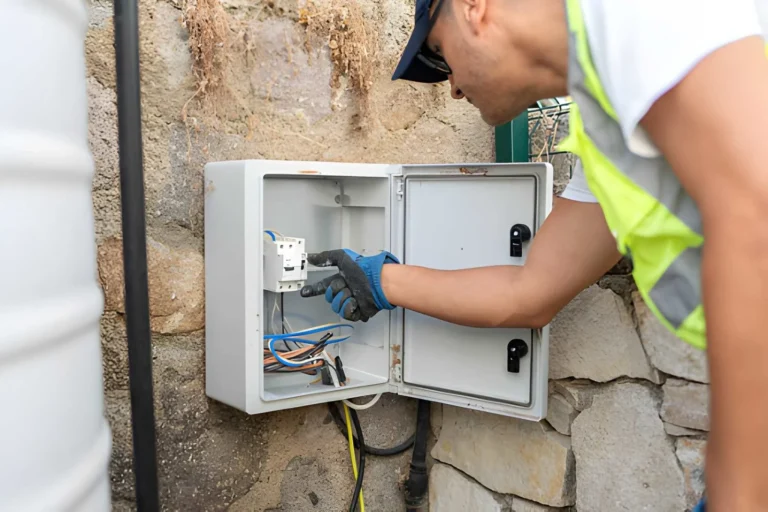
Wall mount enclosures are protective cabinets or boxes fixed directly to a wall, machine frame, pole structure, or other vertical surface. They isolate electrical equipment from dust, water, impact, tampering, and accidental contact while keeping components accessible for installation and servicing.
Compared with floor-standing cabinets, a wall-mounted enclosure takes up less space and is usually better suited to compact control systems, local power distribution, instrumentation, and equipment-mounted controls. Depending on the project, it can be made from stainless steel, galvanized steel, aluminum, or another specified sheet-metal material.
Common Types of Wall Mount Enclosures
The best structure depends on the amount of equipment inside, the location, and how frequently the enclosure must be accessed.
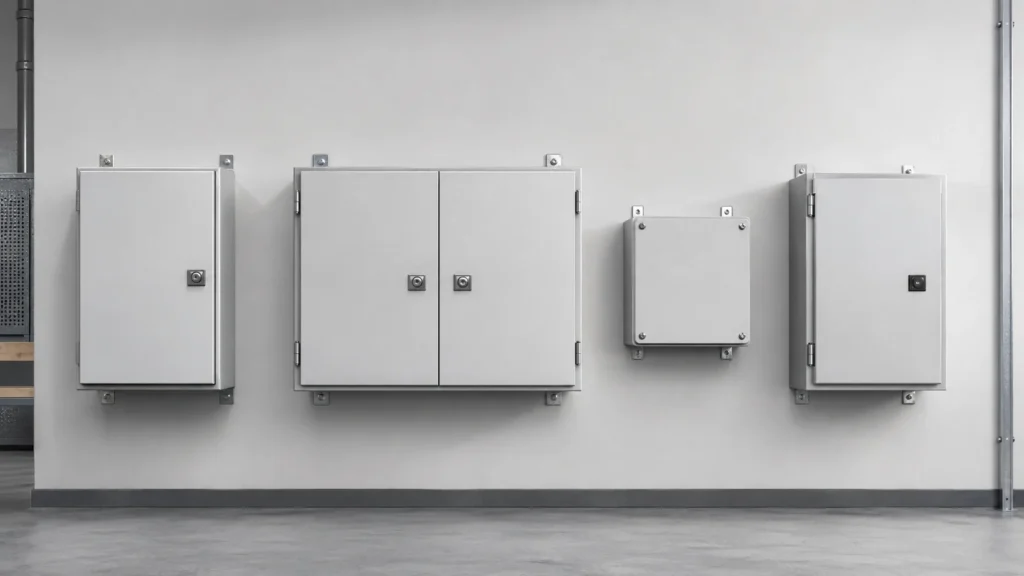
Single-Door Wall Mount Enclosures
Single-door enclosures are a common choice for compact control panels, junction boxes, meter housings, and small distribution applications. They offer a straightforward layout and quick access to internal components. Typical options include a removable mounting plate, quarter-turn latch, keyed lock, gasketed door, and cable-entry knockouts or custom cutouts.
Double-Door Wall Mount Enclosures
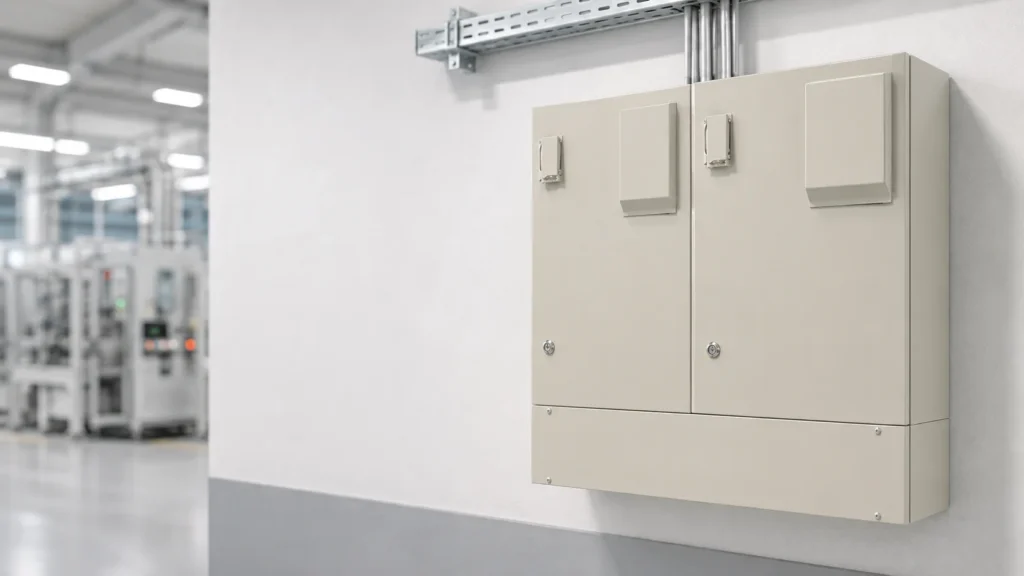
Double-door designs are suitable for wider cabinets or panels with larger internal assemblies. The two doors provide easier access across the full width of the mounting plate and can reduce the clearance required in front of a wide single door. They are often used for distribution and industrial control equipment.
Wall Mount Junction Box Enclosures
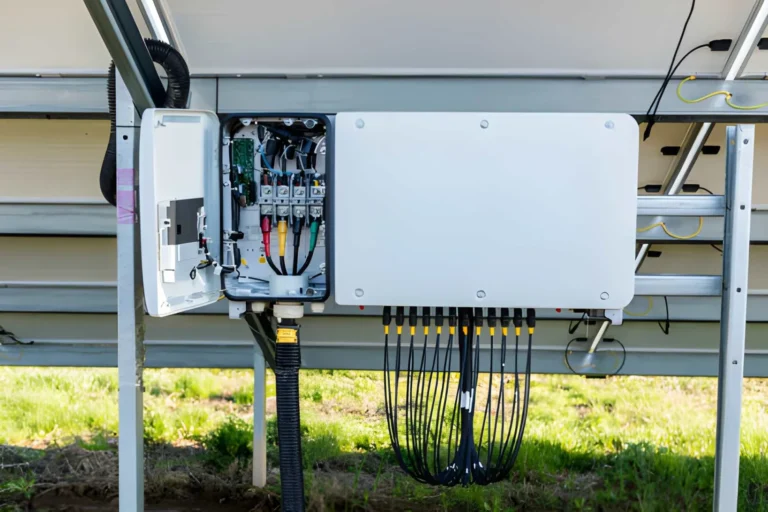
A wall mount junction box protects cable joints, terminals, and wiring connections. It is normally smaller than a full control-panel enclosure and may be specified with gland plates, multiple cable entries, terminal rails, or a clear viewing window. For outdoor or washdown environments, sealing and cable-gland selection are especially important.
Wall Mount Control Panel Enclosures
Control panel enclosures are designed for equipment such as relays, contactors, PLCs, HMI devices, drives, and power supplies. Internal layout matters: leave adequate spacing for wiring, heat dissipation, maintenance, and future additions. A suitable mounting plate, DIN rails, internal doors, and cutouts for push buttons or displays can be supplied to match the electrical design.
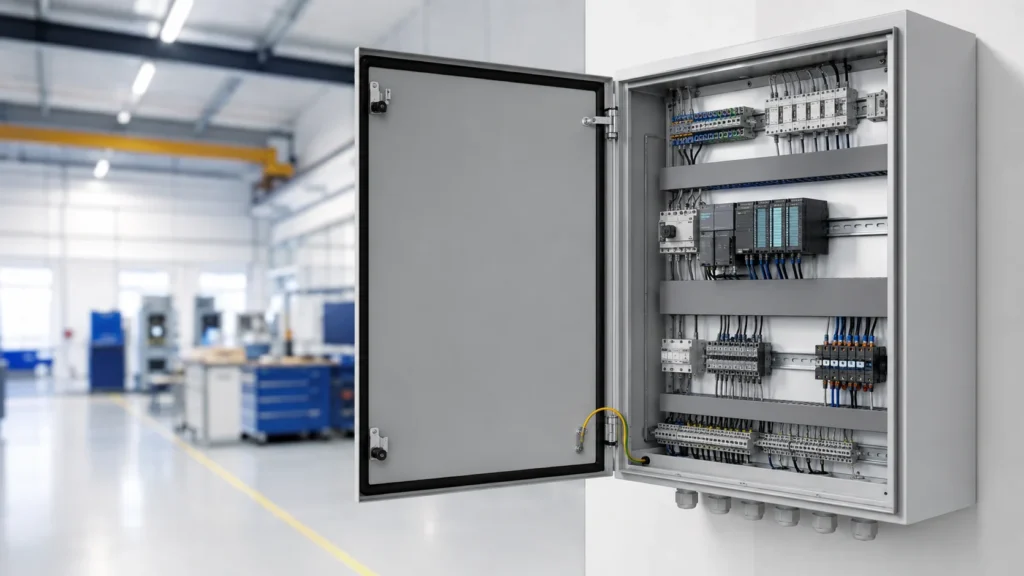
Wall Mounted Meter Boxes
Wall mounted meter boxes are used to house energy meters, metering terminals, breakers, and related wiring. Depending on the project, they may need transparent windows, sealable covers, utility-specific dimensions, or separate compartments for incoming and outgoing circuits.
Typical Applications
Wall mount enclosures are used wherever equipment needs reliable protection without a large freestanding cabinet.
- Industrial automation: PLCs, sensor interfaces, local machine controls, and HMI stations.
- Power distribution: Small distribution boards, breakers, fuses, relays, and monitoring devices.
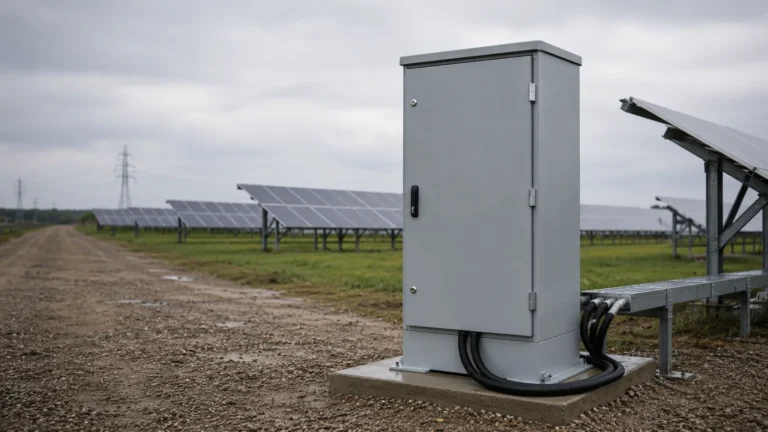
- Renewable energy: Solar auxiliary circuits, inverter-related controls, and combiner-box assemblies.
- Telecommunications: Network equipment, signal-control units, and field communication devices.
- Water treatment and infrastructure: Pump controls, instrumentation, and remote monitoring systems.
- Commercial buildings: Lighting controls, building-management devices, and metering equipment.
How to Choose the Right Wall Mount Enclosure
1. Start With the Installation Environment
First identify whether the enclosure will be installed indoors, outdoors, in a dusty workshop, a humid location, a washdown area, or a corrosive coastal or chemical environment. This determines the required material, gasket design, surface treatment, ventilation approach, and protection rating.
For example, stainless steel is often selected where corrosion resistance and cleanability are priorities. Galvanized steel can be a practical option for general industrial use, while aluminum may be preferred when low weight or heat dissipation is important.
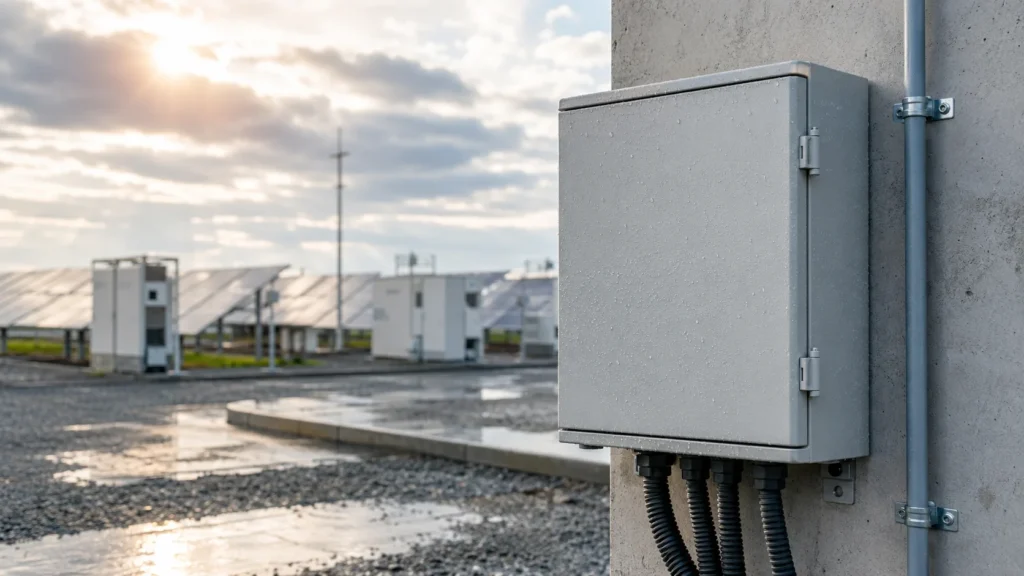
For projects exposed to moisture, washdown, salt air, or hygiene-sensitive conditions, explore our stainless steel enclosures for custom material and structural options.
2. Specify the Required Protection Rating
The enclosure’s IP rating should be chosen for the actual exposure level—not simply selected as the highest available rating. IEC 60529 defines IP codes for protection against access, solid objects, and water. Common requirements include IP54 for general indoor industrial environments and IP65 or IP66 where dust and water exposure is more demanding.
For North American projects, buyers may also specify a NEMA Type requirement. IP and NEMA classifications are not interchangeable one-for-one, because their test scopes and environmental considerations are not identical. Confirm the required standard before quotation, particularly where corrosion resistance, oil, icing, or washdown performance is specified.
3. Size the Enclosure Around the Internal Layout
Do not size a cabinet only by the overall dimensions of its components. Reserve space for wire bending, cable glands, terminal blocks, service access, heat clearance, and future expansion. A clear internal layout drawing makes it easier for the manufacturer to position mounting studs, rails, internal panels, doors, and cutouts correctly.
For a control enclosure, ask these questions:
- What are the dimensions and heat loads of the internal devices?
- Where will cables enter and leave the enclosure?
- Is a removable mounting plate required?
- Does the door need a viewing window, HMI cutout, push buttons, or indicators?
- Will maintenance personnel need access from the front only?
4. Select the Door and Access Configuration
Door style affects both usability and protection. A single door works well for compact equipment. A double door offers better access to large panels. An inner door can separate operator devices from energized parts, while a sloped top can help prevent dust accumulation or liquid pooling in certain industrial environments.
Choose locks, hinges, door stays, and latching systems based on the security level and frequency of maintenance. For equipment with authorized-access requirements, keyed locks or lockable latches should be defined early in the specification.
5. Plan Cable Entry and Mounting Details
Cable entry is often where enclosure protection can be compromised. Decide whether the project needs gland plates, bottom-entry plates, side-entry cutouts, conduit hubs, or pre-punched holes. The position and size must accommodate the cable bend radius and avoid interference with internal components.
Also confirm the mounting method: wall brackets, rear mounting holes, external mounting feet, pole-mount accessories, or a machine-frame installation. External mounting brackets can be useful when you want to install the enclosure without opening it.
6. Address Heat, Condensation, and Ventilation
Electrical components create heat. In a sealed enclosure, heat build-up can shorten component life or cause nuisance failures. Determine whether natural ventilation is sufficient or whether the design needs filters, fans, heat exchangers, heaters, thermostats, or anti-condensation devices.
Outdoor projects need additional attention to solar load, night-time condensation, and cable-entry sealing. The enclosure solution should balance thermal management with the required water and dust protection.
Wall Mount Enclosures vs. Floor Standing Enclosures
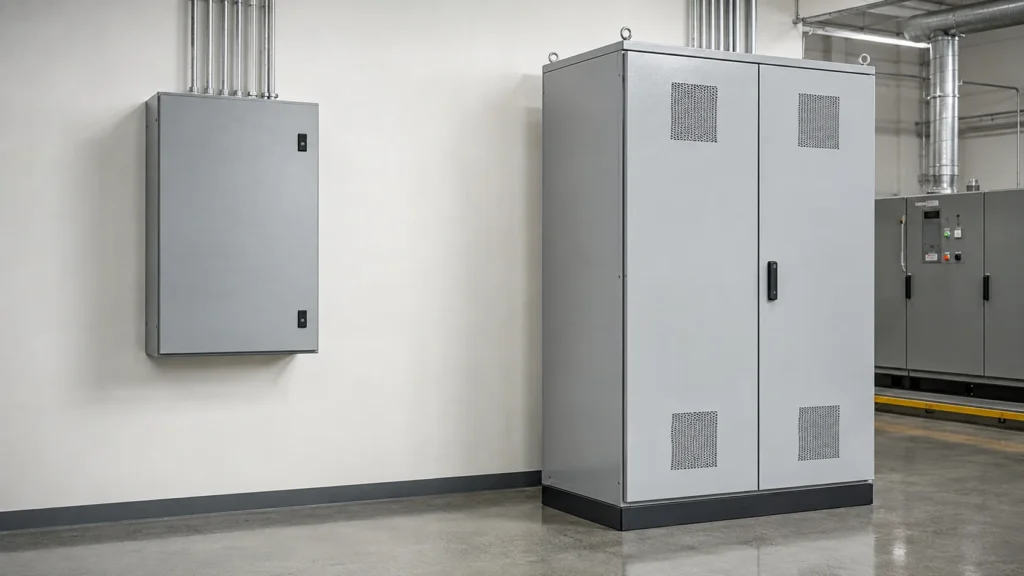
Wall mount enclosures are usually the better choice when the system is compact, equipment is near the point of use, and floor space is limited. They are typically faster to install and easier to place at a convenient working height.
Floor standing enclosures are more suitable for large control systems, high component density, heavy equipment, extensive cable management, or multi-bay panel assemblies. If the internal layout is becoming too crowded or the mounted weight is too high for the wall structure, a freestanding cabinet is usually the safer and more practical option.
Custom Options for Wall Mount Enclosures
A custom metal enclosure can be engineered around your drawing, component layout, and installation method. Common customization options include:
- Stainless steel, galvanized steel, aluminum, or specified sheet metal
- Custom dimensions and sheet thickness
- Single, double, inner-door, or slope-top structures
- Mounting plates, DIN rails, studs, and internal partitions
- Cable-entry cutouts, gland plates, and knockout patterns
- Viewing windows, HMI openings, push-button holes, and engraving
- Locks, hinges, handles, door stays, and earthing points
- Powder coating, brushed stainless finishing, labels, and branding
- IP-rated sealing options based on the target application
For the best result, provide a dimensional drawing, BOM or internal-layout diagram, target quantity, installation environment, and required standards when requesting a quotation.
FAQ
What material is best for wall mount enclosures?
There is no single best material for every project. Stainless steel is a strong option for corrosive, outdoor, washdown, marine, and hygiene-sensitive environments. Galvanized steel is widely used for general industrial cabinets, while aluminum can be useful when low weight or good heat dissipation is important.
Can wall mount enclosures be used outdoors?
Yes. Outdoor use requires the right protection rating, material, sealing system, surface finish, and cable-entry solution. Stainless steel or suitably protected steel is commonly chosen where weather and corrosion resistance are required.
What IP rating should I choose?
Choose the rating according to the actual environment and project specification. IP54 is common for general indoor protection, while IP65 or IP66 may be required for more demanding dust and water exposure. Always verify the required test standard and installation details before ordering.
Can a wall mount enclosure be customized for my control components?
Yes. A manufacturer can customize dimensions, mounting plates, internal rails, door cutouts, cable entries, windows, locks, finishes, and branding based on your drawing or component layout.
What information is needed for a quotation?
Send the enclosure dimensions, material preference, drawing or internal layout, required quantity, installation environment, target IP or NEMA requirement, cable-entry details, and any cutout or accessory requirements.
Need a Custom Wall Mount Enclosure?
EWJ manufactures custom metal wall mount enclosures for industrial control, electrical distribution, outdoor equipment, instrumentation, and OEM projects.
Send your drawing, internal layout, required quantity, and protection requirements to receive a practical enclosure proposal and quotation.