Acabado superficial de las cajas de acero inoxidable: guía de selección
A stainless steel enclosure surface finish affects more than how a cabinet looks. It influences how easily dirt can be removed, how scratches appear, how welded areas are restored, and how consistently a supplier can reproduce the appearance of an OEM enclosure across production batches.
For industrial electrical cabinets, stainless steel junction boxes, and custom equipment housings, the finish should be selected together with the material grade, installation environment, cleaning method, and fabrication details. A highly reflective surface is not automatically the right choice, and a brushed finish is not necessarily suitable for every washdown application.
This guide compares common stainless steel enclosure surface finish options—including 2B, bright annealed (BA), brushed, satin, and mirror-polished surfaces—and explains what to specify on your drawings before ordering custom metal enclosures.
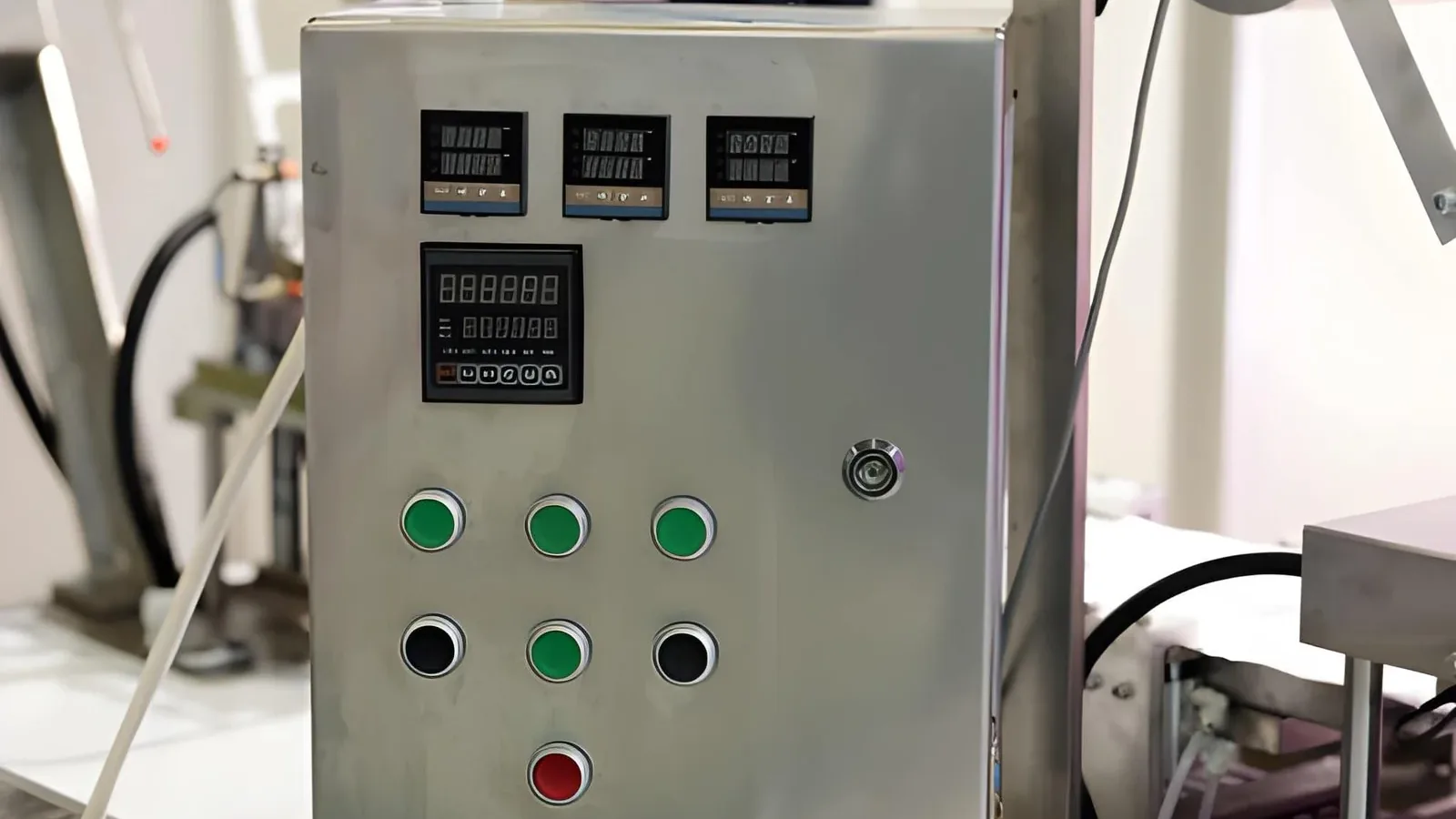
1. Why Does Stainless Steel Enclosure Surface Finish Matter?
Stainless steel relies on a thin, chromium-rich passive surface film for its corrosion resistance. Surface condition matters because roughness, scratches, embedded contamination, and weld heat tint can influence the way a finished enclosure performs and is maintained.
For enclosure buyers, the main selection factors are:
- Operating environment: Indoor control rooms, outdoor equipment areas, coastal sites, and washdown facilities have different exposure conditions.
- Cleaning requirements: Dirt, grease, and cleaning residues may be more difficult to remove from heavily textured or damaged surfaces.
- Appearance: A directional brushed grain, low-glare satin surface, or mirror-like appearance may be preferred for different equipment designs.
- Fabrication: Bending, cutting, welding, and handling can alter the appearance of the original sheet.
- Cost and consistency: Additional polishing, reworking welded areas, and appearance inspection add manufacturing operations.
A surface finish is one part of the specification—not a substitute for choosing a suitable grade of stainless steel or designing proper drainage, sealing, and corrosion-resistant hardware.
2. Common Stainless Steel Surface Finishes for Electrical Enclosures
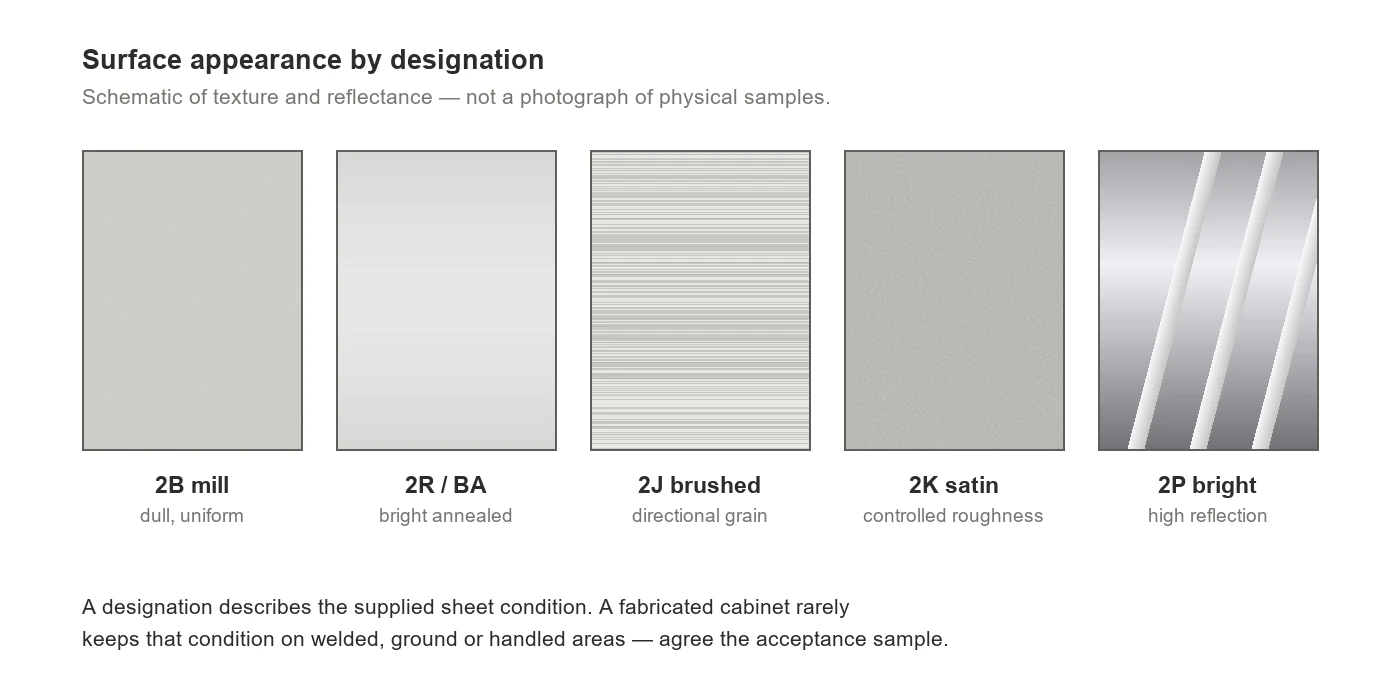
Several finish names describe the condition in which stainless steel sheet is supplied, while others describe additional mechanical finishing operations. Buyers should not treat every commercial name as an exact international specification.
| Finalizar | Appearance and Process | Practical Enclosure Considerations |
|---|---|---|
| 2B mill finish | Smooth, dull to slightly reflective, cold-rolled surface | Functional panels and housings when a decorative appearance is not required |
| 2R / BA (bright annealed) | Bright, reflective mill finish from controlled-atmosphere annealing | Clean-looking panels; not identical to a mechanically mirror-polished finish |
| 2J / brushed or dull polished | Directional texture produced by brushing or polishing | Visible cabinets where a consistent grain direction is desired |
| 2K / satin polished | Controlled satin polish; EN designation includes a surface-roughness requirement | Applications specifying a smoother, controlled satin surface |
| 2P / bright polished | Highly reflective mechanical polish | Special appearance requirements; often adds polishing and handling demands |
| Bead-blasted matte | Non-directional matte texture formed by blasting | Possible low-glare option; media, contamination, roughness, and cleaning implications require review |
Finish designations above follow the general terminology in EN 10088-2 for flat stainless steel products. Not all finishes are available in all grades, thicknesses, or from every enclosure manufacturer. Bead blasting is not one of the EN 10088-2 finish codes listed above.
2B Mill Finish: Functional and Common
The 2B finish is produced as part of the cold-rolling and finishing process. It is usually smooth and slightly reflective rather than decorative. For many functional metal housings and internal panels, it is a practical starting surface when the project does not require a particular visible grain or mirror appearance.
However, a cabinet made from 2B sheet does not necessarily retain a perfectly uniform 2B appearance after welding or local rework. Specify which surfaces will be visible and whether appearance matching is required.
Bright Annealed (2R / BA): Reflective but Not Mirror-Polished
Bright-annealed stainless steel is supplied with a relatively bright, reflective finish. It is commonly identified as 2R in European designation systems and BA in commercial terminology.
It can be a good option where the material’s supplied appearance is acceptable without extensive mechanical polishing. But BA is a mill finish, not a guarantee that the finished enclosure will have the same image clarity as a mechanically polished 2P or commercial No. 8 mirror finish.
Brushed or Dull-Polished (2J): Directional Appearance
Brushed stainless steel has visible, generally unidirectional lines. It is often used on exposed cabinet doors and equipment housings where a consistent industrial appearance is desired.
The description “brushed” alone may be insufficient for an OEM specification. The grain direction, abrasive finish, expected appearance, and acceptable sample should be agreed with the fabricator. Directional texture can make cross-grain scratches more noticeable, particularly on large, uninterrupted door surfaces.
Satin-Polished (2K): A More Controlled Finish
Satin-polished stainless steel typically has a subdued appearance. Under EN 10088-2, a 2K finish has a defined maximum surface roughness requirement, rather than merely being a marketing term for “matte.”
For buyers requesting a controlled satin finish, include the relevant finish designation, roughness requirement where applicable, and an approved reference sample. Do not assume that every product sold as “satin” meets a particular 2K specification.
Bright or Mirror Polishing (2P): High Reflection
A 2P bright-polished finish can provide a highly reflective surface. It may be chosen for equipment where visual presentation is important or where a very smooth, polished surface is specified.
It usually requires more attention to polishing quality, fingerprints, visible scratches, protective film, and packaging. A mirror finish also does not eliminate the need for suitable material selection, appropriate weld treatment, or regular cleaning.
Bead-Blasted or Matte Textures: Evaluate Carefully
Bead blasting can produce a uniform, non-directional matte appearance, but the result depends on the blasting medium, pressure, surface condition, and subsequent cleaning.
An unsuitable process may leave a rougher surface or introduce contamination. For hygiene-sensitive or aggressive outdoor environments, consider whether a textured surface is appropriate before choosing it simply for its low-glare appearance. Availability should be confirmed with the manufacturer.
3. How to Choose a Finish for Different Enclosure Applications
The correct choice depends on the conditions in which the empty enclosure will be installed and how the finished equipment will be maintained.
Indoor Industrial Control Cabinets
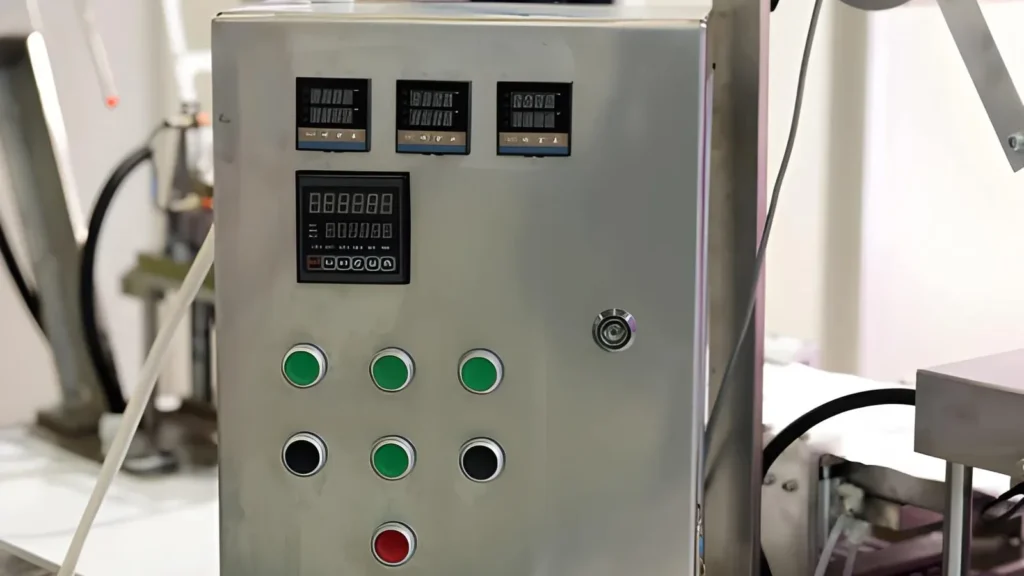
In general industrial rooms with limited exposure to moisture and chemicals, a functional 2B surface or a brushed finish may be suitable, depending on appearance requirements. For exposed control-panel doors, a consistent grain direction may matter more than it does for internal mounting structures.
Food Processing and Washdown Areas
Equipment exposed to frequent cleaning needs appropriate stainless steel grade selection, accessible surfaces, suitable joints, and compatible cleaning chemicals. Smooth, cleanable surfaces may be preferred, but the required roughness or hygiene criteria should come from the customer’s process and applicable standards—not from a generic finish label.
A brushed appearance alone does not prove that an enclosure is hygienic or suitable for a particular washdown procedure.
Coastal and Outdoor Installations
Salt deposits, humidity, and pollutants can increase corrosion risk. Grade selection, drainage, crevices, fasteners, surface condition, and cleaning all matter. A high-quality smooth finish may help reduce dirt retention, but polishing cannot turn an unsuitable stainless steel grade into a universally corrosion-proof material.
If the key question is whether to select grade 304 or 316, see our 304 vs 316 stainless steel enclosure guide.
Customer-Facing Equipment and Instrument Housings
For equipment installed in laboratories, production areas, or customer-facing spaces, appearance consistency may be part of the product design. A brushed, satin, or bright finish can be specified according to the desired appearance and cleaning requirements.
Consider a physical approval sample before ordering a larger production batch, especially where several enclosure panels must appear visually consistent.
4. How Cutting, Welding, and Fabrication Affect the Final Finish
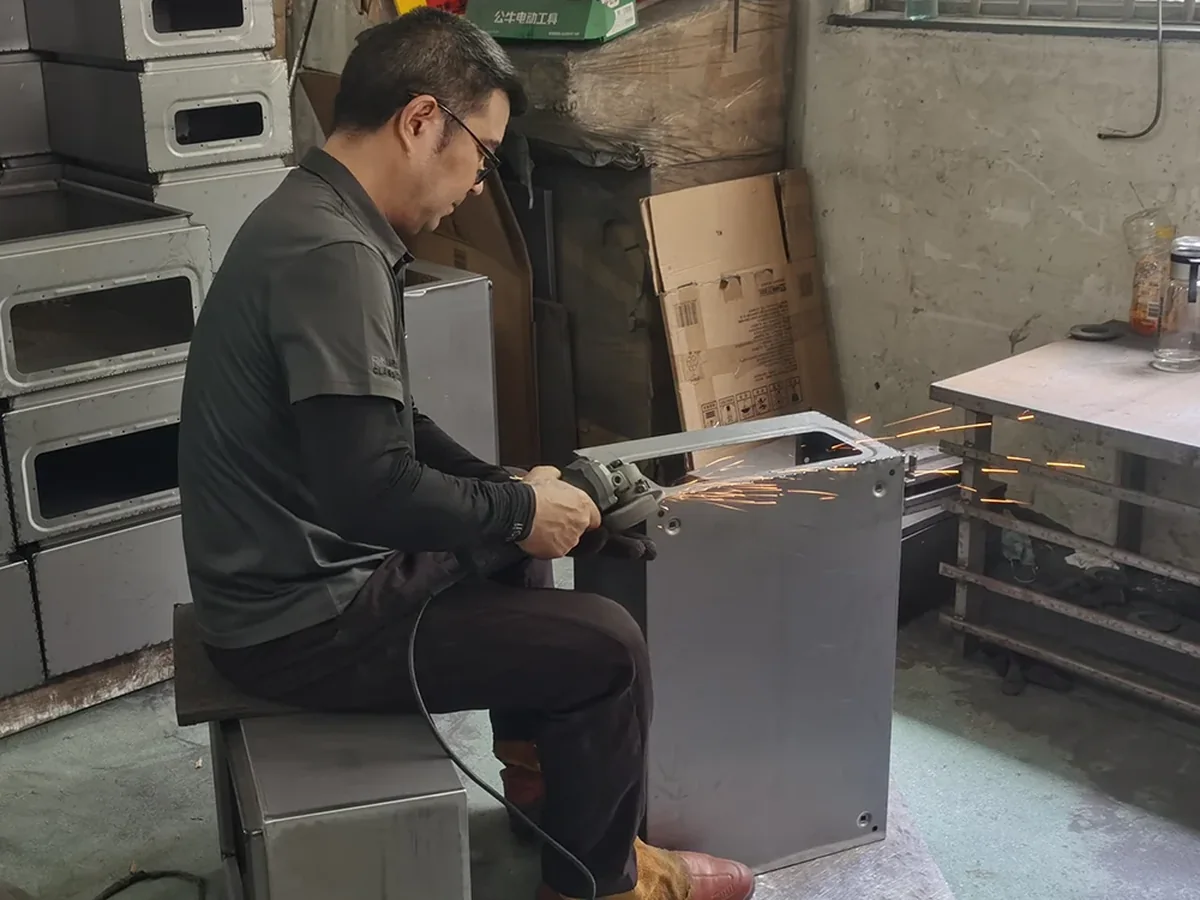
Choosing prefinished sheet is only the beginning. A custom electrical enclosure may pass through cutting, forming, welding, hardware installation, cleaning, and packaging before delivery.
Welding Heat Tint and Post-Weld Cleaning
Welding can leave colored heat-tinted areas near a joint. These discolored oxide layers can reduce local corrosion resistance and should be assessed for appropriate removal. Depending on the design and approved process, post-weld treatment may include mechanical cleaning, pickling, or other suitable methods.
Do not treat cosmetic buffing as automatically equivalent to complete heat-tint removal. Likewise, passivation is not a substitute for removing heavy weld scale or embedded contamination when such removal is required.
Scratches, Grain Direction, and Protective Film
Brushed sheet requires particular care during cutting, bending, assembly, and transport. If two adjacent panels have different grain directions, their appearance can differ even when the same material and nominal finish are used.
Where this matters, mark the grain direction on the drawing and identify the visible faces. Specify the protective-film and packaging requirements needed to reduce damage before installation.
Preventing Carbon-Steel Contamination
Stainless steel surfaces can develop rust staining if contaminated by particles from carbon-steel tools, shared work surfaces, or inappropriate handling.
Suitable workshop practices, clean tooling, and post-fabrication inspection help reduce this risk. The required cleaning or surface-treatment process should be agreed with the fabricator for the intended environment.
Need Help Specifying a Stainless Steel Enclosure Finish?
Send your material, drawings and finish requirements to discuss a manufacturable enclosure design.
5. Brushing, Pickling, Passivation, and Electropolishing: What Is the Difference?
These terms describe different operations and should not be used interchangeably in a purchase specification.
| Operation | What it does | Do not confuse it with |
|---|---|---|
| Brushing / mechanical polishing | Changes the surface texture and visual appearance by abrasion | Complete weld heat-tint removal on its own |
| Pickling | Removes certain oxides and surface-affected layers, including weld heat tint, using an appropriate chemical process | Passivation |
| Passivation | Formation or restoration of the protective passive surface condition on clean stainless steel; may also remove certain surface contaminants, depending on the process | Removal of heavy weld scale or embedded contamination |
| Electropolishing | Electrochemical finishing process that can smooth and brighten the surface | Something implied by a mirror or brushed finish |
For a custom enclosure, decide whether the requirement is primarily visual, related to post-weld corrosion performance, or driven by a defined cleaning specification. Then describe the actual process or measurable result needed.
Special processes such as electropolishing or chemical treatment should be discussed with the manufacturer before quotation; do not assume they are included in a standard enclosure order.
6. How to Specify Stainless Steel Enclosure Surface Finish on Drawings
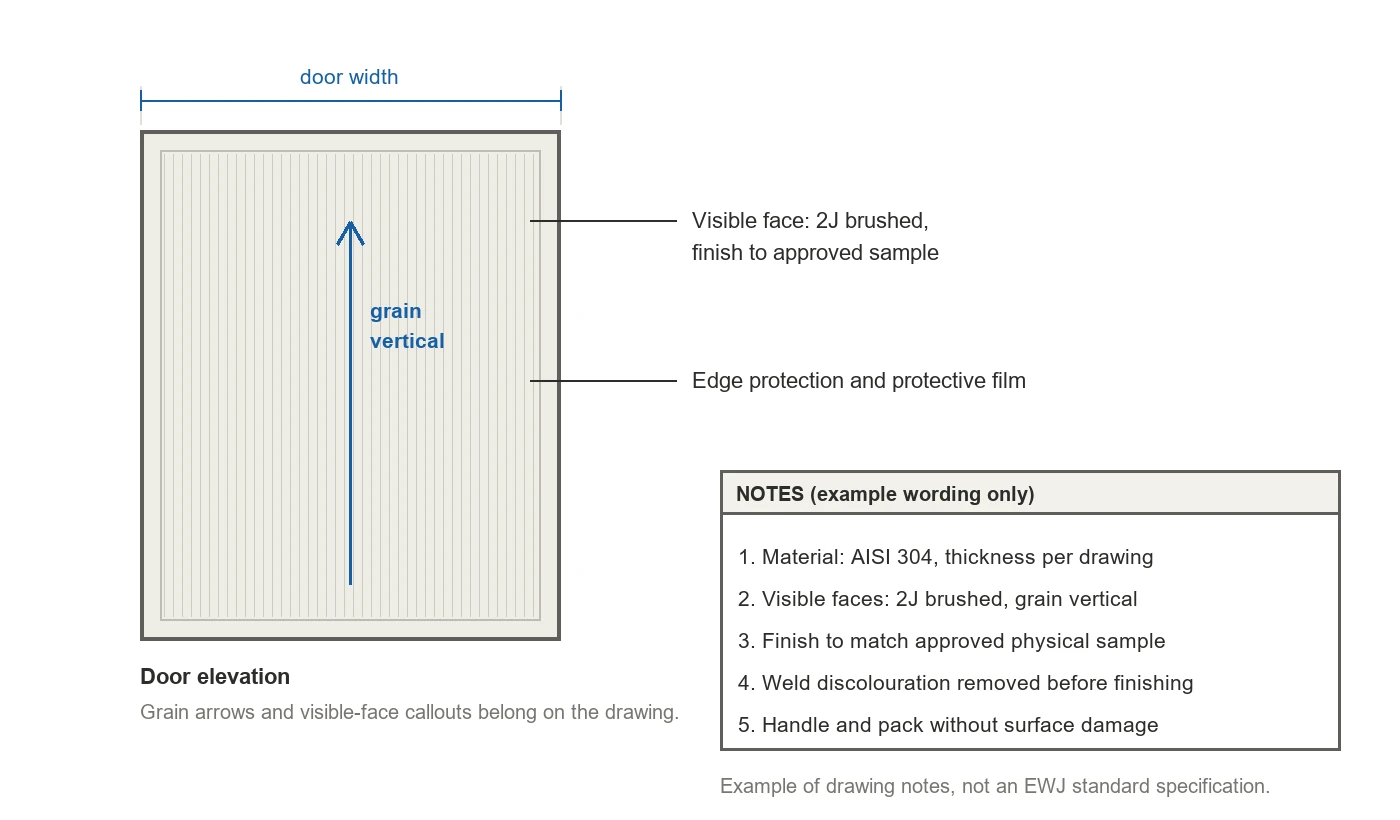
A clear finish specification prevents disputes about appearance and unnecessary rework. Include the following details in the quotation package:
- Material grade: For example, AISI 304 or 316, together with the applicable material standard where required.
- Nominal sheet thickness: State the thickness separately for the body, door, covers, and mounting plate where relevant.
- Finish designation: Identify 2B, 2R/BA, 2J, 2K, 2P, or another agreed finish. Avoid using only “brushed” or “polished” without clarification.
- Visible faces and grain direction: Identify the front, sides, internal surfaces, and desired direction of any brushed pattern.
- Surface acceptance criteria: Where necessary, define sample appearance, roughness (Ra), allowable scratches, and inspection conditions.
- Weld treatment: State the required appearance and post-weld cleaning or finishing expectations.
- Packaging and protection: Describe protective film, edge protection, and packing requirements for exposed finished surfaces.
A practical note might read: “External visible panels: AISI 304 stainless steel, nominal 1.5 mm, brushed finish to approved sample; vertical grain on doors; weld discoloration removed; protected during packing.” This is an illustrative purchasing note, not a complete engineering specification or a statement of EWJ’s standard offering.
For the full set of drawing and quotation requirements, refer to our Lista de comprobación del paquete de planos de la carcasa.
7. Does Surface Finish Affect Enclosure Cost and Lead Time?
It can. Different finishes may require different starting materials, abrasive operations, handling procedures, and inspection criteria. Large visible panels with strict cosmetic requirements may also require additional protection against scratches.
For example, a standard mill finish may require fewer appearance-related operations than a special directional polish. Matching welded sections to adjacent prefinished surfaces can add work. Small batches may also have different preparation economics than repeat OEM production.
However, there is no reliable universal percentage premium for a brushed, satin, or mirror finish. Material grade, sheet availability, finish specification, geometry, quantity, and supplier capability all influence the quotation.
Before placing an order, ask the manufacturer which finishes are available for the selected grade and thickness, whether a sample is recommended, and what is included in the finish inspection criteria.
8. Choosing a Custom Stainless Steel Enclosure Manufacturer
A useful manufacturing partner should be able to review the enclosure drawings, explain feasible finish options, and identify places where fabrication may affect the requested appearance. The goal is not merely to make the metal look polished; it is to achieve a consistent, manufacturable enclosure that meets the project’s real conditions of use.
EWJ fabrica carcasas de acero inoxidable a medida for electrical and industrial equipment applications. For OEM projects, customers can provide drawings showing material, dimensions, cutouts, mounting features, and finishing requirements for review.
A supplier quotation should clearly state which finishing steps are included and which, if any, need separate confirmation. Request an approved sample when the visible appearance or cleaning specification is critical.
Preguntas frecuentes
What is the most common stainless steel enclosure surface finish?
A 2B mill finish is a common starting surface for stainless steel sheet, while brushed surfaces are often specified for visible equipment housings. The right choice depends on whether the project prioritizes functional fabrication, appearance, or a measurable surface requirement.
Is a brushed stainless steel finish the same as No. 4?
Commercial No. 4 is commonly associated with a brushed or dull-polished finish, broadly corresponding to 2J terminology. However, the exact texture can vary by supplier and abrasive process. An approved sample or additional appearance specification is advisable.
What is the difference between 2B and BA stainless steel finishes?
2B is typically smooth, dull, and slightly reflective. BA, also known as 2R, is produced by bright annealing and is generally more reflective. Neither designation automatically means the finished enclosure has been mirror-polished after fabrication.
Is mirror-polished stainless steel always more corrosion resistant?
A smooth, properly processed surface can support cleaning and corrosion performance, but corrosion resistance also depends on the stainless steel grade, contamination, weld condition, geometry, and environment. A mirror appearance does not guarantee suitability for every coastal or chemical application.
Can an enclosure keep an IP65 or IP66 rating with a brushed finish?
A brushed finish does not by itself establish or invalidate an IP rating. The ingress-protection performance depends on the complete enclosure construction, including seals, doors, fasteners, joints, and cable entries, and on appropriate verification for the relevant configuration.
Do welded stainless steel enclosures need passivation?
The required treatment depends on welding conditions, surface contamination, and operating environment. Weld heat tint and other affected surface layers may need removal before a clean passive surface can be restored. Specify the required outcome and agree on the post-weld process with the fabricator.
What information should I send for a custom finish quotation?
Provide the stainless steel grade, sheet thickness, drawings, requested finish, grain direction, visible surfaces, weld-treatment requirements, quantity, and any roughness or appearance acceptance criteria. A sample photograph can be helpful, but an approved physical reference is often more reliable for critical cosmetic requirements.
Request a Custom Stainless Steel Enclosure Quote
A suitable stainless steel enclosure surface finish should balance appearance, fabrication feasibility, maintenance, and the real installation environment.
EWJ supports custom metal enclosure projects based on customer drawings and technical requirements. If you are specifying a stainless steel cabinet, junction box, or equipment housing, share your design and the finish you want to achieve. Our team can review the available manufacturing options and confirm the quotation scope.
Share your drawings, material grade and the finish you need. As a fabricante de armarios eléctricos a medida, EWJ reviews each requirement against the drawings before quoting. For an efficient review, please send:
- 2D drawings or 3D CAD files
- Stainless steel grade and sheet thickness
- Required finish and visible surface locations
- Weld treatment and any surface roughness criteria
- Enclosure quantity and intended application