La arquitectura eléctrica de las cajas de distribución como eje de la estrategia energética
¿Y si el sistema eléctrico de su caja de distribución no fuera sólo una caja de seguridad, sino un activo estratégico? En muchos proyectos, las cajas de distribución se consideran hardware pasivo, se especifican tarde en el proceso de diseño y se eligen principalmente por el precio. Esta mentalidad es cada vez más arriesgada. A medida que los sistemas eléctricos se descentralizan, se basan en los datos y se vuelven más fiables, la caja de distribución se ha convertido en una decisión estructural que afecta al tiempo de actividad, la escalabilidad, el cumplimiento de las normativas e incluso los costes operativos.
En este artículo cambiaremos de perspectiva. En lugar de preguntar “¿Qué caja de distribución necesito?”, exploraremos “¿Qué papel debe desempeñar la caja de distribución en mi estrategia eléctrica?”.” Este enfoque es especialmente relevante para operadores industriales, EPC, gestores de instalaciones y compradores comerciales que evalúan el valor a largo plazo en lugar del coste a corto plazo.
Por qué el diseño eléctrico de las cajas de distribución ya no es una mercancía
Tradicionalmente, un caja de distribución eléctrica se consideraba un componente normalizado. Si se ajustaba a los disyuntores y cumplía los valores nominales de tensión, era “suficientemente buena”. Esta suposición ya no es válida.
Los entornos energéticos actuales están determinados por:
- Cargas variables
- Automatización y control digital
- Objetivos de eficiencia energética
- Mayor presión sobre la seguridad y el cumplimiento
En este contexto, la caja de distribución se convierte en el interfaz entre la infraestructura energética y la inteligencia operativa. Las malas decisiones de diseño propagan los problemas aguas abajo: viajes molestos, puntos ciegos de energía, retrasos en el mantenimiento y capacidad de expansión limitada.
| Perspectiva antigua | Perspectiva moderna |
|---|---|
| Recinto pasivo | Nodo activo del sistema |
| En función de los costes | Riesgo y ciclo de vida |
| Configuración fija | Escalable y modular |
| Inspección manual | Supervisión basada en datos |
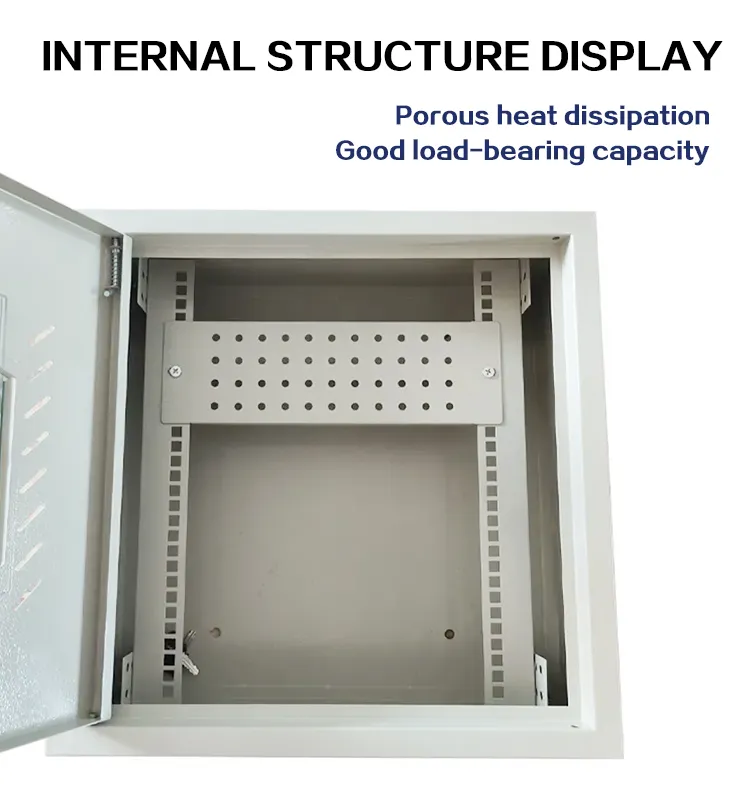
Cajas de distribución como instrumentos de gestión de la carga
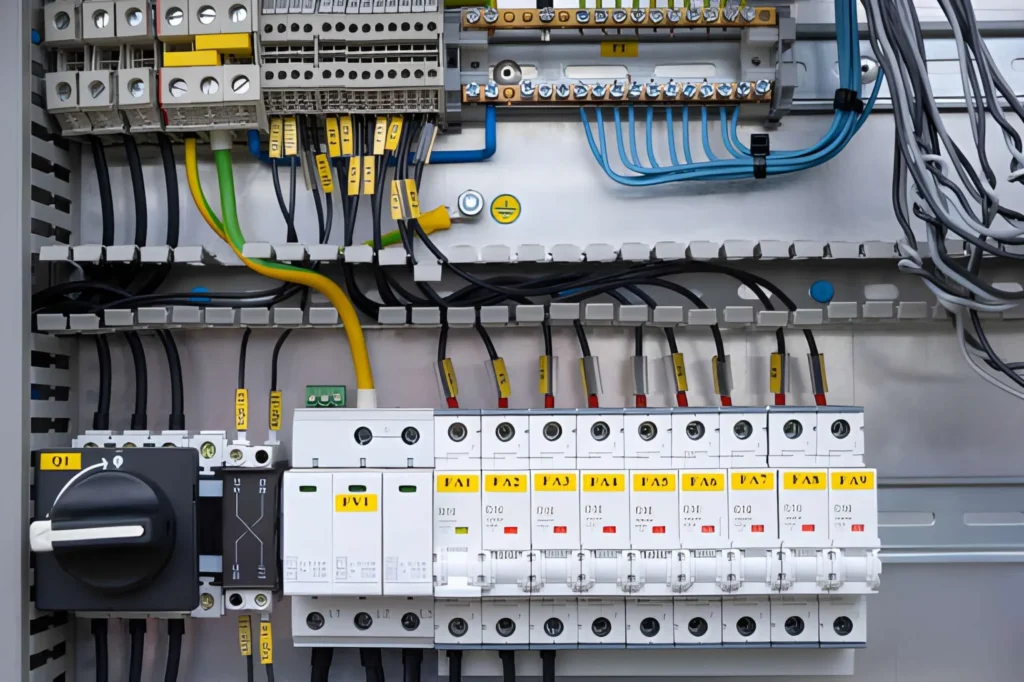
Una función que se pasa por alto de un sistema eléctrico con caja de distribución es orquestación de la carga. No sólo divide la potencia, sino que define cómo interactúan las cargas bajo tensión.
En entornos industriales y comerciales, la distribución desigual de la carga provoca:
- Sobrecalentamiento de los conductores
- Desgaste prematuro del martillo
- Reducción de la calidad de la energía
Las cajas de distribución bien diseñadas solucionan este problema:
- Equilibrio de fases adecuado
- Circuitos dedicados para cargas sensibles
- Agrupación lógica basada en el comportamiento de la carga
Esto es especialmente crítico en instalaciones con:
- Motores y variadores de frecuencia
- Sistemas de calefacción, ventilación y aire acondicionado
- Equipos de datos y control
| Tipo de carga | Riesgo si se gestiona mal | Respuesta del diseño |
|---|---|---|
| Motores | Picos de corriente de irrupción | Comederos separados |
| Equipos informáticos | Fluctuación de tensión | Circuitos aislados |
| HVAC | Carga máxima simultánea | Protección escalonada |
El papel estructural de los cerramientos y los materiales
Cuando se evalúa una solución eléctrica de caja de distribución, a menudo se subestima el diseño del armario. Sin embargo, el fallo del armario es una de las causas más comunes de degradación del sistema.
La elección del material afecta directamente:
- Disipación del calor
- Resistencia a la corrosión
- Durabilidad mecánica
Los materiales de cerramiento más comunes son:
- Acero con recubrimiento en polvo para uso industrial en interiores
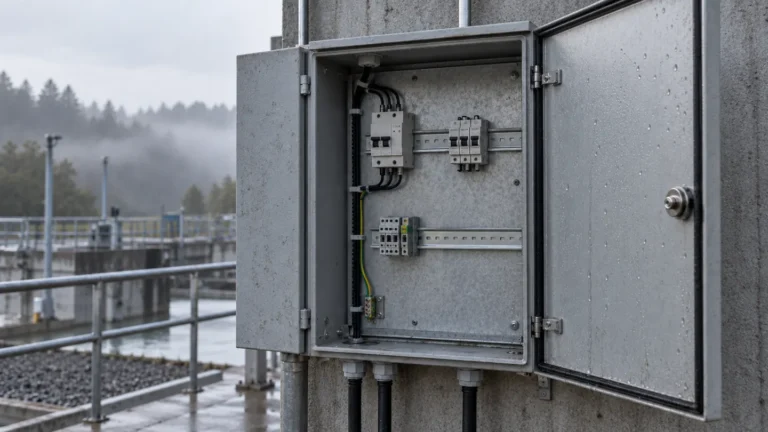
- Acero inoxidable para entornos corrosivos
- Plástico reforzado para aplicaciones ligeras o resistentes a productos químicos
La protección contra la penetración no se limita a la lluvia o el polvo. Se trata de mantener unas condiciones internas predecibles así que disyuntores y los contadores cumplen las especificaciones.
| Medio ambiente | Grado IP recomendado | Riesgo típico |
|---|---|---|
| Interior limpio | IP30-IP40 | Contacto accidental |
| Interior industrial | IP54 | Entrada de polvo |
| En el exterior | IP65+ | Humedad, exposición a los rayos UV |
Integración con contadores eléctricos y sistemas de datos
Los modernos sistemas eléctricos de cajas de distribución sirven cada vez más como centros de medición. La integración de los contadores eléctricos en el nivel de distribución permite obtener información que la medición previa no puede proporcionar.
En esta capa, los medidores de potencia pueden:
- Seguimiento del consumo a nivel de circuito
- Identificar las ineficiencias por zona o proceso
- Apoyar la imputación interna de costes
A diferencia de los contadores de las compañías eléctricas, los contadores a nivel de distribución ayudan a responder cuestiones operativas:
- ¿Qué línea de producción consume más energía?
- ¿Dónde se originan realmente las cargas punta?
- ¿Qué circuitos están infrautilizados?
Estos datos se vuelven procesables cuando se combinan con:
- Sistemas de gestión de edificios
- Software de gestión de la energía
- Planes de mantenimiento preventivo
Cajas de distribución inteligentes: De la protección a la predicción
El auge de los diseños eléctricos de cajas de distribución inteligentes marca un cambio de la protección a la predicción. En lugar de reaccionar ante los fallos, ahora los sistemas se anticipan a ellos.
Las funciones inteligentes pueden incluir:
- Control de corriente y temperatura en tiempo real
- Información sobre el estado del interruptor
- Alarmas y diagnósticos a distancia
Esto es especialmente valioso en:
- Instalaciones no tripuladas
- Activos distribuidos
- Entornos críticos de tiempo de actividad
| Capacidad | Beneficio operativo |
|---|---|
| Control remoto | Reducción del trabajo de inspección |
| Análisis de tendencias de carga | Planificación de capacidades |
| Alertas tempranas de avería | Prevención de paradas |
Aunque no todos los proyectos necesitan una digitalización completa, ignorar las opciones inteligentes puede limitar futuras actualizaciones. Incluso los diseños básicos preparados para la comunicación conservan la flexibilidad.
La conformidad es un requisito de diseño, no una casilla de verificación
La conformidad eléctrica se trata a menudo como un paso de aprobación. En realidad, es un marco de diseño que da forma al sistema eléctrico de la caja de distribución desde el principio.
Influencia de las normas:
- Distancias internas y líneas de fuga
- Selección de componentes
- Etiquetado y documentación
En función del mercado y la aplicación, las normas pertinentes pueden incluir:
- IEC para proyectos internacionales
- UL para los mercados norteamericanos
- Códigos eléctricos locales
Un diseño conforme hace algo más que pasar la inspección. Lo hace:
- Simplifica el mantenimiento
- Reduce la responsabilidad
- Mejora la aceptación en los sectores regulados
| Área de conformidad | Impacto práctico |
|---|---|
| Etiquetado claro | Solución de problemas más rápida |
| Componentes certificados | Rendimiento previsible |
| Documentación | Auditorías más fáciles |
Escalabilidad: Diseñar para la segunda vida del sistema
Uno de los errores más caros es diseñar un sistema eléctrico de caja de distribución que sólo se ajuste a las necesidades actuales. La expansión rara vez es hipotética: es esperada.
El diseño escalable tiene en cuenta:
- Capacidad del disyuntor de repuesto
- Distribución interna modular
- Espacio físico para futuros contadores o módulos de comunicación
Incluso una previsión modesta puede evitar una sustitución completa más adelante. Si prevé un crecimiento, merece la pena estudiar desde el principio las configuraciones modulares o ampliables. Una breve consulta técnica puede aclarar qué nivel de preparación para el futuro tiene sentido para su aplicación.
Criterios estratégicos de selección más allá del precio
Cuando las cajas de distribución se evalúan únicamente en función del coste unitario, se acumulan los riesgos ocultos. Una evaluación más estratégica tiene en cuenta:
- Coste del ciclo de vida
- Riesgo de inactividad
- Accesibilidad para el mantenimiento
- Visibilidad de los datos
| Criterio | Enfoque a corto plazo | Enfoque estratégico |
|---|---|---|
| Precio | El más bajo por adelantado | Ciclo de vida total |
| Diseño | Fijo | Modular |
| Supervisión | Ninguno | Opcional/preparado |
| Mantenimiento | Reactivo | Preventivo |
En este cambio de mentalidad es donde los compradores experimentados separan el hardware básico de los activos de infraestructura.
Perspectiva final
Un sistema eléctrico con caja de distribución ya no es sólo una caja en la pared. Es un elemento estructural de su estrategia energética, que influye en la seguridad, la eficiencia, la escalabilidad y el conocimiento. Cuando se diseña con intención, se convierte en una plataforma en lugar de una limitación.
Al replantearse la forma de evaluar las cajas de distribución -desde los componentes pasivos hasta los nodos activos del sistema- se obtiene un mejor control del riesgo y el rendimiento. Y en una era en la que la fiabilidad energética y la visibilidad de los datos importan más que nunca, este cambio no es sólo inteligente. Es necesario.
Preguntas frecuentes
¿Por qué instalar contadores eléctricos dentro de una caja de distribución?
Porque la medición a nivel de distribución proporciona información detallada sobre cómo se utiliza realmente la energía en los circuitos, no sólo sobre el consumo total.
¿Los contadores eléctricos inteligentes requieren disyuntores inteligentes?
No necesariamente. Muchos contadores funcionan de forma independiente y pueden instalarse posteriormente en las cajas de distribución existentes.
¿Pueden los contadores eléctricos mejorar el control de la calidad de la energía?
Sí. Los contadores avanzados pueden detectar desequilibrios de tensión, armónicos y anomalías de carga.
¿Son necesarios los contadores eléctricos en las pequeñas instalaciones comerciales?
Aunque no son obligatorias, cada vez se utilizan más para controlar los costes y optimizar el consumo energético, incluso en las instalaciones más pequeñas.
¿Con qué frecuencia deben calibrarse los contadores de energía eléctrica?
Esto depende de las normas y la aplicación, pero los medidores industriales suelen seguir calendarios de calibración periódicos definidos por los requisitos de conformidad.