Why Condensation Forms in Electrical Enclosures
Condensation in electrical enclosures can appear even when a cabinet seems properly sealed. An installer opens the door after a cool night and finds droplets on the inner wall, a damp mounting plate, or moisture around terminals. The first assumption is often a failed gasket. Sometimes it is. But moisture can also come from humid air already inside the enclosure, air exchanged as the enclosure warms and cools, or water entering through a cable entry.
The correct solution depends on where the moisture came from. Adding more sealant to every joint will not solve a dew-point problem, and installing a heater will not fix a leaking gland plate. This guide explains how to distinguish the causes and what to specify when designing an 屋外用電気盤.
What causes condensation inside an electrical enclosure?
Air contains water vapor. When warm, humid air meets a surface cold enough to fall below its dew point, some of that vapor becomes liquid water. A metal enclosure can cool quickly overnight or during a cold washdown. Moisture then collects on the inner door, roof, walls or components. Equipment may generate heat during operation and cool after shutdown, creating another temperature cycle.
The enclosure does not have to be visibly flooded. Small amounts of internal moisture can repeatedly condense and evaporate. Over time, this can contribute to corrosion and equipment faults. The risk depends on ambient humidity, enclosure temperature, installation conditions and the equipment inside.
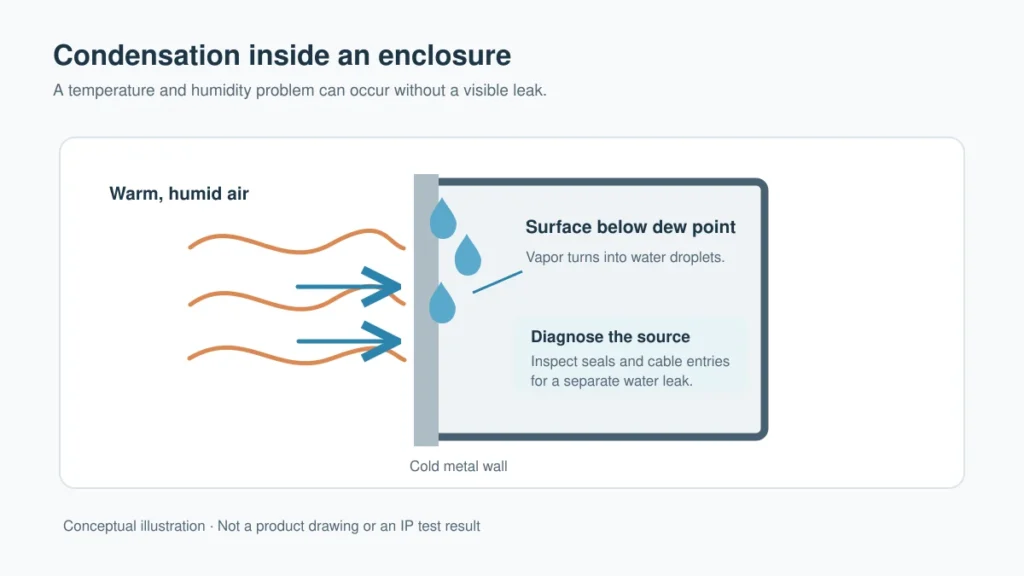
Before changing the design, distinguish three common situations:
| What you observe | Possible cause to investigate | First check |
|---|---|---|
| Droplets on several cold internal surfaces, often after temperature changes | Condensation of humid internal air | Log temperature and relative humidity over a full operating cycle |
| Local wet patch below a door corner, top seam or cable entry after rain | Water ingress | Inspect the relevant seal, cutout, fastener and cable gland |
| Moisture returns after each washdown or shutdown | Repeated thermal cycle, washdown exposure or both | Compare timing of moisture with cleaning and equipment operation |
These are diagnostic clues, not a substitute for inspecting the installed assembly. If moisture could affect energized equipment, arrange inspection under the site’s electrical safety procedures.
Why an IP-rated enclosure may still have moisture inside
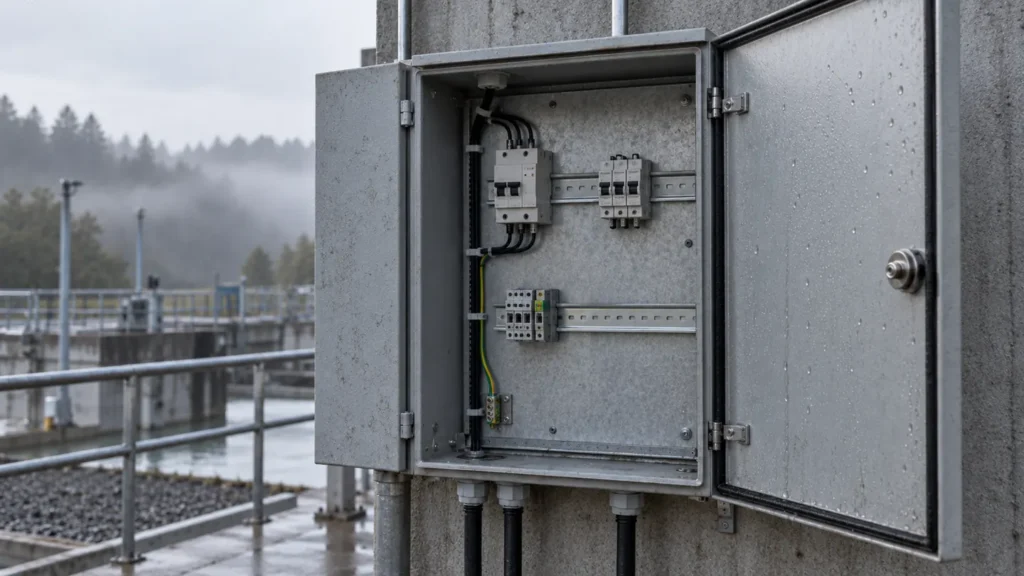
An IP rating describes tested resistance to entry of solids and water under specified conditions. It is not a statement that the air inside will never reach its dew point. An IP65 or IP66 enclosure can still experience internal condensation as temperatures change. Site modifications can also compromise the intended protection: an unsealed cable cutout, an incompatible gland, a misaligned door or a damaged gasket creates a different problem from condensation.
Treat ingress control and humidity control as related design tasks. First confirm the door, seams and every penetration meet the project’s protection needs. Then evaluate whether climate control is necessary for the actual temperature and humidity profile.
How to reduce condensation in electrical enclosures
1. Keep unwanted water out
Check the door gasket for continuous contact, correct seating and damage. Look closely at the top seam, hinge side and corners. Specify cable glands for the cable diameter and installation environment, and seal unused openings. If the enclosure uses a removable gland plate, check its perimeter seal as well as each individual entry. A box that was tested before additional holes were drilled may not perform the same way after modification.
For exposed installations, consider where rain, runoff and spray will strike the cabinet. Mounting orientation, overhangs and entry location can influence how much water the seals must resist. Bottom or protected cable entry can be useful where the layout permits, but routing and sealing must be reviewed as one system.
2. Control the internal temperature and humidity
Where dew-point condensation is the primary problem, an appropriately selected enclosure heater can keep internal surfaces warmer. A thermostat or humidity controller may help operate the heater only when conditions call for it. Specify the heater based on enclosure size, ambient conditions, heat generated by equipment and the required operating range; do not choose one solely by cabinet dimensions.
Cooling deserves equal care. Overcooling an enclosure can create another condensation risk, especially when warm humid air reaches cold surfaces. For larger heat loads, ask the panel designer to review the complete climate-control strategy, including how any condensate will be handled.
3. Review ventilation and pressure management
Ventilation can help with heat in some installations, but an ordinary open vent may admit humid air, dust or water and reduce the enclosure’s protection. A purpose-designed pressure-equalization or ventilation component may be appropriate for a specific application. Its location and rating must be evaluated as part of the finished enclosure, rather than assumed from the shell rating.
4. Design for inspection and maintenance
Leave access to inspect seals, cable glands, heater controls and any drain or climate-control accessory. Include those parts in a maintenance schedule. A compressed, dirty or torn gasket can change the enclosure’s behavior long after installation, while an extra field-drilled hole may go unnoticed in the original drawing set.
What to include in a custom enclosure specification
When requesting a custom outdoor electrical enclosure, describe the environment rather than writing only “waterproof box.” Give the supplier the installation location, expected temperature range, humidity and washdown exposure, target protection level, material preference, cable entry positions and internal equipment layout. State whether equipment runs continuously or shuts down overnight, and identify any heat-producing components.
These details help the fabricator plan the door and gasket arrangement, cutouts, gland plate, mounting structure and space for climate-control equipment. The enclosure shell and the electrical design team should agree on those interfaces before fabrication.
結論
Condensation in electrical enclosures is a moisture and temperature problem that must be diagnosed before it is corrected. Verify water ingress points first, then review the operating cycle, internal humidity and thermal design. For an outdoor project, specifying the enclosure’s seals, cable entries and climate-control space together makes the finished assembly easier to protect and maintain.
Planning a custom outdoor enclosure? Send EWJ your enclosure drawing, installation conditions and cable-entry requirements so the team can review the housing design for your project.
よくある質問
Can condensation form in an IP65 electrical enclosure?
Yes. An IP rating addresses ingress under defined test conditions; it does not eliminate humidity already inside the enclosure or stop a cold internal surface from reaching the dew point.
Is a heater always needed to prevent enclosure condensation?
No. Start by identifying whether the moisture is condensation or water ingress. Heating may help when dew-point condensation is the cause, but equipment heat, ambient conditions and the complete enclosure design determine the appropriate solution.
Will adding a vent solve condensation?
Not automatically. An unsuitable vent can allow humid air or water into the enclosure and affect its protection. Review any vent or pressure-management component against the exposure conditions and intended assembly rating.
What should I send a manufacturer for a condensation-prone project?
Send enclosure drawings, ambient conditions, operating cycle, internal heat load, target protection level, cable-entry layout and the location of any heater, thermostat or ventilation component.