NEMAエンクロージャーの保護等級解説:適切な保護レベルの選び方
NEMAのエンクロージャー規格を理解せずに電気エンクロージャーを選定するのは、天気予報を確認せずにジャケットを買うようなものです。運が良ければ問題ないかもしれませんが、そうでなければ、機器が凍結したり、部品が腐食したりして、多額の費用がかかるやり直しを余儀なくされることになるかもしれません。.
このガイドでは、各評価レベルについて、どのような脅威から保護するのか、どのような場面で有効なのか、またいつアップグレードやダウングレードを行うべきかについて詳しく解説します。.
電気工事においてNEMA規格が重要な理由
不適切な筐体を選んでしまうと、2つの事態が起こります。必要のない保護機能に無駄な出費をしてしまうか、あるいは仕様が不十分で、数ヶ月後に機器が故障してしまうかのどちらかです。どちらのケースも費用がかかりますが、どちらも回避可能です。.
全米電気機器製造業者協会は、まさにこの問題を解決するために評価制度を策定しました。. NEMAエンクロージャー保護等級 筐体がどのような環境に対応できるかを定義します――固体物、水、粉塵、腐食、さらには水没などです。各等級の数値は特定の試験条件に対応しているため、エンジニアや購買担当者は公平な基準で各オプションを比較することができます。.
ここで、多くの人が見落としがちなポイントがあります。それは、数値が大きいからといって、必ずしも保護性能が高いとは限らないということです。NEMA 4の筐体は、NEMA 12よりも耐水性に優れています。12の方が数字が大きいように聞こえますが、このシステムは直線的なものではなく、カテゴリー別に分類されているのです。この点を理解すれば、選定ははるかに簡単になります。.
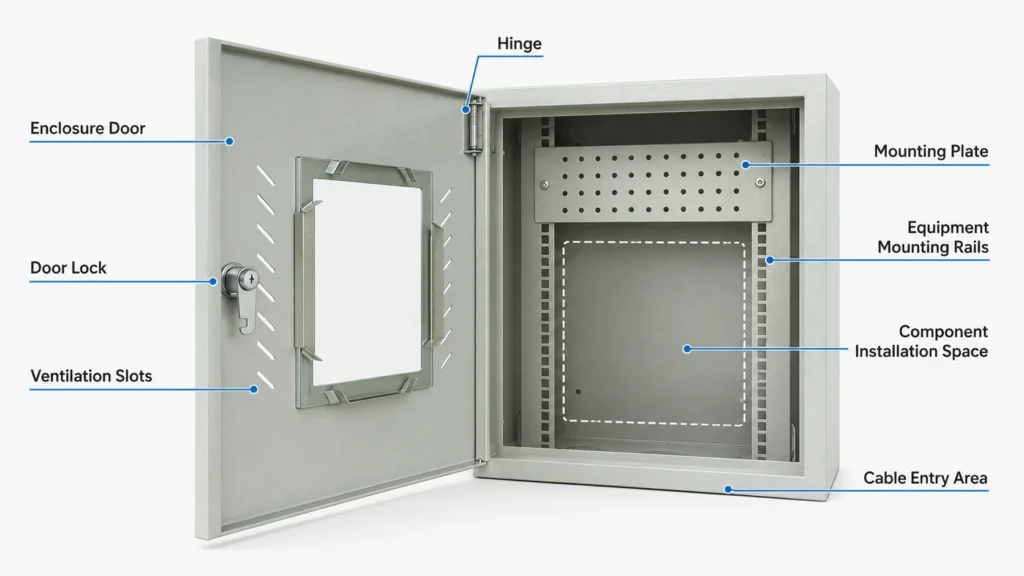
屋内用筐体の保護等級:基本等級から防塵等級まで
NEMA 1 および 2:エントリーレベルの屋内用保護等級
管理された環境については、ここから始めましょう。NEMA 1規格のボックスは、通電中の部品に指や落ちた汚れが入り込むのを防ぎます。それだけです。防水機能も防塵シールもありません。清潔なオフィスビルや乾燥した設備室内の電気盤を想像してください。.
NEMA 2では、わずかな機能強化が加えられています。具体的には、水滴や軽い水しぶきからの保護です。ただし、雨には対応していません。これは屋内の結露が発生する環境を対象としています。洗濯室や、空調設備の近くにある機械室など、湿気が表面に結露する場所が該当します。筐体が乾燥した空調管理された部屋に設置されている場合は、NEMA 1で十分です。 時折湿気が発生する環境ですか? その場合はNEMA 2にグレードアップしてください。.
NEMA 12 および 13:粉塵、水滴、および冷却液からの保護
2桁の数字が付いているにもかかわらず、NEMA 12は基本的な屋内用規格です。これは、沈着する粉塵、糸くず、繊維、および滴り落ちる水から保護するものです。風で飛散する異物に対する保護はありません。それは屋外での懸念事項です。 これは、浮遊粒子が風で舞い回るのではなく、沈着する環境において、NEMA 1よりも一段上の規格だと考えてください。気流が制御された製造現場は、このカテゴリーにうまく当てはまります。.
NEMA 13は、同等の保護性能に加え、油や冷却液に対する防滴性能を備えています。潤滑油が飛び散る機械の近くで使用するのに適しています。金属加工設備、プレスライン、または冷却液供給システムを備えた工場などでその効果が発揮されます。.
経験則として、12や13という数字が高く感じられる場合は、これらが屋内専用規格であることを覚えておいてください。屋外にさらされると耐えられません。NEMA 4規格のボックスはこれら両方を上回る性能を発揮しますが、その番号付けは混乱を招くことについて何の言い訳もしていません。.
NEMA 5:めったに出会えない「粉塵対策のスペシャリスト」
NEMA 5は、屋内の粉塵の多い環境を対象としています。セメント工場、製鉄所、穀物取扱施設などが該当します。ガスケットは粒子状物質を遮断しますが、水は遮断しません。実際には、NEMA 5を指定する人はほとんどいません。なぜでしょうか? そもそもガスケットが必要な場合、メーカーはより高い規格であるNEMA 4の認証取得を目指すからです。 同じ金型コストでより高い保護性能が得られるからです。そのため、NEMA 5は理論上は存在しますが、カタログで見つけるのは困難でしょう。.
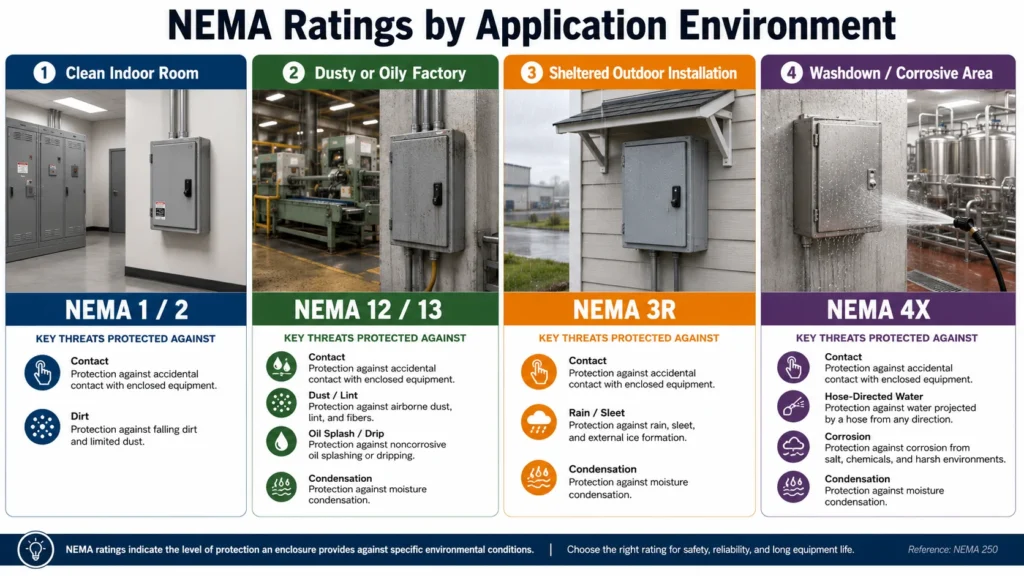
屋外用エンクロージャー:雨、みぞれ、およびホースでの水洗いに対する保護機能
NEMA 3、3R、および3S:過酷な気象条件に耐える
屋外に出ると、NEMA 3が基準となります。風で舞い上がる粉塵、雨、みぞれ、雪から内部を保護します。ガスケット付きのカバーがその役割を果たします。氷が形成されても筐体自体は損傷しませんが、外部の機構が凍結する可能性があります。.
NEMA 3Rは防塵性能を省いていますが、それ以外の性能(雨、みぞれ、雪、氷に対する耐性)はすべて維持されています。3R規格の筐体は、屋根の下など、屋外でも雨風をしのげる場所に設置された電気開閉装置、照明用コンタクタ、配電盤などで見られます。 この違いは重要です。プリント基板は、ブレーカーやコンタクタのような頑丈な電気部品よりも湿気に敏感だからです。空気中に浮遊する汚染物質が存在し、空気の流れが活発な場合は、追加費用をかけてでもNEMA 3を採用することをお勧めします。.
NEMA 3SはNEMA 3と同等ですが、ドアのラッチやハンドルなどの外部機構が、氷に覆われた状態でも確実に動作し続けることが保証されています。この設計では、通常、ラッチを上部から保護するとともに、凍結しても固着しない水平方向に動く金具が採用されています。.
「X」の意味:耐食性
NEMA規格の等級名に「X」が付くものはすべて、耐腐食性が追加されています。NEMA 3X、3RX、3SXはいずれも、基本の等級に耐腐食性が加わっています。メーカーは、プラスチック製の筐体や、ヒンジやラッチにステンレス製の金具を採用することで、これを実現しています。.
沿岸の施設、海洋環境、化学薬品による洗浄が行われる食品加工工場――これらはまさに「X」の領域です。塩分を含んだ空気は、多くのエンジニアが予想するよりも早く標準的な筐体を腐食させてしまいます。プロジェクトの場所が海岸線から数マイル以内の場合は、最初から「X」の要素を考慮に入れておく必要があります。.
NEMA 4 および 4X:洗浄環境向けに設計
NEMA 4は、NEMA 3のすべての機能に加え、ホースによる放水に対する保護機能を備えています。その試験は極めて厳格で、1インチのノズルから毎分65ガロンの水が噴射されます。 これは決して穏やかな噴霧ではありません。醸造所、乳製品工場、食品加工工場など、清掃スタッフが高圧ホースで設備を洗浄するあらゆる施設では、最低でもNEMA 4規格の耐水性が求められます。.
NEMA 4Xは、この洗浄耐性と耐食性を兼ね備えています。屋外や工場での洗浄用途においては、4Xが標準的な選択肢となっています。プラスチック製の筐体により、コストを抑えることができます。つまり、耐食性のために鋼材の割高分を支払う必要がないのです。市場に出回っている屋外用耐候性筐体のほとんどが、この規格に準拠しています。.
水中用エンクロージャー:NEMA 6 および 6P
筐体が水没する可能性がある場合、NEMA 6および6Pが検討対象となります。どちらも一時的な水没から保護する仕様ですが、その違いは水深と水没時間にあります。.
NEMA 6は、時折の浸水に耐える仕様です。 UL-50試験規格では、水深6フィートでの30分間の浸漬が規定されています。この規格に適合させるには、密着性が高く連続したガスケットが必要であり、通常はカバーの継ぎ目全体に固形シリコーンを流し込んで形成されます。筐体が洪水が発生しやすい地域や、水が溜まる可能性のある施設に設置される場合、NEMA 6は十分な安全マージンを提供します。.
NEMA 6Pはさらに一歩進んでいます。水深は同じく6フィートですが、耐水時間は30分ではなく24時間です。また、耐腐食性機能も備わっています。これは、鉱山、マンホール、採石場など、単に最悪のシナリオとしてではなく、実際に長期間にわたり水にさらされる可能性が現実的にある場所向けの規格です。 試験の際にはコンジットコネクタを取り付ける必要があるため、設置方法自体が筐体そのものと同じくらい重要になります。.
危険場所対応等級:NEMA 7、8、9、および10
以上の内容はすべて、非危険環境に関するものです。爆発性ガスや可燃性粉塵が存在する可能性がある場合は、別の保護等級が適用されます。 NEMA 7はクラスI環境(爆発性ガスおよび蒸気)に対応しています。NEMA 9はクラスII(可燃性粉塵)を対象としています。NEMA 8は、部品を油に浸漬することで保護します。NEMA 10は鉱業用途を対象としています。.
危険場所用エンクロージャーを選定するには、クラスおよびディビジョン制度を理解する必要があります。クラス I、ディビジョン 1 とは、通常の運転中に危険物質が存在することを意味します。ディビジョン 2 とは、異常な状況下でのみ危険物質が漏出する可能性があることを意味します。各クラスはさらにグループに細分されており、例えばグループ B にはアンモニアやエタノールが含まれます。 分類を誤ると、エンクロージャーの定格は意味をなさなくなります。仕様を決定する前には、必ず当該エリアの分類を確認してください。.
NEMA規格とIP規格:その違いを理解する
欧州規格では、国際電気標準会議(IEC)が管理するIP(Ingress Protection)分類が採用されています。IP等級はNEMAと一見似ており、2桁の数字で防塵・防水性能を表していますが、その試験基準は異なります。NEMA 3規格の筐体は、IP45の要件を満たしているだけでなく、NEMAの試験が全体的により厳格であるため、その要件を上回っています。.
つまり、一方を単純に他方に置き換えることはできません。NEMA 4X規格のボックスとIP66規格のボックスは、一見すると同様の範囲をカバーしているように見えますが、同一のものではありません。世界市場をターゲットとする北米のメーカーは、多くの場合、両方の認証を取得しています。プロジェクトが国境を越える場合は、顧客や規制当局がどの規格を求めているかを確認してください。両者が同等であると勝手に決めつけないでください。.
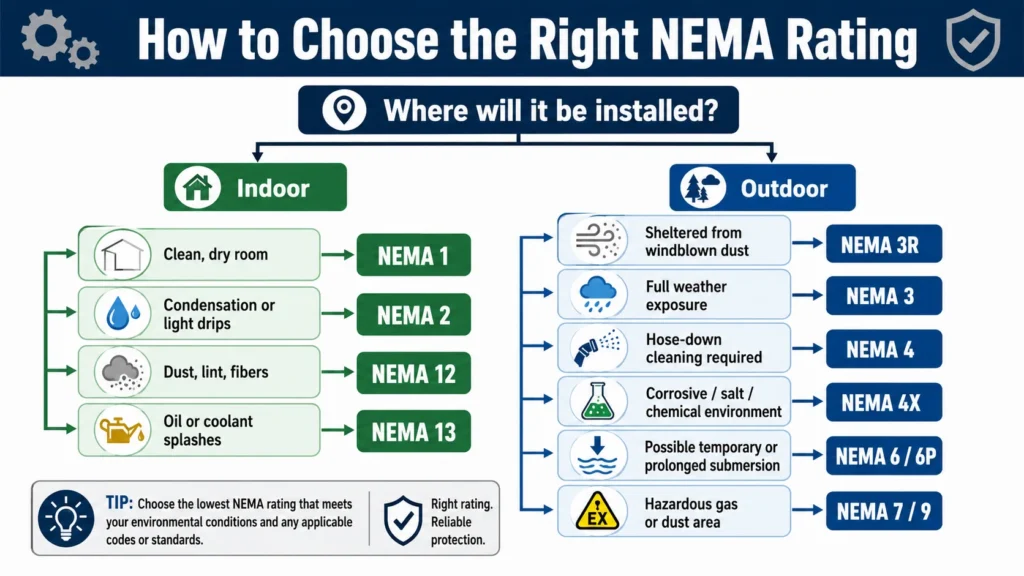
クイック選択ガイド:NEMA定格と用途の対応表
次回の仕様決定をスムーズに進めるための、実用的な参考表をご紹介します:
| 環境 | 主な脅威 | 推奨評価 |
|---|---|---|
| 清潔な屋内の部屋 | 不注意による接触、ほこりの落下 | NEMA 1 |
| 屋内(結露あり) | 水滴、湿気 | NEMA 2 または 12 |
| 工場フロア、管理下 | ほこり、糸くず、水滴の沈着 | NEMA 12 または 13 |
| 屋外、屋根付き | 雨、みぞれ、氷 | NEMA 3R |
| 屋外、直射日光が当たる場所 | 風で舞い上がるほこり、雨、雪 | NEMA 3 または 4 |
| 沿岸地域または腐食性のある地域 | 潮風、化学物質、湿気 | NEMA 4X(または3X) |
| 洗浄設備 | 高圧ホースの水 | NEMA 4X |
| 洪水被害を受けやすい、または水没の恐れがある | 一時的な水没 | NEMA 6 または 6P |
| 有害ガス環境 | 爆発性蒸気 | NEMA 7(クラスI) |
| 可燃性粉塵区域 | 爆発性微粒子 | NEMA 9(クラス II) |
定格を実際の脅威プロファイルに合わせて設定してください。乾燥した屋内のパネルにNEMA 4Xの筐体を過剰に仕様設定すると、予算の無駄になります。一方、沿岸部の屋外設置にNEMA 1のボックスを仕様不足で用いれば、早期の故障は必至です。最適な選択は常に環境条件に基づいて行われるべきであり、予算によって決まるものではありません。.
NEMA規格に準拠した特注エンクロージャーをお探しですか?今すぐお見積もりをご依頼ください
NEMA 1からNEMA 4Xまでのステンレス製エンクロージャーまで、EWJELEはお客様の仕様に合わせて製造いたします。最小注文数量(MOQ)の柔軟な対応、短納期、工場直販価格を実現しています。今すぐ図面をお送りください。.見積依頼
適切なNEMA規格に準拠した筐体を構築する
どの規格が適しているかお悩みですか?当社のエンジニアが、お客様に最適な筐体の選定と製作をお手伝いいたします。ステンレス製、ABS製、あるいは特注品も対応可能です。ご使用環境についてお知らせください。.エンジニアに相談する
特注ステンレス製筐体 — 仕様に合わせて製作
弊社では、304または316ステンレス鋼を使用した、あらゆるNEMA規格に対応した筐体を製造しています。完全なカスタマイズ、少量の最小発注数量(MOQ)、競争力のある価格、世界中への発送に対応しています。今すぐご利用ください。.プロジェクトを始めましょう
よくある質問
NEMA 4とNEMA 4Xの違いは何ですか?
NEMA 4とNEMA 4Xは、いずれもホースから噴射される水、風で飛来する粉塵、および雨から保護します。 主な違いは耐食性です。NEMA 4Xは耐食性が追加されており、沿岸地域、化学物質が存在する環境、および食品加工の洗浄エリアに適しています。NEMA 4Xの筐体は、通常、この耐食性を実現するためにプラスチックまたはステンレス鋼で作られています。.
NEMA 3R規格のエンクロージャーは屋外で使用できますか?
はい。NEMA 3Rは屋外での使用を想定して設計されており、雨、みぞれ、雪、および結氷から保護します。ただし、風で飛来する粉塵に対しては保護されません。 NEMA 3Rは、ひさしの下など、屋外でも風雨を避けられる場所で使用してください。風で飛来する粉塵や破片に完全にさらされる場合は、NEMA 3またはNEMA 4にアップグレードしてください。.
NEMA定格が高いほど、常に良いと言えるのでしょうか?
いいえ。NEMA規格の等級は直線的な関係にはありません。数値が高いからといって、必ずしも保護性能が高いとは限りません。例えば、NEMA 12は数値が高いにもかかわらず、基本的な屋内用規格です。NEMA 5が指定されることはほとんどありません。メーカーは、より汎用性の高いNEMA 4を好んで採用する傾向があるためです。常に、最高数値を追い求めるのではなく、具体的な環境上の脅威に合わせて適切な等級を選択してください。.
NEMA規格とIP規格は互換性がありますか?
必ずしもそうとは限りません。NEMA規格とIP規格では、それぞれ異なる試験基準が採用されています。NEMA 3規格の筐体はIP45の要件を満たしていますが、NEMAの試験の方がより厳格であるため、その要件を上回っています。プロジェクトが国境を越える場合は、クライアントや現地の規制でどの規格が要求されているかを確認してください。多くのメーカーは、両方の市場に対応するために、二重認証の取得を目指しています。.
洗浄環境では、どのNEMA規格の保護等級が必要ですか?
醸造所、乳製品工場、食品加工工場などの洗浄環境では、最低でもNEMA 4規格の製品を使用してください。その場所で腐食性の洗浄薬品を使用したり、塩分にさらされたりする場合は、NEMA 4Xを指定してください。4X規格は、ホースによる水流からの保護と耐食性を兼ね備えており、定期的に機器をホースで洗浄する施設では標準的な選択肢となっています。.
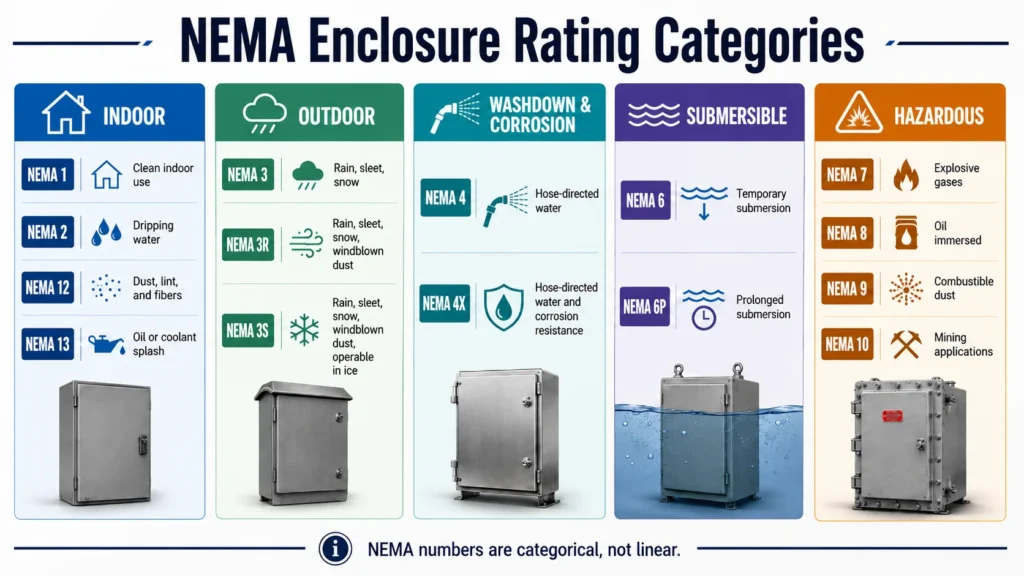
結論
適切なNEMA保護等級を選ぶには、たった一つの質問に尽きます。それは、「その筐体が実際にどのような環境にさらされるのか」ということです。屋内の粉塵、屋外の雨、沿岸部の塩分、工場での高圧洗浄、あるいは一時的な水没――それぞれの状況に応じて、特定の保護等級が求められます。 NEMAの番号は、保護レベルが連番になっているわけではないことに注意してください。NEMA 12は基本的なものです。NEMA 4Xは高度なものです。そして、「X」は常に耐食性を意味します。.
迷ったときは、予算ではなく脅威に見合った仕様を選びましょう。仕様が過剰なエンクロージャーは、初期費用が多少高くなります。一方、仕様が不十分なものは早期に故障し、その結果、ダウンタイムや交換費用、機器の損傷など、はるかに大きなコストがかかります。最初から適切な定格を選べば、エンクロージャーは長年にわたり内部の機器を保護し続けるでしょう。.