電気機器用筐体の板金厚さ:適切なゲージの選び方
Choosing the correct sheet metal thickness is an important part of electrical enclosure design. The thickness of the metal affects structural rigidity, resistance to deformation, product weight, fabrication costs, and the overall durability of the enclosure.
However, thicker sheet metal is not always the best solution. A small wall-mounted electrical box and a large industrial control cabinet have different structural requirements. Material type, panel dimensions, mounting conditions, and internal equipment loads must all be considered before selecting a suitable thickness.
This guide explains how to choose electrical enclosure sheet metal thickness, compare common material options, and specify the right requirements when ordering custom metal enclosures.
1. What Is the Typical Sheet Metal Thickness for an Electrical Enclosure?
There is no single thickness suitable for every electrical enclosure. The appropriate specification depends on the enclosure’s size, construction, material, and intended application.
For preliminary design and supplier discussions, common sheet metal thickness ranges include:
| Sheet Thickness | Typical Considerations |
|---|---|
| 0.8–1.2 mm | Small housings, compact covers, and panels with short unsupported spans |
| 1.2–2.0 mm | Many general industrial control and instrument enclosure shells |
| 2.0–3.0 mm | Larger fabricated panels and applications requiring greater structural rigidity |
These figures are indicative starting points rather than mandatory specifications. Actual requirements may fall outside these ranges depending on the enclosure design and applicable product standards.
For example, a compact wall-mounted enclosure may perform adequately with a relatively thin steel panel. A larger cabinet with wide doors, heavy internal equipment, or demanding installation conditions may require thicker material or additional reinforcement.
When selecting a thickness, evaluate the complete enclosure rather than choosing a sheet specification based on its external dimensions alone. This matters most for industrial コントロールパネル筐体, where component weight and access requirements vary widely from one project to the next.
2. What Factors Determine Electrical Enclosure Sheet Metal Thickness?
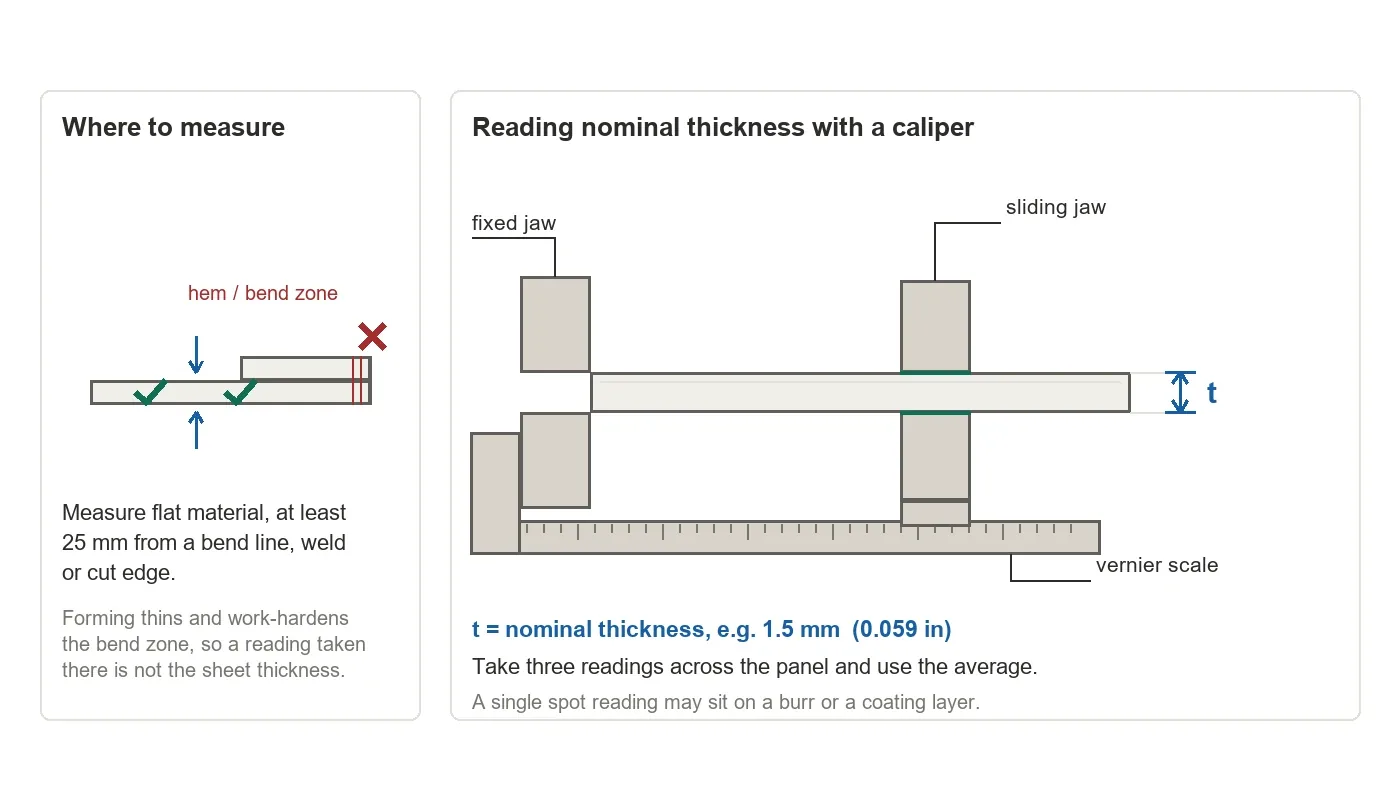
Several engineering factors influence the thickness required for an electrical enclosure.
Enclosure Size and Unsupported Panel Area
The dimensions of each panel directly affect its structural behavior.
A larger flat metal surface generally has a greater tendency to bend or vibrate under external forces than a smaller panel made from the same material and thickness.
For example, two electrical enclosures may have the same overall height and width, but different internal frame structures. The enclosure with additional supports may achieve better rigidity without requiring thicker sheet metal.
When evaluating panel dimensions, consider:
- Overall enclosure width, height, and depth
- Unsupported panel spans
- Flat surface areas
- Folded edges and return flanges
- Internal frames and reinforcement structures
Large enclosure doors and side panels deserve particular attention because excessive deflection can affect alignment and assembly.
If the panel size itself is still open, settle that first — our electrical enclosure sizing guide covers usable internal space and component layout, which then sets the spans the sheet has to carry.
Material Strength and Mechanical Properties
Different metals have different mechanical properties, so identical thicknesses do not necessarily provide identical performance.
一般的なエンクロージャーの素材は以下の通り:
- Carbon Steel: A cost-effective option for general industrial enclosures, typically requiring an appropriate protective finish.
- Galvanized Steel: Provides additional corrosion protection through its zinc coating and is commonly considered for electrical cabinets and outdoor applications.
- Stainless Steel 304 and 316: Suitable for applications requiring corrosion resistance, including humid, coastal, and washdown environments.
- Aluminum: Offers lower weight, good corrosion resistance, and high thermal conductivity for applications where weight and heat management are important.
Aluminum generally has a lower elastic modulus than steel, meaning that an aluminum panel of the same dimensions and thickness may deflect more under the same load. The alloy, temper, forming method, and structural design also influence its performance.
For this reason, changing from steel to aluminum should involve a design review rather than simply retaining the original thickness.
You can explore EWJ’s ステンレススチール製エンクロージャー, galvanized steel enclosures, 、および アルミ筐体 to compare available material solutions.
Mounting Method and Equipment Weight
An enclosure installed on a wall may have different structural requirements from a floor-standing cabinet.
The mounting arrangement affects how the enclosure transfers its weight and external loads to the supporting structure.
Consider the following:
- Wall-mounted enclosures: Check fixing points, rear-panel stiffness, and the weight of the complete assembly.
- Floor-standing cabinets: Evaluate the base structure, overall stability, and internal equipment loads.
- Pole-mounted enclosures: Consider mounting brackets, wind exposure, and additional forces acting on the supporting structure.
Internal components also matter. Heavy transformers, contactors, circuit breakers, and other equipment may require a stronger mounting plate or additional internal supports.
The mounting plate should therefore be evaluated separately from the enclosure body.
Door Size, Hinges, and Locking Structure
The enclosure door is another important structural component.
A large door may experience deflection during opening, closing, transportation, and normal operation. Its performance depends on several factors:
- Door width and height
- Sheet thickness
- Hinge number and positioning
- Locking-point arrangement
- Door-mounted components
- Gasket compression requirements
For weather-resistant enclosures, excessive door deformation can also affect gasket contact and sealing consistency.
Increasing sheet thickness is one possible solution, but folded edges, reinforcement ribs, and suitable hinge arrangements can also improve door rigidity.
Cutouts, Openings, and Structural Reinforcement
Electrical enclosures frequently require openings for cable glands, connectors, switches, ventilation, displays, and other accessories.
These openings remove material from the original panel and can reduce its local stiffness.
Large cutouts or multiple closely spaced openings may require additional consideration during the design stage.
A manufacturer should review:
- Cutout dimensions and locations
- Distance between openings and panel edges
- Distance between holes and bending lines
- Reinforcement around large openings
- Cable entry and removable gland plate construction
Proper structural planning helps avoid unnecessary deformation and manufacturing problems.
3. Should the Enclosure Body, Door, and Mounting Plate Have the Same Thickness?
Not necessarily.
Different enclosure components perform different functions and may require different thickness specifications.
| Enclosure Component | Main Design Considerations |
|---|---|
| Enclosure body | Overall dimensions, panel spans, mounting conditions, and structural rigidity |
| Front door | Door size, hinge loads, locking arrangement, and sealing requirements |
| Mounting plate | Weight of installed components, support points, and mounting hardware |
| Removable cover | Panel dimensions, fastening arrangement, and expected mechanical loads |
| Cable entry plate | Cable gland openings, fastening strength, and sealing arrangement |
For example, a mounting plate supporting multiple electrical components may require a different design from the enclosure’s external side panels.
Similarly, a large front door may benefit from folded edges or reinforcement ribs to reduce deformation.
Using different thicknesses for different components can help balance structural performance, material consumption, and manufacturing costs.
The final specifications should be confirmed through engineering review and, where necessary, mechanical testing.
4. What Happens If the Sheet Metal Is Too Thin or Too Thick?
Selecting an unsuitable thickness can create problems during both manufacturing and operation.
Problems Caused by Thin Sheet Metal
If the selected material is too thin for the enclosure structure, possible issues include:
- Panel deformation under external loads
- Door bending or misalignment
- Excessive vibration during operation
- Reduced rigidity around mounting points
- Difficulty maintaining consistent gasket compression
- Damage around heavily loaded fasteners or openings
These problems are particularly important for large panels and enclosures carrying heavy equipment.
Disadvantages of Excessively Thick Sheet Metal
Using thicker material than necessary also creates disadvantages.
- Higher material costs: Additional metal increases raw material consumption and finished product weight.
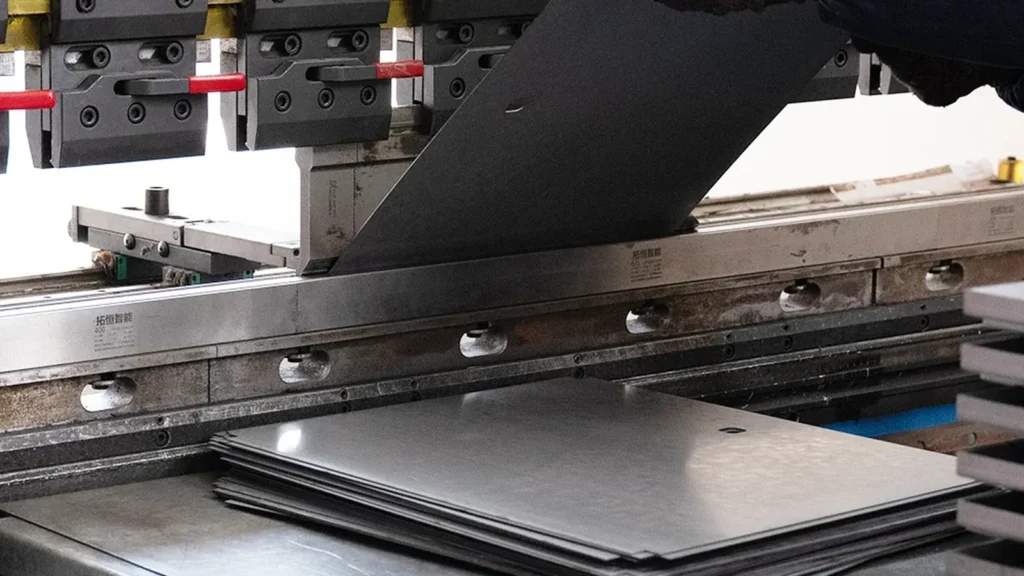
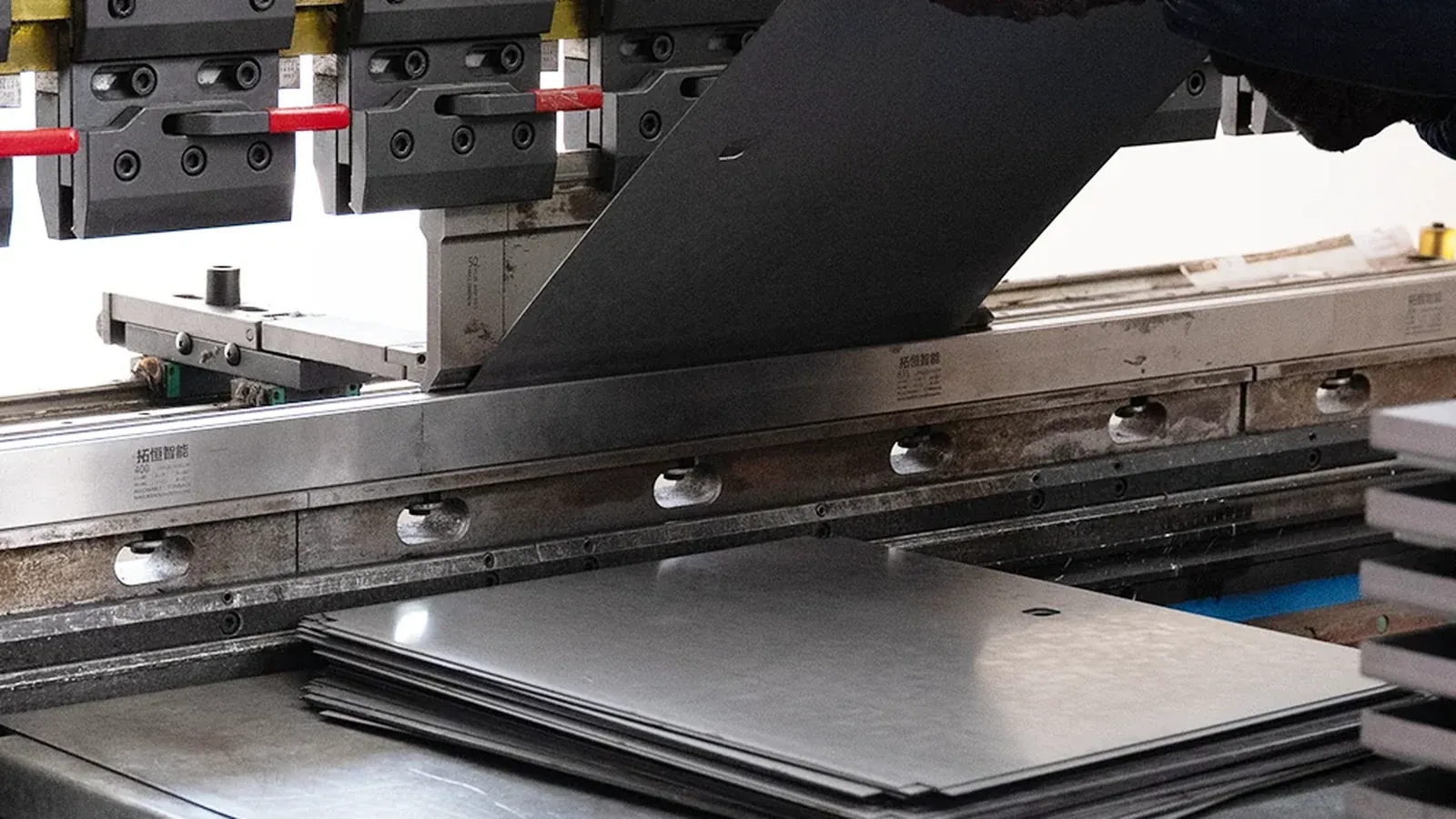
- More demanding bending operations: Thicker sheets generally require greater press brake capacity and appropriate bending tooling.
- Higher transportation costs: Heavy enclosures may increase packaging, handling, and freight expenses.
- More complex fabrication: Welding, cutting, and forming parameters may need adjustment when working with thicker materials.
The objective should be to achieve sufficient mechanical strength without creating unnecessary manufacturing costs.
Need Help Choosing the Right Enclosure Thickness?
The right sheet thickness depends on your enclosure dimensions, material, mounting requirements and structural design. Our team can review your requirements and discuss a suitable custom enclosure solution.
5. Can Structural Reinforcement Replace Thicker Sheet Metal?
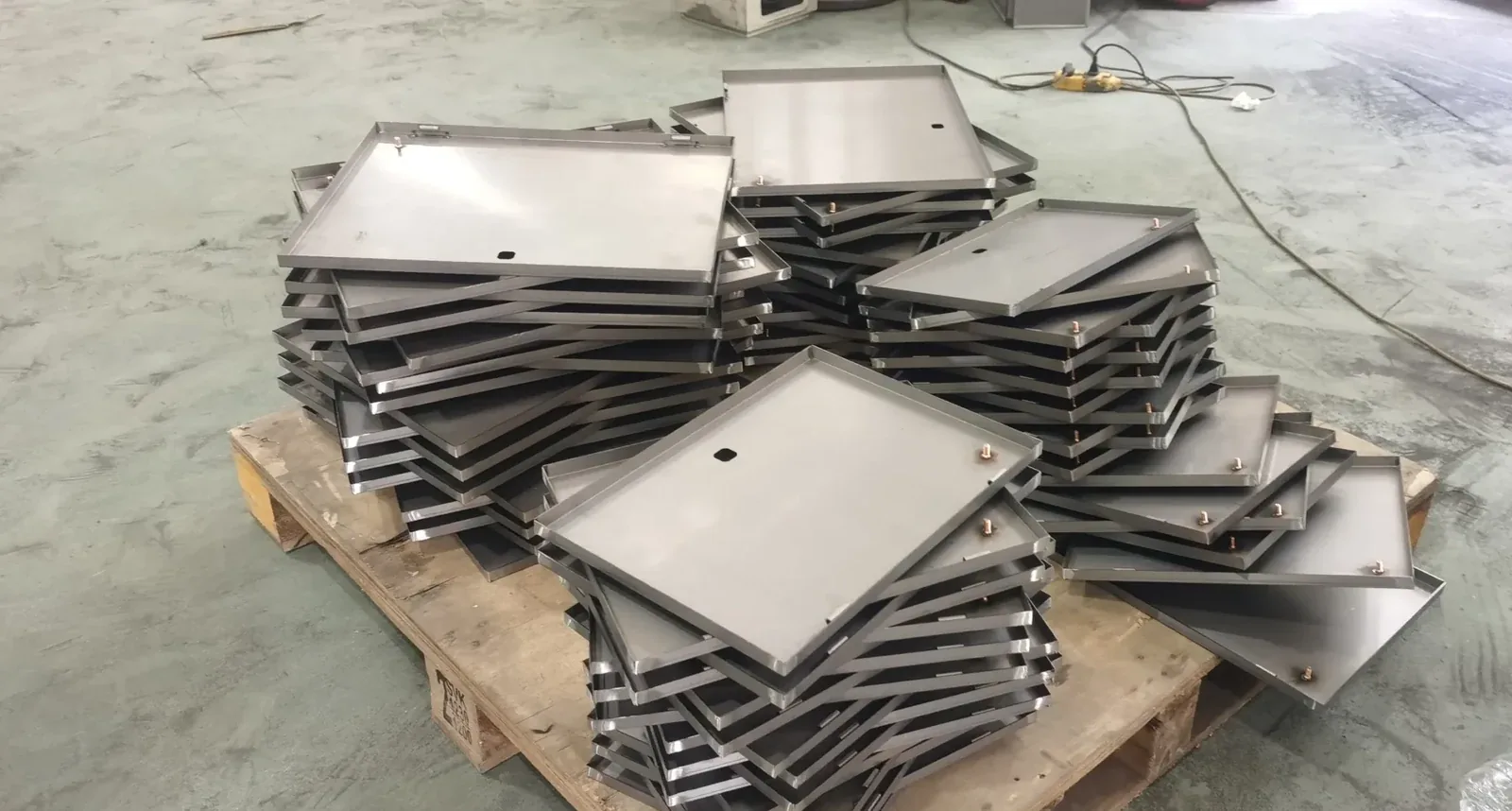
In some applications, yes.
Structural reinforcement can improve the rigidity of an electrical enclosure without increasing the thickness of every metal panel.
Folded Edges and Return Flanges
Bending the edges of a metal panel creates additional structural stiffness.
Return flanges are commonly used around enclosure doors, removable covers, and cabinet panels to improve rigidity and support assembly.
Reinforcement Ribs and Stiffeners
Reinforcement ribs and formed channels help reduce panel deformation, especially on larger flat surfaces.
They can be incorporated into the door or body during the sheet metal fabrication process.
Internal Frames and Support Brackets
Internal frames and brackets provide additional support for large enclosures and equipment mounting structures.
They can also help distribute loads across multiple structural points.
However, reinforcement should not be treated as an automatic substitute for minimum thickness requirements. Applicable electrical enclosure standards, customer specifications, and mechanical testing requirements must still be satisfied.
The most suitable solution depends on the complete enclosure design.
6. How to Specify Sheet Metal Thickness in a Custom Enclosure Drawing
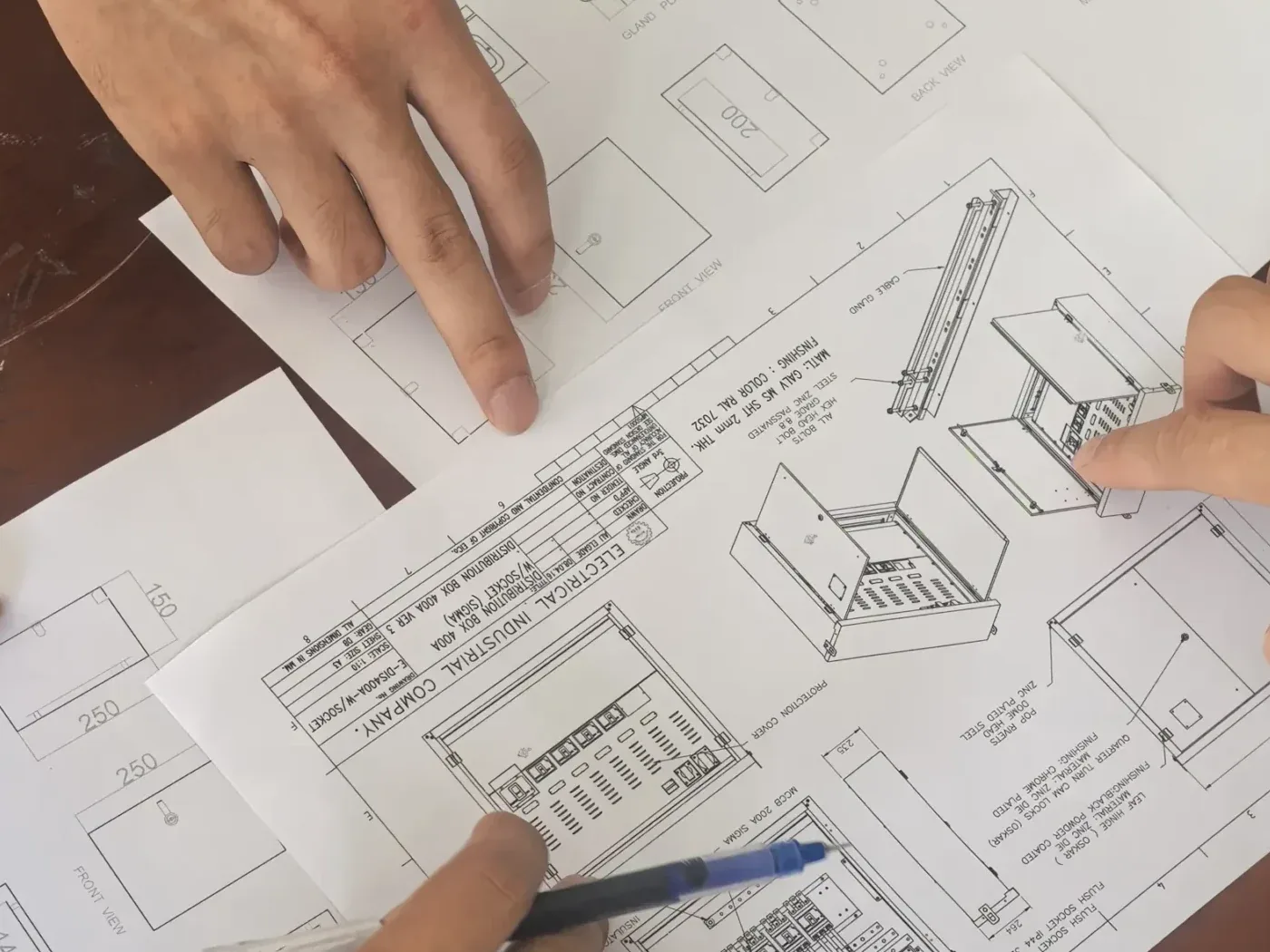
When ordering a custom electrical enclosure, providing clear material and thickness specifications helps prevent manufacturing misunderstandings.
A professional drawing package should include the following information.
Material Grade and Nominal Thickness
Do not simply write steel or aluminum.
Specify the material grade and nominal thickness for each component.
For example:
- Material: Stainless Steel 304
- Nominal Thickness: 1.5 mm
- Surface Finish: Brushed Finish
- Application: Industrial Electrical Enclosure
These details help the manufacturer select suitable fabrication methods and materials.
Separate Specifications for Different Components
If the enclosure body, door, and mounting plate have different requirements, list them separately in the technical drawing.
Avoid assuming that all components should automatically use the same thickness.
Bending and Fabrication Requirements
Sheet thickness affects bending operations, inside bend radius, tooling selection, and hole positioning.
The drawing should identify important bending dimensions and fabrication details.
For custom projects, the manufacturer should review the design to identify potential forming or assembly issues before production.
Tolerances and Surface Treatment
Also specify relevant dimensional tolerances, welding requirements, powder coating or other surface treatments, and areas that require masking.
For a more complete drawing preparation process, see our 筐体図面一式のチェックリスト.
Specify Millimeters or Inches Clearly
Some buyers use sheet metal gauge numbers instead of direct thickness measurements.
However, gauge-to-thickness conversions can vary depending on the material and measurement system.
For international OEM projects, specifying the nominal thickness in millimeters or inches is generally clearer. If gauge numbers are also provided, identify the applicable gauge standard and material.
7. How to Choose the Right Thickness for Your Electrical Enclosure Project
Before confirming a sheet metal specification, follow these practical steps:
- Identify the application: Determine whether the enclosure is intended for industrial control, power distribution, instrumentation, or another application.
- Select the material: Consider corrosion exposure, weight requirements, mechanical properties, and surface finishing.
- Review the enclosure dimensions: Evaluate panel spans, door dimensions, and structural support.
- Check mounting and equipment loads: Consider the weight of internal components, mounting arrangements, and external forces.
- Evaluate fabrication requirements: Review bending, welding, cutouts, reinforcement, and hardware installation.
- Confirm the specification: Check applicable standards and review the final design with the enclosure manufacturer.
If the exact thickness has not been determined, provide the enclosure drawings and application details to the manufacturer for an engineering review.
A suitable design should consider structural performance, fabrication feasibility, product weight, and overall project cost together.
よくある質問
What is the standard sheet metal thickness for electrical enclosures?
There is no universal thickness for every electrical enclosure. Common preliminary reference ranges are approximately 0.8–1.2 mm for small housings and 1.2–2.0 mm for many general control and instrument enclosure shells. Larger structures may require thicker material or additional reinforcement.
Is 1.2 mm steel thick enough for an electrical enclosure?
It can be suitable for certain compact steel enclosures, depending on their dimensions, construction, mounting method, and expected loads. Larger enclosures or those with wide unsupported panels may require a different specification.
Does an IP65 electrical enclosure need thicker sheet metal?
Not necessarily. IP65 protection depends on the complete enclosure design, including door gaskets, cable entries, joints, latches, and assembly quality. Increasing sheet metal thickness alone does not guarantee an IP65 rating.
Should the enclosure door and body have the same thickness?
No. The door and body may have different structural requirements. Door dimensions, hinge loads, locking points, and gasket compression should be evaluated separately when determining the appropriate thickness.
Is stainless steel stronger than galvanized steel for electrical enclosures?
The answer depends on the specific material grade and mechanical properties. Stainless steel and galvanized steel are selected for different reasons, particularly corrosion protection, environmental exposure, and cost. Thickness and structural performance should be evaluated according to the actual application.
Can a thinner metal enclosure be made stronger with reinforcement?
Yes, in some designs. Folded edges, reinforcement ribs, internal frames, and support brackets can improve structural rigidity. However, the finished design must still satisfy applicable standards and project requirements.
What information should I provide when requesting a custom enclosure thickness recommendation?
Provide the enclosure dimensions, preferred material, intended application, mounting method, expected equipment weight, and order quantity. A 2D engineering drawing or 3D CAD file will help the manufacturer review the design and recommend a suitable fabrication solution.
Need a Custom Electrical Enclosure?
Choosing the correct sheet metal thickness is only one part of designing a reliable electrical enclosure. Material selection, structural design, fabrication methods, and environmental requirements must work together.
EWJ provides OEM and ODM metal enclosure manufacturing for electrical and industrial equipment manufacturers.
Our customization options include:
- Carbon steel, galvanized steel, stainless steel, and aluminum
- Custom enclosure dimensions and structures
- Sheet metal cutting, bending, and welding
- Customized mounting plates, openings, and accessories
- Surface finishing and branding
- Prototype development and batch production
Whether you already have a complete engineering drawing or need assistance reviewing your enclosure specifications, our team can help evaluate your project requirements.
Send us your drawings and project details to discuss a suitable custom enclosure solution.
Get a Custom Electrical Enclosure Quote
Send us your enclosure drawings, material specifications and project requirements. EWJ builds custom electrical enclosures and provides OEM metal enclosure manufacturing based on your designs.
Please include:
- 2D drawings (PDF / DWG / DXF)
- 3D CAD files (STEP)
- Required material and sheet thickness
- Enclosure dimensions and mounting requirements
- Estimated order quantity