Explosion Proof Enclosure Comprehensive Guide
In industries where flammable gases, vapors, or combustible powders may be present, safety is not optional. It is a basic operational requirement.
Explosion proof enclosures are designed to contain sparks, flames, and internal pressure produced by electrical equipment. Their strong construction helps prevent an internal ignition from spreading into the surrounding hazardous atmosphere.
To improve safety in high-risk locations, it is important to understand the available enclosure types, applicable standards, installation requirements, and maintenance procedures.
This guide explains the key points you should know about explosion-proof enclosures and junction boxes.
1.What Is an Explosion-Proof Enclosure?
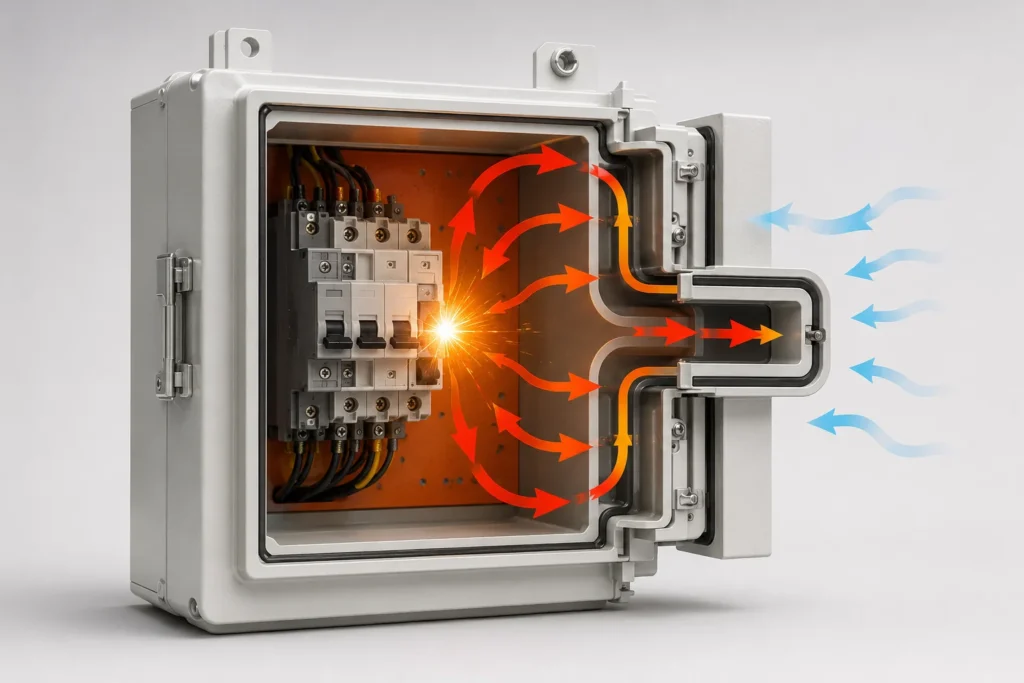
An explosion-proof enclosure is designed to contain sparks, flames, and hot gases produced by electrical equipment. It prevents these ignition sources from reaching a surrounding atmosphere that may contain flammable gas, vapor, or combustible dust.
These enclosures are widely used in oil and gas facilities, chemical processing plants, and woodworking operations. Such locations often contain materials that could ignite when exposed to heat or electrical sparks.
The term “explosion-proof” does not mean the enclosure cannot be damaged by an external explosion. Instead, it means the enclosure can contain an explosion that begins inside it and reduce the risk of ignition outside.
Explosion-proof enclosures are commonly made from strong materials such as steel or aluminum. Their walls, joints, seals, and covers are built to withstand high internal pressure and temperature.
Specially designed joints also allow hot gases to cool before they escape from the enclosure. This helps prevent the gases from igniting the surrounding hazardous atmosphere.
The enclosure design must meet strict safety requirements established by standards such as the National Electrical Code (NEC) and those issued by the International Electrotechnical Commission (IEC).
Explosion-proof enclosures commonly protect switches, motors, wiring connections, and other electrical components. Correct installation, regular inspection, and timely maintenance are essential for maintaining their protective performance.
2. Types of Explosion-Proof Enclosures
Explosion-proof enclosures can be grouped in three main ways:
- By material
- By protection rating
- By application
Each category affects the enclosure’s strength, corrosion resistance, heat tolerance, installation environment, and overall cost.
2.1 Types by Material
The enclosure material determines how well the product can withstand impact, pressure, heat, chemicals, moisture, and corrosion.
A. Steel Enclosures
Steel offers excellent mechanical strength and impact resistance. Depending on the grade and manufacturing process, its tensile strength may range from approximately 250 MPa to 2,000 MPa.
It is also easy to form, weld, and machine. This makes steel suitable for enclosures with complex structures or heavy-duty mounting requirements.
However, steel is relatively heavy. Its density is about 7.85 g/cm³. Untreated carbon steel may also corrode when exposed to moisture, salt, chemicals, or other aggressive conditions.
Steel is magnetic, which may affect certain sensitive electrical or electronic applications.
B. アルミ製エンクロージャー
Aluminum combines low weight with good strength and corrosion resistance. Its density is approximately 2.7 g/cm³, which is close to one-third that of steel.
This lower weight makes aluminum enclosures easier to transport, install, and maintain. Aluminum is also non-magnetic, making it useful around sensitive instruments and electrical equipment.
Its tensile strength generally ranges from about 90 MPa to 600 MPa. Although strong enough for many industrial applications, it does not provide the same impact or high-temperature performance as steel.
Aluminum melts at approximately 660°C, while many steel grades melt at temperatures above 1,370°C.
C. Stainless-Steel Enclosures
Stainless steel is preferred when corrosion resistance, mechanical strength, and high-temperature performance are required.
Its tensile strength commonly ranges from approximately 520 MPa to 1,200 MPa. Depending on the grade and operating conditions, it can also perform at elevated temperatures.
Stainless-steel explosion-proof enclosures are widely used in chemical processing plants, marine facilities, offshore platforms, food-processing areas, and other corrosive environments.
The main disadvantage is cost. Stainless steel is usually more expensive than carbon steel or aluminum, especially when higher grades such as 316 stainless steel are required.
D. Polycarbonate and Fiberglass Enclosures
Polycarbonate and fiberglass are lightweight, corrosion-resistant, and economical alternatives to metal.
Polycarbonate typically has a tensile strength of around 60 MPa. Fiberglass-reinforced materials may offer tensile strengths between approximately 200 MPa and 500 MPa.
These materials resist many chemicals and do not rust. They are often used for terminal boxes, instrument housings, electrical connections, and other applications where extreme impact or heat resistance is not required.
However, non-metallic enclosures may not perform as well as steel or stainless steel under severe pressure, high temperatures, strong mechanical impact, or prolonged exposure to harsh industrial conditions.
Material selection must therefore be based on the enclosure’s certification, installation area, operating temperature, and expected environmental exposure.
2.2 Types by Protection Rating
Explosion-proof enclosures may also be classified according to Ex, IP, and NEMA protection systems.
These ratings describe different aspects of enclosure performance. They should not be treated as interchangeable.
A. Ex Protection Ratings
Ex ratings identify how electrical equipment is protected when installed in an explosive atmosphere. ATEX and IECEx are two widely recognized certification systems for this type of equipment.
Common protection methods include Ex d, Ex e, Ex i, Ex p, and Ex n.
| Protection Type | Basic Principle | Typical Hazardous Area | 一般的なアプリケーション |
|---|---|---|---|
| Ex d | Contains an internal explosion and prevents flame transmission | Zone 1 and Zone 2 | Motors, control panels, switches, breakers, and transformers |
| Ex e | Prevents arcs, sparks, and excessive surface temperatures | Zone 1 and Zone 2, depending on certification | Junction boxes, terminal enclosures, and lighting equipment |
| Ex i | Limits electrical energy below ignition levels | Zone 0, Zone 1, or Zone 2, depending on protection level | Sensors, transmitters, instruments, and low-power devices |
| Ex p | Uses protective gas pressure to prevent hazardous gas entry | Zone 1 or Zone 2, depending on the system | Analyzer cabinets, control systems, and large equipment housings |
| Ex n | Reduces ignition risk during normal operation | Primarily Zone 2 | Terminal boxes, lighting systems, and basic control equipment |
Ex d: Flameproof Protection
An Ex d enclosure is built to withstand an explosion that begins inside the housing.
Its joints and flame paths cool escaping gases before they reach the surrounding atmosphere. This prevents internal flames from igniting flammable gas outside the enclosure.
Ex d protection is commonly used for motors, circuit breakers, switches, control panels, and other equipment that may produce arcs or sparks.
It is normally applied in Zone 1 and Zone 2 hazardous locations.
Ex e: Increased Safety
Ex e equipment is designed to avoid sparks, arcs, and excessive heat during normal operation.
This is achieved through secure terminals, suitable insulation, increased clearances, controlled surface temperatures, and carefully selected components.
Ex e enclosures are commonly used for junction boxes, terminal housings, lighting fixtures, and similar equipment that does not normally generate ignition-capable sparks.
Depending on the certification and equipment category, Ex e protection may be suitable for Zone 1 or Zone 2.
Ex i: Intrinsic Safety
Intrinsic safety limits the voltage, current, stored energy, and surface temperature within an electrical circuit.
Even if a fault occurs, the available energy remains too low to ignite the surrounding gas or vapor.
Ex i protection is widely used for sensors, transmitters, measurement instruments, and other low-power electronic equipment. Depending on whether the protection level is Ex ia, Ex ib, or Ex ic, it may be used in Zone 0, Zone 1, or Zone 2.
This method protects the complete circuit, not only the enclosure.
Ex p: Pressurization or Purging
Ex p systems maintain a controlled positive pressure inside an enclosure.
Clean air or an inert protective gas is used to prevent flammable gases from entering. Before the equipment is energized, the enclosure may also be purged to remove any hazardous atmosphere already present.
This protection method is often selected for large control cabinets, analyzer houses, industrial computers, and complex electrical systems.
It is commonly used in Zone 1 and Zone 2 installations, depending on the pressurization method and certification.
Ex n: Non-Sparking Protection
Ex n equipment is designed so that it does not produce ignition-capable sparks, arcs, or high surface temperatures during normal operation.
It is mainly intended for Zone 2 locations, where an explosive gas atmosphere is not expected during normal operation and, if it occurs, remains present only briefly.
Typical applications include basic terminal boxes, lighting equipment, and low-risk control components.
B. IP Ratings
An IP rating indicates how well an enclosure resists the entry of solid particles and water.
The rating normally contains two digits:
- The first digit describes protection against solids and dust.
- The second digit describes protection against water.
For example, an IP66 enclosure is completely protected against dust and resistant to powerful water jets.
This makes IP66 enclosures suitable for demanding indoor and outdoor conditions. However, an IP rating does not confirm that an enclosure is explosion-proof. A separate hazardous-location certification is still required.
C. NEMA Ratings
NEMA ratings describe enclosure performance under environmental conditions such as dust, water, corrosion, ice, oil, and hazardous gases.
Common examples include:
NEMA 4X: Provides protection against windblown dust, rain, splashing water, hose-directed water, and corrosion. It is often selected for outdoor, marine, chemical, and washdown environments.
NEMA 7: Designed for certain indoor hazardous locations containing specified gases or vapors. The enclosure must be approved for the applicable hazardous-location class, division, and gas group.
A NEMA rating should always be matched to the actual installation conditions. It must not be selected only by comparing the rating number with an IP code.
2.3 Types by Application
Explosion-proof enclosures are also classified according to the equipment they protect and the function they perform.
A. Explosion-Proof Junction Boxes
Explosion-proof junction boxes provide a protected space for joining, branching, and terminating electrical wires.
Their construction helps contain sparks or internal faults that could ignite the surrounding atmosphere. They are frequently installed in oil refineries, chemical plants, fuel-storage areas, and other hazardous locations.
B. Explosion-Proof Control Stations
Control stations house push buttons, selector switches, indicator lights, emergency-stop devices, and other operator controls.
They allow workers to operate machinery without exposing electrical switching components to the surrounding hazardous atmosphere.
Common applications include factories, processing plants, offshore platforms, and fuel-handling facilities.
C. Explosion-Proof Lighting Fixtures
Explosion-proof lighting fixtures provide safe illumination in areas containing flammable gases, vapors, or combustible dust.
Their housings prevent internal arcs, sparks, or hot components from igniting the surrounding atmosphere.
They are often used in refineries, paint facilities, chemical plants, tunnels, warehouses, and offshore installations.
D. Explosion-Proof Electrical Enclosures
These enclosures protect electrical panels, circuit breakers, relays, contactors, wiring, and other power or control components.
They contain potential ignition sources while also shielding the equipment from dust, moisture, impact, and corrosion.
The enclosure must be selected according to the hazardous-area classification and the electrical equipment installed inside it.
E. Explosion-Proof Isolators
Explosion-proof isolators allow electrical power to be disconnected safely in a hazardous location.
They are important during equipment maintenance, inspection, repair, and emergency shutdown procedures.
A visible and secure isolation point can also help prevent machinery from being energized unexpectedly.
F. Explosion-Proof Distribution Cabinets
Distribution cabinets contain larger power-distribution systems, including breakers, busbars, protective devices, and control components.
They are used to distribute electricity safely across industrial equipment or different sections of a hazardous facility.
These cabinets are often found in oil and gas plants, chemical processing sites, mines, and heavy manufacturing facilities.
G. Explosion-Proof Distribution Boxes
Explosion-proof distribution boxes serve a similar function to distribution cabinets but are usually smaller.
They supply power to individual machines, branch circuits, lighting systems, or local electrical equipment.
Their compact design makes them suitable for decentralized power distribution in hazardous areas.
H. Explosion-Proof Ventilation Systems
Explosion-proof ventilation systems help remove heat, fumes, and potentially hazardous gases from enclosed spaces.
Their motors, fans, switches, and electrical connections are designed to reduce ignition risks.
These systems are commonly used in paint rooms, battery areas, chemical storage facilities, fuel-processing locations, and other spaces where combustible gases may accumulate.
I. Explosion-Proof Pipe Fittings
Explosion-proof pipe and conduit fittings create secure connections between conduits, enclosures, and electrical equipment.
Properly installed fittings help limit the movement of flames, gases, and hot particles through the wiring system.
They are especially important in facilities that process or store flammable liquids and gases.
J. Explosion-Proof Cable Connectors
Explosion-proof cable connectors provide secure cable entry into electrical enclosures.
They help maintain the required flameproof, sealing, strain-relief, and environmental protection performance of the complete installation.
The connector must match the cable type, enclosure thread, hazardous-area rating, and required IP protection level.
K. Explosion-Proof Plugs and Sockets
Explosion-proof plugs and sockets provide removable electrical connections in hazardous locations.
Their design helps prevent sparks, arcs, and exposed live parts from igniting the surrounding atmosphere.
They are commonly used for portable tools, temporary equipment, lighting, machinery, and maintenance systems in industrial hazardous areas.


3. Applications of Explosion-Proof Enclosures
Explosion-proof enclosures are used wherever electrical equipment may be exposed to flammable gases, vapors, chemicals, or combustible dust.
Oil and Gas Facilities
In oil and gas operations, these enclosures protect control panels, junction boxes, switches, and lighting systems installed in hazardous areas.
They help prevent internal sparks or heat from igniting nearby gases and vapors.
Chemical Plants
Chemical facilities often handle volatile and highly flammable substances.
Explosion-proof enclosures isolate sensitive electrical components and reduce the risk of an ignition source coming into contact with hazardous chemicals or vapors.
Mining Operations
Mines may contain combustible dust, methane, and other explosive materials.
Explosion-proof electrical boxes protect machinery controls, wiring connections, and power equipment operating in these dangerous conditions.
Pharmaceutical Facilities
Pharmaceutical production areas may contain fine powders, chemical vapors, or combustible dust.
Explosion-proof enclosures protect electrical equipment while helping facilities maintain safer and more reliable production environments.
4. Design Standards for Explosion-Proof Enclosures
Explosion-proof enclosures must be carefully designed, tested, and certified before they are installed in hazardous locations. IECEx and ATEX are two of the most widely recognized systems in this field.
IECEx
IECEx is an international certification system based on IEC standards for equipment used in explosive atmospheres.
It establishes consistent requirements for product design, testing, manufacturing quality, and certification. These requirements help ensure that an enclosure can control internal flames, sparks, or excessive heat without igniting the surrounding atmosphere.
IECEx certification is widely accepted in international industrial projects.
ATEX
ATEX refers to European Union requirements for equipment and protective systems used in potentially explosive atmospheres.
It defines rules for product design, testing, marking, documentation, and conformity assessment. ATEX also classifies hazardous locations into zones according to how often an explosive atmosphere is present and how long it may remain.
Equipment must be selected for the specific gas or dust zone in which it will operate.
Common Design Requirements
Both IECEx and ATEX require manufacturers to consider several important factors, including:
- Strong and suitable enclosure materials
- Secure joints, seals, and cable entries
- Controlled surface temperatures
- Resistance to internal pressure
- Reliable protection against flames or sparks
- Detailed testing and quality-control procedures
Compliance with IECEx or ATEX indicates that the enclosure has been evaluated for specific hazardous-location conditions. However, certification does not make one enclosure suitable for every explosive environment.
The selected product must still match the required zone, gas or dust group, temperature class, protection method, and installation conditions.
5. Considerations When Selecting an Explosion-Proof Enclosure
Choosing the correct explosion-proof enclosure is essential for maintaining safety and reliable operation in areas containing flammable gases, vapors, or combustible dust.
Hazardous Area Classification
First, identify the risk level of the installation area.
Gas environments are classified as Zone 0, Zone 1, or Zone 2. Dust environments use Zone 20, Zone 21, or Zone 22.
The enclosure must carry an appropriate ATEX, IECEx, or other locally required certification for the specific zone.
Enclosure Material
Select the material according to the operating environment.
Stainless steel is suitable for corrosive, marine, chemical, or outdoor conditions. Aluminum is lighter and easier to install while still providing good strength and corrosion resistance.
Carbon steel and non-metallic materials may also be suitable for certain applications.
Maintenance Requirements
The enclosure should allow safe and convenient inspection, wiring, and repair.
Removable covers, accessible terminals, and modular structures can simplify routine maintenance. However, every opening, panel, and accessory must preserve the enclosure’s certified protection.
規制遵守
Confirm that the enclosure complies with all applicable local and international hazardous-location requirements.
Check the certification, zone rating, gas or dust group, temperature class, ingress-protection rating, and permitted operating conditions before installation.
For more detailed selection guidance, read our related article, Choosing the Right Electrical Enclosure.
6. Installation and Maintenance of Explosion-Proof Enclosures
Correct installation and regular maintenance are essential for preserving the enclosure’s certified protection.
Installation of Explosion-Proof Enclosures
Step 1: Select a suitable location
Install the enclosure in a position that meets its approved temperature, moisture, vibration, and hazardous-area limits.
Step 2: Mount the enclosure securely
Fix the enclosure firmly to a suitable surface. Follow the manufacturer’s mounting instructions and installation clearances.
Step 3: Use certified accessories
Use only approved explosion-proof cable glands, connectors, conduit fittings, plugs, and sealing components.
Each accessory must match the enclosure’s thread type, protection method, and hazardous-area certification.
Step 4: Seal all cable entries
Tighten and seal every electrical entry correctly. Unused openings must be closed with certified stopping plugs.
Poorly sealed entries may allow moisture, dust, gas, or flames to pass through the enclosure.
Step 5: Complete the electrical connections
Make sure all terminals and wiring connections are secure. Follow the approved wiring diagram and avoid damaging internal components.
Step 6: Ground the enclosure
Connect the enclosure to a reliable grounding system. Proper grounding helps reduce electrical faults and the buildup of static electricity.
Maintenance of Explosion-Proof Enclosures
Inspect the enclosure regularly for cracks, corrosion, impact damage, loose fasteners, or missing components.
Check seals and gaskets for wear, hardening, deformation, or damage. Replace them only with approved parts when necessary.
Keep the exterior clean. Remove dust, dirt, oil, and other materials that may affect heat dissipation or create a combustible layer.
Inspect flame paths, threaded joints, cable glands, and sealing fittings. They must remain clean, undamaged, and correctly tightened.
Where approved ventilation or pressurization components are installed, confirm that they operate correctly.
Electrical terminals should also be checked periodically for looseness, overheating, or corrosion.
Before opening or repairing the enclosure, isolate the electrical supply and follow the required shutdown and lockout procedures. Maintenance must not begin while the equipment is energized or while a hazardous atmosphere may be present.
7. Conclusion
Explosion-proof enclosures play a vital role in protecting people, electrical equipment, and industrial facilities in hazardous environments.
The correct enclosure should match the required IECEx or ATEX certification, hazardous-area classification, material, and protection rating. Proper installation and regular maintenance are equally important.
By prioritizing product quality, regulatory compliance, and suitable enclosure selection, businesses can reduce ignition risks and maintain safe, reliable operations in areas where explosive gases, vapors, or dust may be present.