IP65とIP66の電気エンクロージャーの違い
選択する際は 電気エンクロージャー 産業用機器においては、IP保護等級を理解することが極めて重要です。IP65およびIP66は、最も一般的に指定される保護等級です。多くのエンジニアや購買担当者は、どちらを選べばよいか迷っています。.
この記事では、IP保護等級について詳しく解説し、IP65とIP66を個別に検討して比較するとともに、それぞれの用途について論じ、適切な筐体の選定に関する指針を示します。.
IPコードの理解
「IP」とはどういう意味ですか?
IPとは「Ingress Protection(侵入防止)」の略で、これは IEC 60529, 、これは、筐体が固体(ほこりなど)や液体(水など)の侵入をどの程度防ぐかを表すものです。これは次のように表されます。 IPXY, 、ここで:
- X – 最初の数字:粉塵・固体粒子に対する保護等級(0~6)
- Y – 2桁目:防水・防液性能(0~9K)
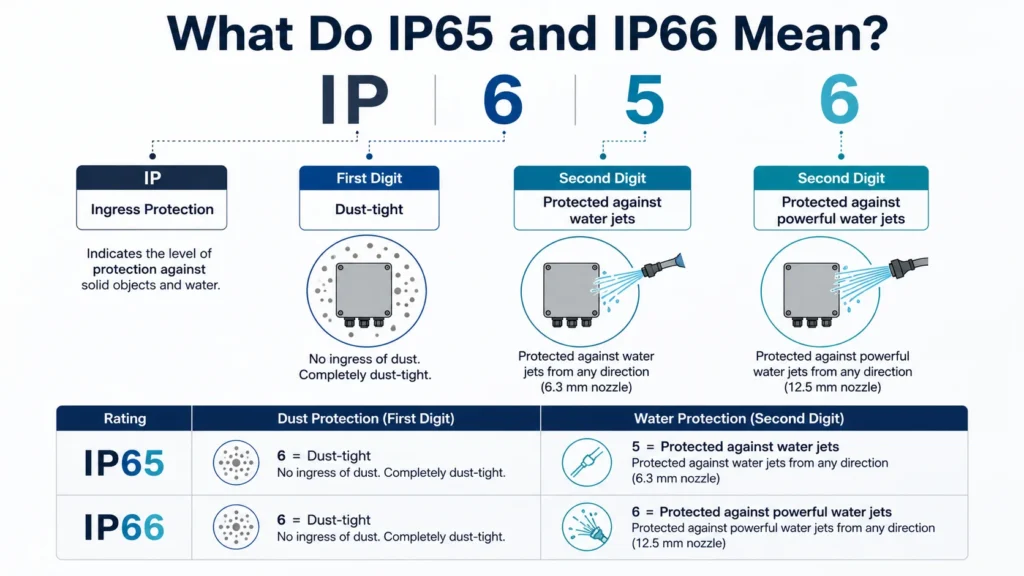
IP65とIP66の解説:
- IP65: 6 = 防塵(粉塵の侵入なし)、5 = あらゆる方向からの水噴射に対する保護(低圧)
- IP66: 6 = 防塵(粉塵の侵入なし)、6 = 高圧水流に対する保護(IP65よりも高い保護等級)
IP65およびIP66の詳細な解説
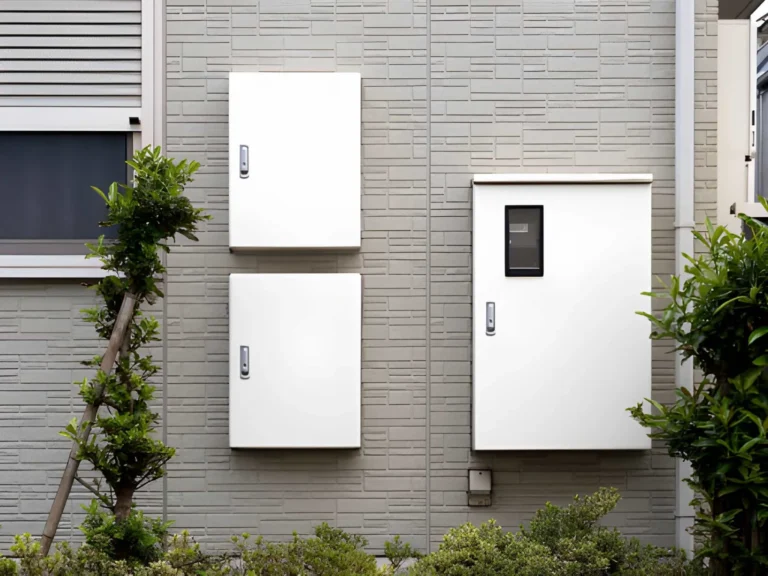
IP65 電気エンクロージャー
- 防塵対策: 完全に防塵仕様
- 水資源の保護: あらゆる方向からの低圧水流に対して耐性がある
- 素材の選択肢: アルミニウム、ステンレス鋼、ABS
- 一般的な利用例: 屋内または屋外で小雨にさらされる機器、制御盤、低圧洗浄エリア
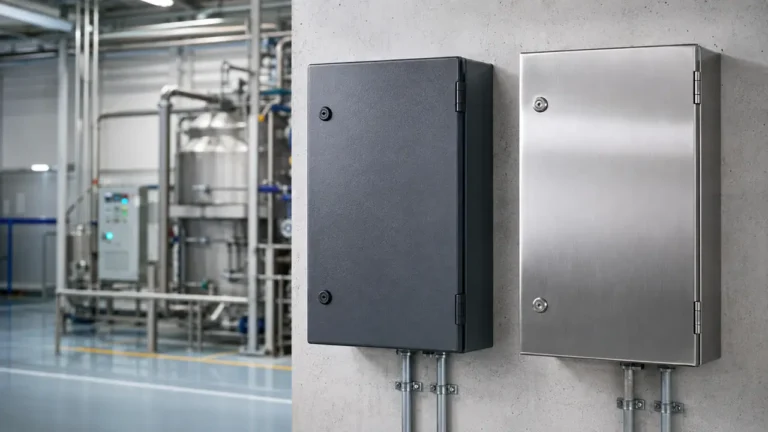
IP66 電気エンクロージャー
- 防塵対策: 完全な防塵性能を備え、IP65と同等です
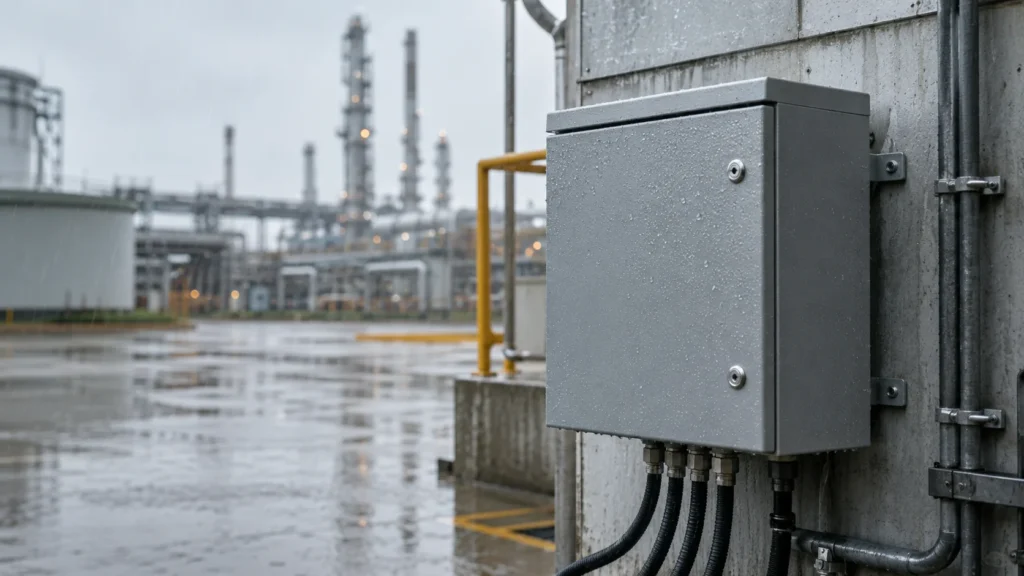
- 水資源の保護: 高圧水流に耐性があり、工業用洗浄や豪雨にも耐える
- 素材の選択肢: ステンレス鋼、アルミニウム、ABS
- 一般的な利用例: 屋外用機械、沿岸地域、工業用洗浄エリア、過酷な気象条件にさらされる地域
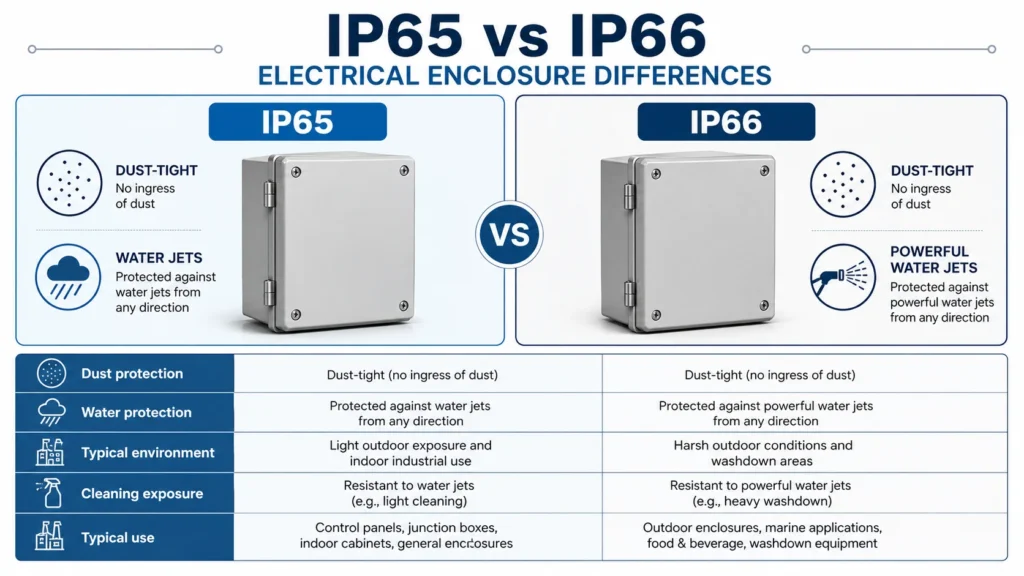
IP65とIP66の比較
これら2つの保護等級における主な違いは、水圧に対する耐性にあります。どちらも防塵性能を備えていますが、IP66は高圧の水流に対してより強力な保護性能を発揮します。.
並べて比較:
| 特徴 | IP65 | IP66 |
|---|---|---|
| 防塵対策 | 完全に防塵仕様 | 完全に防塵仕様 |
| 水資源保護 | 低圧~中圧のジェット | 高圧ジェット |
| 試験圧力 | 約30 kPa(ノズル径6.3 mm) | 約100 kPa(ノズル径12.5 mm) |
| 理想的な環境 | 半屋外で、風雨をしのげる場所 | 屋外で完全に露出している、水洗い可能なエリア |
| 一般的なアプリケーション | 屋外照明、看板、制御ボックス | 産業用キャビネット、船舶用または食品関連施設 |
| コストレベル | 下へ | より高い |
| いつ選ぶべきか | 軽度の水への曝露 | 直接水をかける、頻繁に洗う |
基本的に、半屋外や屋根のある場所ではIP65で十分ですが、完全に露出した場所や水にさらされる機会が多い環境では、IP66が適しています。.
IP65およびIP66の実用例
IP65:
- 小雨の降る地域における屋外照明
- 時折水しぶきがかかる屋内用機械
- 中程度の産業環境における制御盤
IP66:
- 豪雨にさらされた屋外の産業用機器
- 高圧洗浄が必要な分野(食品加工、化学プラント)
- 腐食環境のある沿岸地域や湿潤な環境
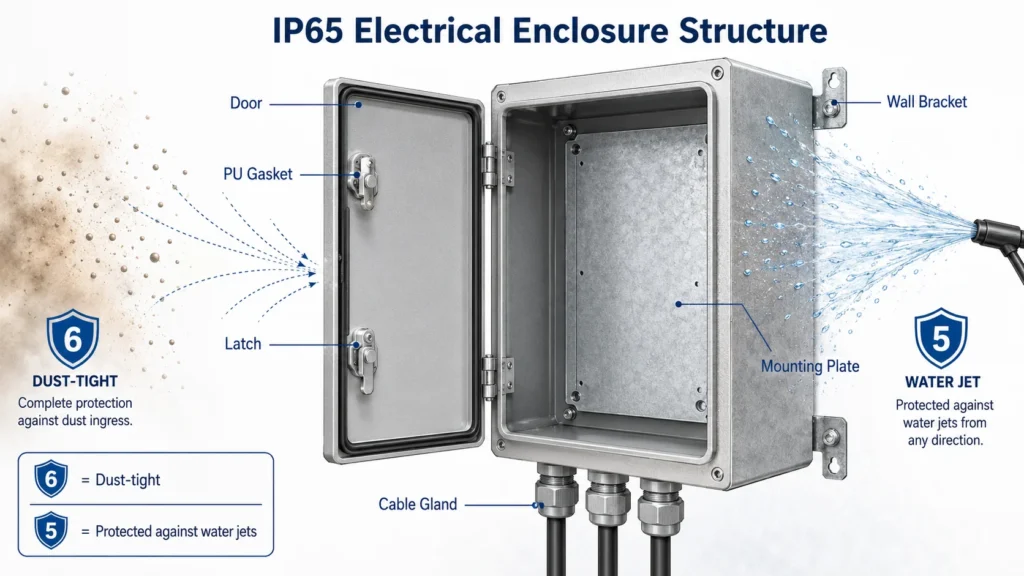
ニーズに合わせて適切なエンクロージャーを選ぶ方法
- 光への耐性とコストパフォーマンス:IP65で十分
- 水への長期暴露または工業用洗浄:IP66の採用を推奨します
- 材料に関する考慮事項:
- ステンレス鋼:過酷な環境や腐食性のある環境
- アルミニウム:軽量でコストパフォーマンスに優れている
- ABS:経済的で耐食性に優れ、屋内用途に適しています
- ヒント:まず、使用環境(雨にさらされる可能性、洗浄工程、腐食環境など)を評価し、最適なIP等級と材質を選択してください。.
当ウェブサイトおよびエンクロージャーソリューションについて
で EWJELE, 当社は以下の分野を専門としています 特注の産業用電気エンクロージャー IP65やIP66など、幅広いIP保護等級に対応しています。当社の製品は、アルミニウム、ステンレス鋼、ABS樹脂などの素材で製造されています。.
当社を選ぶ理由:
- お客様の図面に基づいたOEM/カスタム設計
- 産業環境向けの信頼性の高い製造
- 競争力のある価格と迅速な納期
行動喚起: お見積りのご依頼や、お客様の産業用途に最適なエンクロージャーソリューションをお探しの方は、今すぐお問い合わせください。. 見積依頼
結論
IP65とIP66の違いを理解することは、電気機器を粉塵や水から保護する上で極めて重要です。IP65は比較的穏やかな環境に適しているのに対し、IP66は高圧の水にさらされるような過酷な条件に適しています。最適な性能と耐久性を実現するため、環境要件、材質の要件、および予算に基づいて筐体を選択してください。.
よくあるご質問
IP65規格のエンクロージャーは屋外で使用できますか?
はい、IP65規格の筐体は、小雨や水のかかりにくい屋外環境では使用できますが、高圧洗浄には使用できません。.
IP66は常にIP65よりも優れているのでしょうか?
必ずしもそうとは限りません。IP66はより高い防水性能を備えていますが、多くの屋内用途や、屋外での使用でも過酷ではない環境では、IP65で十分です。.
沿岸環境にはどのような材料が最適でしょうか?
ステンレス鋼は耐食性に優れているため、推奨されます。コストや重量が懸念される場合は、アルミニウムも適しています。.
筐体のサイズやデザインをカスタマイズすることはできますか?
はい、EWJELEでは、お客様の図面や仕様に基づいたOEMおよびカスタム設計をご提供しております。.
IP65とIP66のどちらを選べばよいでしょうか?
降雨の強さ、洗浄手順、腐食性物質への曝露などの環境要因を考慮してください。過酷な環境ではIP66を、比較的穏やかな環境ではIP65を使用してください。.