Distribution Board vs Distribution Box: What’s the Difference?
Many people think distribution boards and distribution boxes are the same, but they’re not.
They may sound similar, but they have different roles in electrical systems. Knowing the difference helps you choose the right one for your needs.
This article explains what each one does, where they’re used, and how to pick the right option for your setup.
What is a Distribution Board?
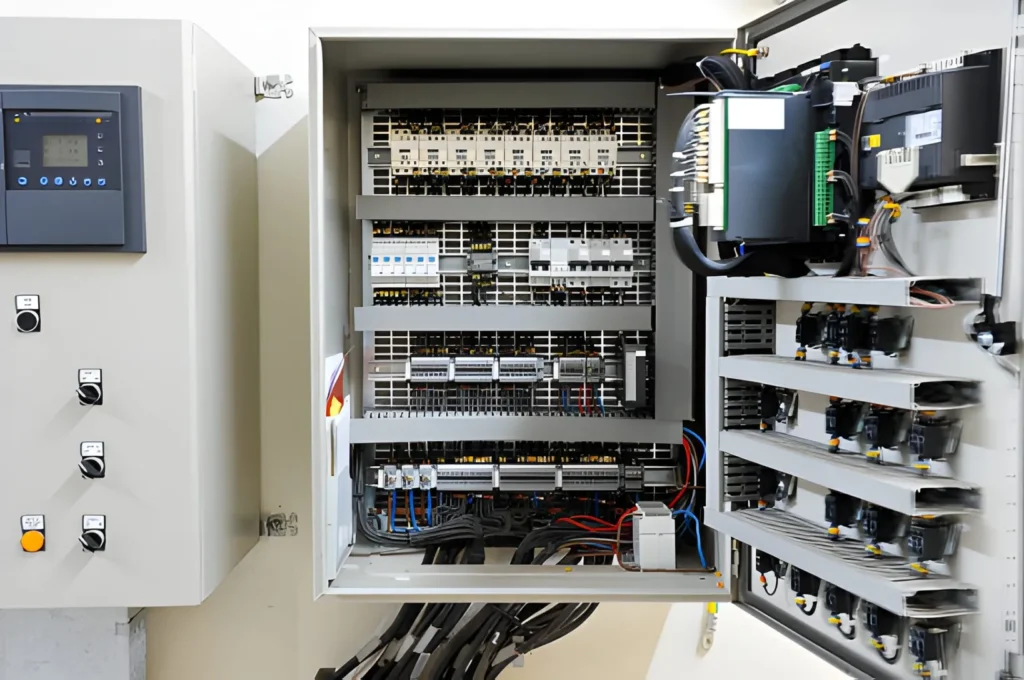
A distribution board is a central hub in an electrical system. It splits power from the main supply and routes it to various circuits throughout a building. In simple terms, it controls how electricity flows from living room lights to heavy-duty machinery.
Its built-in safety features are particularly important. It houses circuit breakers or fuses that automatically disconnect power if there is an overload or fault. This protects people and equipment, making it essential for safe electrical design.
Main Types
Main Distribution Boards(MDBs)
- Receive power directly from the utility or a generator.
- Distribute it to different areas of a building.
- Usually placed near the main power source and handle large loads.
Sub-Distribution Boards (SDBs)
- Take power from the main distribution board.
- Supply power to specific zones or equipment.
- Help balance and manage loads, such as serving a single floor or a factory section.
Common Applications
Distribution boards appear in nearly every setting:
- Residential homes: powering lights, kitchen appliances, and outlets.
- Commercial spaces: supplying offices, shops, and common areas.
- Industrial environments: supporting complex, high-load systems like machinery, production lines, and HVAC.
A properly installed distribution board ensures safe and efficient power delivery across all circuits.
What is a Distribution Box?
A distribution box is a compact electrical enclosure used to safely manage local power distribution. It does not handle large-scale circuit management like a distribution board. Instead, its focus is organizing and protecting electrical connections in smaller, specific areas. A key advantage is portability: these boxes are lightweight, protective, and easy to relocate, making them suitable for temporary setups indoors or outdoors.

Design and Components
Despite its simple exterior, a distribution box is thoughtfully designed. It typically contains several outlets, connectors, and sometimes basic protection like miniature breakers or fuses. These features enable quick, safe access to power in flexible environments. Many boxes also feature weather-resistant elements—gaskets, sealed covers, and durable materials—to shield connections from dust, moisture, and impact in challenging conditions.
Typical Use Cases
Distribution boxes are ideal for situations requiring temporary or localized power:
- Construction sites where workers need fast, safe access to tools and equipment
- Outdoor events such as festivals or markets supplying lights, audio gear, and stalls
- Small zones or junction points needing organized and safe electrical connections
In short, distribution boxes support mobility and protection, ensuring power remains accessible and secure wherever needed.
Key Differences Between Distribution Board and Distribution Box
Although both distribute electricity, distribution boards and distribution boxes serve different roles. Understanding these differences helps you choose the right solution for a space, whether a large building or a temporary outdoor setup. The comparison below highlights the main distinctions.
Function
- Distribution board: Routes power to multiple circuits and provides circuit protection.
- Distribution box: Protects and organizes electrical connections at a specific point, with no central power routing.
Size and Design
- Distribution board: Large, fixed, and centralized; designed as the building’s main power hub.
- Distribution box: Compact, portable, and flexible; suited for localized or temporary needs.
Installation Location
- Distribution board: Typically indoors, near the main supply or in utility rooms.
- Distribution box: Can be indoors or outdoors, mounted on walls, ceilings, or other accessible locations.
Material
- Distribution board: Built for durability with stainless steel enclosures or aluminum enclosures.
- Distribution box: Usually plastic, polycarbonate, or metal, chosen for the environment.
Safety Features
- Distribution board: Equipped with circuit breakers, surge protection, and comprehensive protection for the entire system.
- Distribution box: Sealed enclosures with IP-rated protection to block dust, moisture, and impact; may include basic protection like fuses or small switches, depending on use.
Maintenance
- Distribution board: Requires regular testing and inspections of breakers, insulation, and connections.
- Distribution box: Generally requires periodic visual checks for cracks, moisture, or loose connections.
Cost
- Distribution board: Higher cost due to complex features and higher capacity.
- Distribution box: Lower cost with simpler enclosure and fewer components.
Lifespan
- Distribution board: Typically 20 years or more with proper maintenance.
- Distribution box: Lifespan depends on usage and environment; outdoor or rugged use may reduce longevity.
Regulatory Compliance
- Distribution board: Must meet IEC/NEMA standards and permanent wiring codes.
- Distribution box: Often rated by IP codes and local safety codes, with specific requirements for outdoor or portable use.
Core idea recap
- A distribution board is designed to manage power routing and protect multiple circuits as a central hub.
- A distribution box focuses on protecting and organizing connections at a localized point, offering portability and flexibility for temporary or smaller-scale needs.
| Aspect | Distribution Board | Distribution Box |
|---|---|---|
| Function | Routes power to multiple circuits and provides circuit protection | Protects and organizes electrical connections at a local point; does not route power to many circuits |
| Size & Design | Large, fixed, centralized hub | Compact, portable, flexible for localization |
| Installation Location | Typically indoors in utility rooms or near the main supply | Indoor or outdoor; can be mounted on walls, ceilings, or open areas |
| Material | Steel or aluminum for durability | Plastic, polycarbonate, or metal depending on environment |
| Safety Features | Circuit breakers, surge protection for the whole system | Sealed enclosure with IP-rated protection; basic protections like fuses or small switches may be included |
| Maintenance | Regular inspections and testing of breakers and insulation | Occasional visual checks for cracks, moisture, or loose connections |
| Cost | Higher due to advanced features and capacity | Lower; simpler enclosure and fewer components |
| Lifespan | Often 20+ years with proper maintenance | Shorter; depends on usage and environment |
| Compliance | Must meet IEC/NEMA standards for permanent installations | Typically rated by IP codes and local safety standards; outdoor-rated versions common |
| Core Idea | Central hub for power routing with protection for multiple circuits | Localized protection and organization of connections in a smaller area |
How to Choose the Right One
| Aspect | Distribution Board | Distribution Box |
|---|---|---|
| Function | Routes power to multiple circuits and provides central protection | Protects and organizes local connections at a single point; does not route power to many circuits |
| Size & Design | Large, fixed, centralized hub | Compact, portable, flexible for localized use |
| Installation Location | Typically indoors, near the main supply or in utility rooms | Indoor or outdoor; can be mounted on walls, ceilings, or open areas |
| Material | Steel or aluminum for durability | Plastic, polycarbonate, or metal depending on environment |
| Safety Features | Circuit breakers, surge protection for the whole system | Sealed enclosure with IP-rated protection; may include basic fuses or small protective devices |
| Maintenance | Regular inspections and testing of breakers and insulation | Occasional visual checks for cracks, moisture, or loose connections |
| Cost | Higher due to complexity and capacity | Lower; simpler enclosure and fewer components |
| Lifespan | Often 20+ years with proper maintenance | Shorter; depends on usage and environment |
| Compliance | Must meet IEC/NEMA standards for permanent installations | Typically IP-rated and aligned with local safety codes; outdoor-rated versions common |
| Core Idea | Central hub for distributing power to multiple circuits with integrated protection | Localized protection and organization of a single area’s connections |
Common Misconceptions
Electrical components often cause confusion because of similar names and overlapping uses. Here are two frequent myths about distribution boards and distribution boxes, clarified.
Are distribution boards the same as fuse boxes?
No. A fuse box uses manual fuses to protect circuits, and those fuses must be replaced when they blow. A distribution board uses resettable circuit breakers that trip when a fault occurs and can be reset afterward. This design is safer, more convenient, and better suited to modern electrical demands.
Can distribution boxes be used long-term?
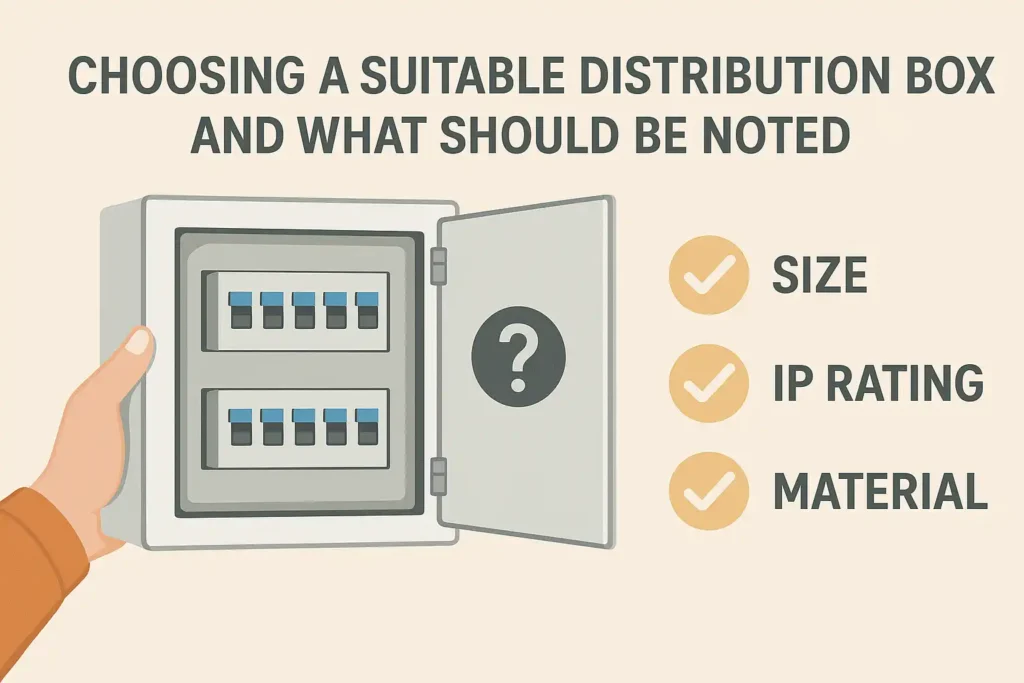
Many people think distribution boxes are only for temporary setups. They can be used long-term as well, provided the right type is chosen. If the box is rated for the environment, weatherproofed properly, and meets safety standards, it can be part of a permanent installation. Just ensure it’s the correct size and material for the intended use.
Frequently Asked Questions
How is a distribution board different from a distribution box?
A distribution board manages power across multiple circuits and includes circuit breakers for safety. It is a permanent installation. A distribution box is a compact enclosure that protects wiring and provides local power access, typically for smaller or temporary setups.
Can I replace a distribution board with a box?
Usually not. A distribution board handles higher loads and multiple circuits, suitable for permanent installations. A distribution box fits simple or temporary needs. Replacing a board with a box can compromise protection and performance.
Which is better for outdoor use?
Distribution boxes are generally better outdoors, especially with a high IP rating for weather resistance. They are designed to withstand dust, rain, and rough environments, making them ideal for construction sites or outdoor events.
Do both meet the same safety standards?
Not exactly. Distribution boards must meet stricter standards (IEC or NEMA) because they control critical building circuits. Distribution boxes must comply with IP ratings and local codes, but the requirements are usually less complex.
What materials work best for harsh environments?
For distribution boards, steel or aluminum are ideal for durability and fire resistance. For distribution boxes, metal suits industrial use, while polycarbonate or UV-resistant plastic work well in lighter outdoor settings.