House Electrical Distribution Box as a System-Level Decision
Most homeowners only notice their electrical system when something fails. A breaker trips. A new appliance won’t run properly. Or a renovation suddenly becomes far more expensive than planned. In many of these cases, the root cause isn’t the appliance or the wiring—it’s the house electrical distribution box that was underestimated from the very beginning.
Instead of treating the distribution box as a basic component, it’s time to view it as a system-level decision that directly affects safety, scalability, and long-term cost.
Why the Distribution Box Is the Bottleneck of Your Electrical System
Your house electrical distribution box is not just a container for breakers. It defines how electricity is managed, protected, and expanded across the entire home.
Every electrical decision eventually passes through this point:
- Adding new circuits
- Upgrading to higher loads
- Integrating smart energy systems
- Meeting updated safety codes
If the distribution box lacks capacity or flexibility, even small upgrades can trigger major rework.
A common real-world problem
Many homes are built with “just enough” capacity. Years later, owners want:
- Induction cooktops
- EV chargers
- Heat pumps
- Home offices with higher loads
Suddenly, the existing distribution box becomes the limiting factor.
Risk Management Starts at the Distribution Box
From a risk perspective, the house electrical distribution box is your first line of defense.
Electrical risks it directly controls
- Overcurrent and short circuits
- Leakage current and shock hazards
- Thermal buildup at connection points
- Surge damage from unstable grids
A low-quality or undersized box increases all of these risks, even if the wiring itself is compliant.
| Risk Area | Impact of Poor Distribution Box |
|---|---|
| Overload protection | Frequent breaker trips or overheating |
| Fault isolation | Larger blackout areas |
| Fire safety | Higher ignition probability |
| Equipment lifespan | Reduced due to unstable supply |
Risk mitigation begins with structure, not accessories.

Capacity Planning: Thinking Beyond Today’s Load
One of the biggest mistakes in residential projects is sizing the house electrical distribution box only for current needs.
Forward-looking capacity considerations
A future-ready distribution box accounts for:
- Spare breaker slots
- Higher-rated busbars
- Space for RCDs, SPDs, and smart modules
- Compatibility with three-phase upgrades
The cost difference upfront is small. The savings later are significant.
Practical rule of thumb
If your load calculation fills more than 70% of the available slots, the box is already undersized for long-term use.
Distribution Box Design Influences Maintenance Costs
Maintenance is rarely discussed in residential electrical planning, but it matters—especially in larger homes and multi-unit buildings.
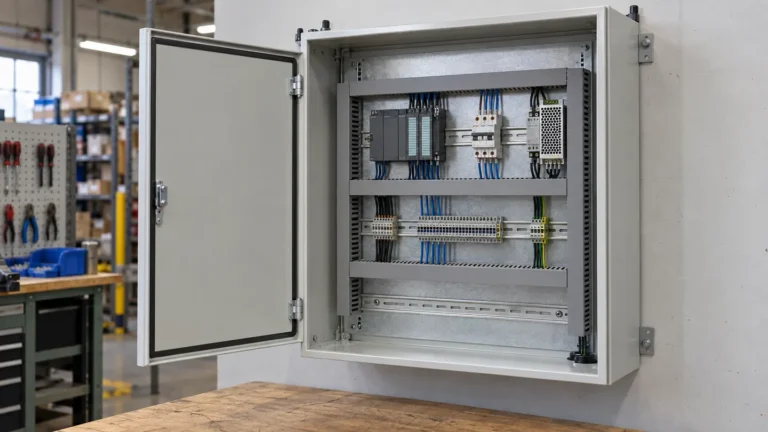
A well-designed house electrical distribution box offers:
- Clear circuit labeling
- Logical grouping of loads
- Easy breaker replacement
- Safe working clearance
Poor internal layout leads to:
- Longer service time
- Higher labor costs
- Increased error risk during repairs
| Design Feature | Long-Term Effect |
|---|---|
| Modular layout | Faster upgrades |
| Clear labeling | Fewer service errors |
| Adequate spacing | Safer maintenance |
Smart Homes Depend on Smart Distribution Architecture
Smart homes are not just about apps and devices. They rely on structured power management.
A modern house electrical distribution box often becomes the integration point for:
- Energy monitoring modules
- Smart meters
- Load management systems
- Surge protection devices
Without space and compatibility at the distribution level, smart upgrades become fragmented or impossible.
This is why many “smart home retrofits” fail to deliver real efficiency gains.
Material and Enclosure Choices Are Strategic, Not Cosmetic
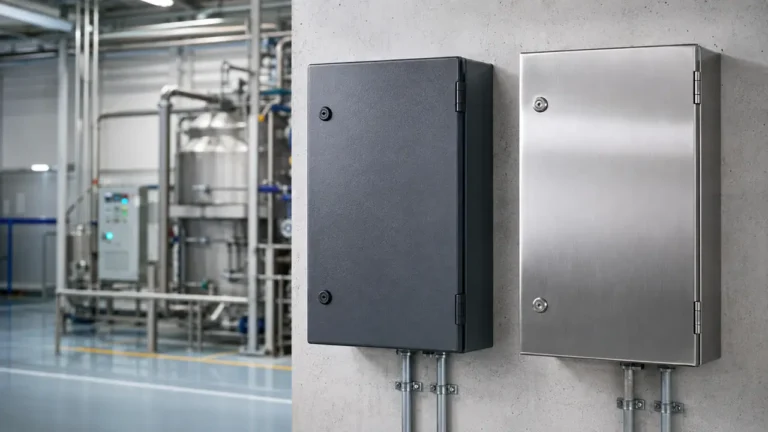
Choosing between plastic and metal enclosures is not just about appearance.
Plastic enclosures
- Corrosion-resistant
- Lightweight
- Ideal for indoor residential use
Metal enclosures
- Higher mechanical strength
- Better EMI shielding
- Suitable for high-load or mixed-use buildings
The environment and load profile should drive this decision—not price alone.
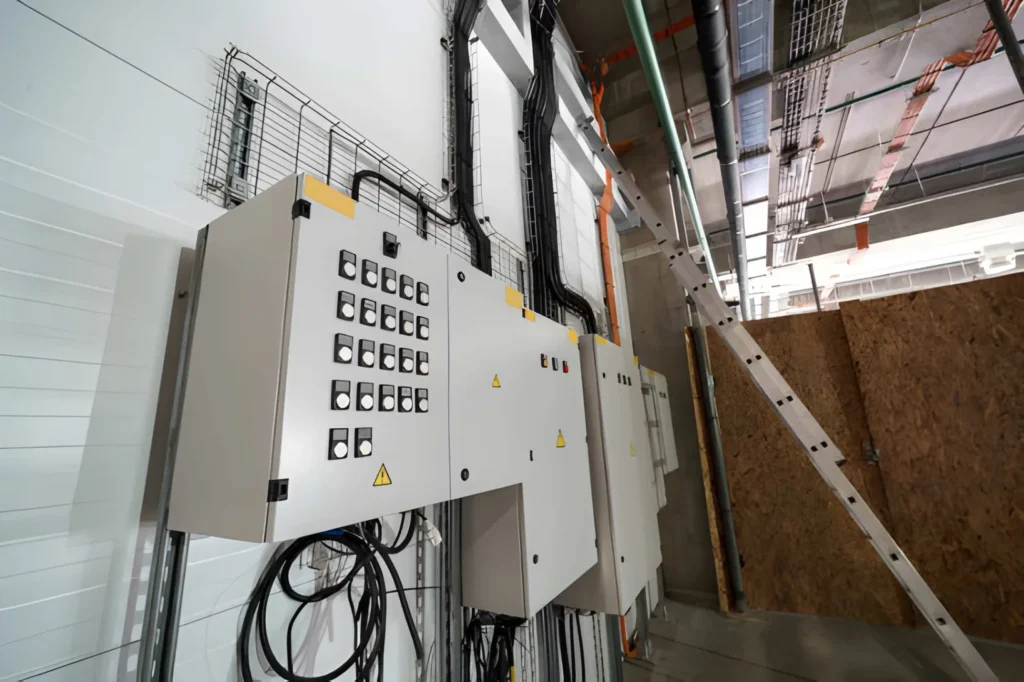
When Residential Projects Start to Look Industrial
Modern homes increasingly blur the line between residential and light industrial use.
Examples include:
- Home workshops
- EV charging stations
- Solar + battery systems
- Multi-tenant residential units
In these cases, the house electrical distribution box must meet higher performance expectations traditionally seen in industrial distribution boards.
Final Perspective
A house electrical distribution box is not a commodity. It is a structural decision that shapes safety, flexibility, and long-term operating cost.
When chosen correctly, it disappears into the background and quietly supports every upgrade you make. When chosen poorly, it becomes the most expensive limitation in your electrical system.
If you’re evaluating options for a new build or upgrade and want to avoid design dead ends, it’s worth discussing requirements early with professionals who understand distribution systems—not just components.
A well-planned distribution box doesn’t just distribute power. It protects your investment.
FAQs
How does an electric power meter interact with a distribution box?
An electric power meter measures consumption, while the house electrical distribution box manages and protects the downstream circuits. Their coordination affects monitoring accuracy and system efficiency.
Can power meters be integrated into distribution boxes?
Yes. Many modern distribution boxes support integrated or modular electric power meters, enabling real-time circuit-level analysis.
Does a higher-quality distribution box improve meter accuracy?
Indirectly, yes. Stable connections and proper load separation reduce noise and fluctuations that can affect readings.
Should meter placement influence distribution box selection?
Absolutely. Space, wiring layout, and modular compatibility should be considered together.