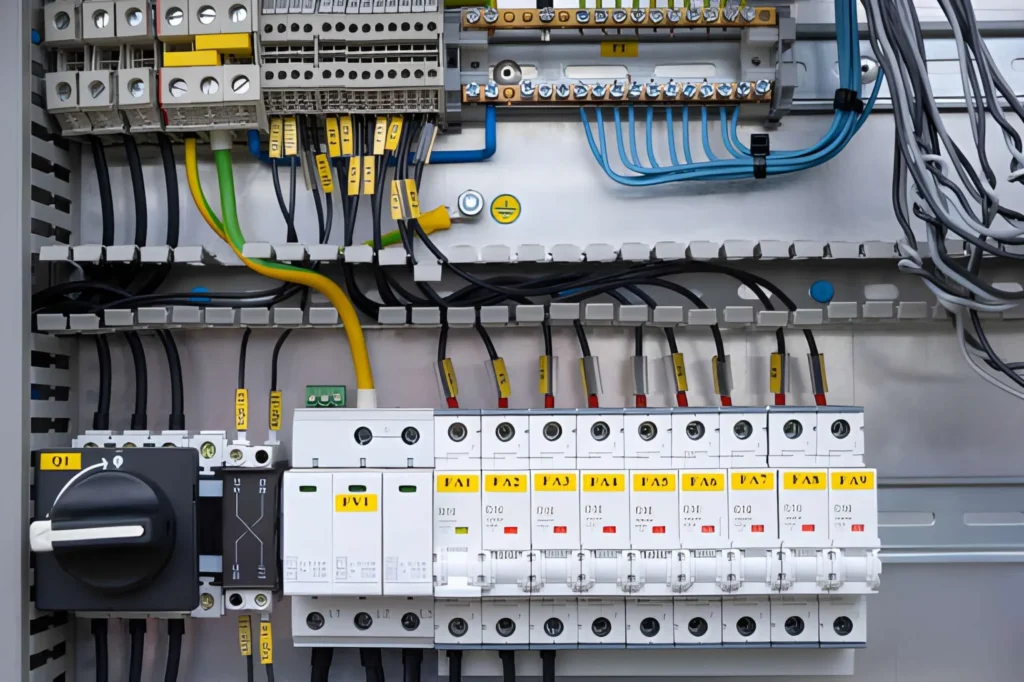
L'architecture électrique des armoires de distribution, colonne vertébrale de la stratégie énergétique
Table des matières
Et si le système électrique de votre armoire de distribution n'était pas seulement une enceinte de sécurité, mais un atout stratégique ? Dans de nombreux projets, les armoires de distribution sont considérées comme du matériel passif, spécifié tardivement dans le processus de conception et choisi principalement en fonction du prix. Cet état d'esprit est de plus en plus risqué. Alors que les systèmes électriques deviennent de plus en plus décentralisés, axés sur les données et critiques en termes de fiabilité, le coffret de distribution est devenu une décision structurelle qui affecte le temps de fonctionnement, l'évolutivité, la conformité et même les coûts d'exploitation.
Dans cet article, nous allons changer de perspective. Au lieu de demander “De quelle boîte de distribution ai-je besoin ?”, Nous explorerons “Quel rôle doit jouer l'armoire de distribution dans ma stratégie électrique ?” Cette approche est particulièrement pertinente pour les opérateurs industriels, les EPC, les gestionnaires d'installations et les acheteurs commerciaux qui évaluent la valeur à long terme plutôt que le coût à court terme.
Pourquoi la conception électrique des boîtes de distribution n'est plus un produit de base
Traditionnellement, un boîte de distribution électrique était considéré comme un composant normalisé. Si elle s'adaptait aux disjoncteurs et respectait les tensions nominales, elle était “suffisante”. Cette hypothèse n'est plus valable.
Les environnements énergétiques d'aujourd'hui sont façonnés par :
- Charges variables
- Automatisation et contrôle numérique
- Objectifs d'efficacité énergétique
- Pression accrue en matière de sécurité et de conformité
Dans ce contexte, la boîte de distribution devient le interface entre l'infrastructure électrique et l'intelligence opérationnelle. Les mauvais choix en matière de conception propagent les problèmes en aval - trajets gênants, angles morts en matière d'énergie, retards de maintenance et capacité d'expansion limitée.
| Ancienne perspective | Perspective moderne |
|---|---|
| Enceinte passive | Nœud de système actif |
| Axé sur les coûts | Risque et cycle de vie |
| Configuration fixe | Évolutif et modulaire |
| Inspection manuelle | Surveillance basée sur les données |
Les coffrets de distribution comme instruments de gestion de la charge
L'un des rôles négligés du système électrique d'une boîte de distribution est le suivant orchestration de la charge. Il ne s'agit pas seulement de diviser la puissance, mais de définir comment les charges interagissent sous l'effet du stress.
Dans les environnements industriels et commerciaux, une répartition inégale de la charge est à l'origine d'une augmentation de la consommation d'énergie et des émissions de gaz à effet de serre :
- Surchauffe des conducteurs
- Usure prématurée du disjoncteur
- Diminution de la qualité de l'électricité
Des boîtes de distribution bien conçues répondent à ce besoin :
- Équilibrage correct des phases
- Circuits dédiés pour les charges sensibles
- Regroupement logique basé sur le comportement de la charge
Ceci est particulièrement important dans les établissements qui ont :
- Moteurs et variateurs de vitesse
- Systèmes CVC
- Équipement de données et de contrôle
| Type de charge | Risque en cas de mauvaise gestion | Réponse de la conception |
|---|---|---|
| Moteurs | Pointes de courant d'appel | Mangeoires séparées |
| Matériel informatique | Fluctuation de la tension | Circuits isolés |
| CVC | Charge de pointe simultanée | Protection échelonnée |
Le rôle structurel des enceintes et des matériaux
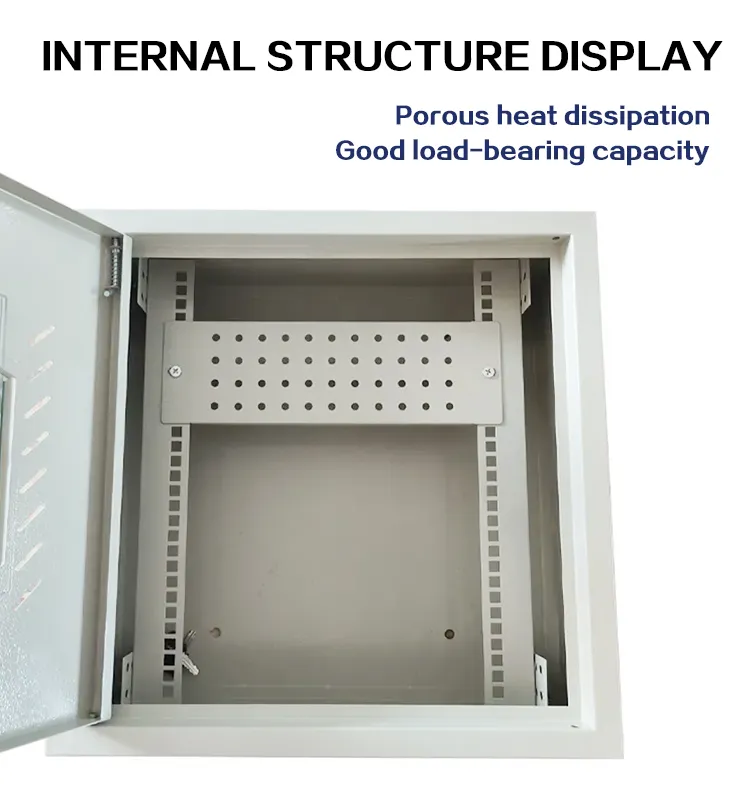
Lors de l'évaluation d'une solution électrique de boîte de distribution, la conception de l'armoire est souvent sous-estimée. Pourtant, la défaillance de l'armoire est l'une des causes les plus courantes de dégradation du système.
Le choix des matériaux a une incidence directe :
- Dissipation de la chaleur
- Résistance à la corrosion
- Durabilité mécanique
Les matériaux les plus courants sont les suivants
- Acier peint par poudrage pour une utilisation industrielle à l'intérieur
- Acier inoxydable pour les environnements corrosifs
- Plastique renforcé pour les applications légères ou résistantes aux produits chimiques
La protection contre les infiltrations ne concerne pas seulement la pluie ou la poussière. Il s'agit de maintenir des conditions internes prévisibles donc briseurs et les compteurs sont conformes aux spécifications.
| Environnement | Indice de protection IP recommandé | Risque typique |
|---|---|---|
| Intérieur propre | IP30-IP40 | Contact accidentel |
| Intérieur industriel | IP54 | Poussière |
| Extérieur | IP65 | Humidité, exposition aux UV |
Intégration avec les compteurs d'électricité et les systèmes de données
Les systèmes électriques modernes à armoires de distribution servent de plus en plus à hubs de mesure. L'intégration des compteurs d'électricité au niveau de la distribution permet d'obtenir des informations que les compteurs en amont ne peuvent pas fournir.
À ce niveau, les compteurs d'énergie peuvent
- Suivre la consommation au niveau du circuit
- Identifier les inefficacités par zone ou par processus
- Soutenir la répartition interne des coûts
Contrairement aux compteurs des services publics, les compteurs au niveau de la distribution permettent de répondre à des questions opérationnelles :
- Quelle est la ligne de production qui consomme le plus d'énergie ?
- D'où proviennent les pics de charge ?
- Quels sont les circuits sous-utilisés ?
Ces données deviennent exploitables lorsqu'elles sont combinées avec :
- Systèmes de gestion des bâtiments
- Logiciel de gestion de l'énergie
- Plans de maintenance préventive
Boîtes de distribution intelligentes : De la protection à la prévision
L'essor des boîtiers de distribution électriques intelligents marque le passage de la protection à la prédiction. Au lieu de réagir aux pannes, les systèmes les anticipent désormais.
Les caractéristiques intelligentes peuvent inclure
- Surveillance du courant et de la température en temps réel
- Retour d'information sur l'état du disjoncteur
- Alarmes et diagnostics à distance
Ceci est particulièrement utile dans les cas suivants
- Installations sans personnel
- Actifs distribués
- Environnements à temps de fonctionnement critique
| Capacité | Avantages opérationnels |
|---|---|
| Surveillance à distance | Réduction du travail d'inspection |
| Analyse des tendances de la charge | Planification des capacités |
| Alertes précoces en cas de défaillance | Prévention des temps d'arrêt |
Si tous les projets n'ont pas besoin d'une numérisation complète, le fait d'ignorer les options intelligentes peut limiter les mises à niveau futures. Même les conceptions de base prêtes pour la communication préservent la flexibilité.
La conformité est une contrainte de conception, pas une case à cocher
La conformité électrique est souvent considérée comme une étape d'approbation. En réalité, il s'agit d'un cadre de conception qui façonne le système électrique de l'armoire de distribution dès le départ.
Influence des normes :
- Espacement interne et lignes de fuite
- Sélection des composants
- Étiquetage et documentation
En fonction du marché et de l'application, les normes pertinentes peuvent être les suivantes :
- IEC pour les projets internationaux
- UL pour les marchés nord-américains
- Codes électriques locaux
Une conception conforme ne se contente pas de passer l'inspection. Il :
- Simplifie l'entretien
- Réduction de la responsabilité
- Améliore l'acceptation dans les industries réglementées
| Domaine de conformité | Impact pratique |
|---|---|
| Étiquetage clair | Dépannage plus rapide |
| Composants certifiés | Des performances prévisibles |
| Documentation | Des audits plus faciles |
Évolutivité : Concevoir pour la seconde vie du système
L'une des erreurs les plus coûteuses consiste à concevoir un système électrique de distribution qui ne répond qu'aux besoins actuels. L'expansion est rarement hypothétique, elle est prévue.
La conception évolutive est prise en compte :
- Capacité du disjoncteur de rechange
- Aménagements intérieurs modulaires
- Espace physique pour de futurs compteurs ou modules de communication
Une anticipation même modeste peut permettre d'éviter un remplacement complet plus tard. Si vous prévoyez une croissance, il vaut la peine de discuter dès le départ des configurations modulaires ou extensibles. Une brève consultation technique ou une demande de renseignements peut clarifier le niveau de protection future qui convient à votre application.
Critères de sélection stratégique au-delà du prix
Lorsque les boîtes de distribution sont évaluées uniquement sur la base du coût unitaire, des risques cachés s'accumulent. Une évaluation plus stratégique prend en compte :
- Coût du cycle de vie
- Risque d'indisponibilité
- Accessibilité de la maintenance
- Visibilité des données
| Critère | Priorité au court terme | Orientation stratégique |
|---|---|---|
| Prix | L'avance la plus faible | Cycle de vie total |
| Conception | Fixe | Modulaire |
| Contrôle | Aucun | En option/prêt à l'emploi |
| Maintenance | Réactif | Préventive |
C'est grâce à ce changement d'état d'esprit que les acheteurs expérimentés font la distinction entre le matériel de base et les actifs d'infrastructure.
Perspective de clôture
Le système électrique d'une armoire de distribution n'est plus seulement une boîte accrochée au mur. C'est un élément structurel de votre stratégie énergétique, qui influe sur la sécurité, l'efficacité, l'évolutivité et la visibilité. Lorsqu'il est conçu avec intention, il devient une plate-forme plutôt qu'une limitation.
En recadrant la façon dont vous évaluez les boîtiers de distribution - des composants passifs aux nœuds actifs du système - vous obtenez un meilleur contrôle des risques et des performances. Et à une époque où la fiabilité de l'alimentation et la visibilité des données sont plus importantes que jamais, ce changement n'est pas seulement intelligent. Il est nécessaire.
FAQ
Pourquoi installer des compteurs d'électricité à l'intérieur d'un coffret de distribution ?
Parce que le comptage au niveau de la distribution fournit une vision granulaire de la manière dont l'énergie est réellement utilisée à travers les circuits, et pas seulement de la consommation totale.
Les compteurs électriques intelligents nécessitent-ils des disjoncteurs intelligents ?
Pas nécessairement. De nombreux compteurs fonctionnent de manière autonome et peuvent être installés dans des boîtes de distribution existantes.
Les compteurs électriques peuvent-ils améliorer la surveillance de la qualité de l'énergie ?
Oui. Les compteurs avancés peuvent détecter les déséquilibres de tension, les harmoniques et les anomalies de charge.
Les compteurs d'électricité sont-ils nécessaires dans les petits systèmes commerciaux ?
Bien qu'ils ne soient pas obligatoires, ils sont de plus en plus utilisés pour contrôler les coûts et optimiser l'énergie, même dans les petites installations.
Quelle est la fréquence d'étalonnage des compteurs d'électricité ?
Cela dépend des normes et de l'application, mais les compteurs industriels suivent généralement des calendriers d'étalonnage périodiques définis par les exigences de conformité.