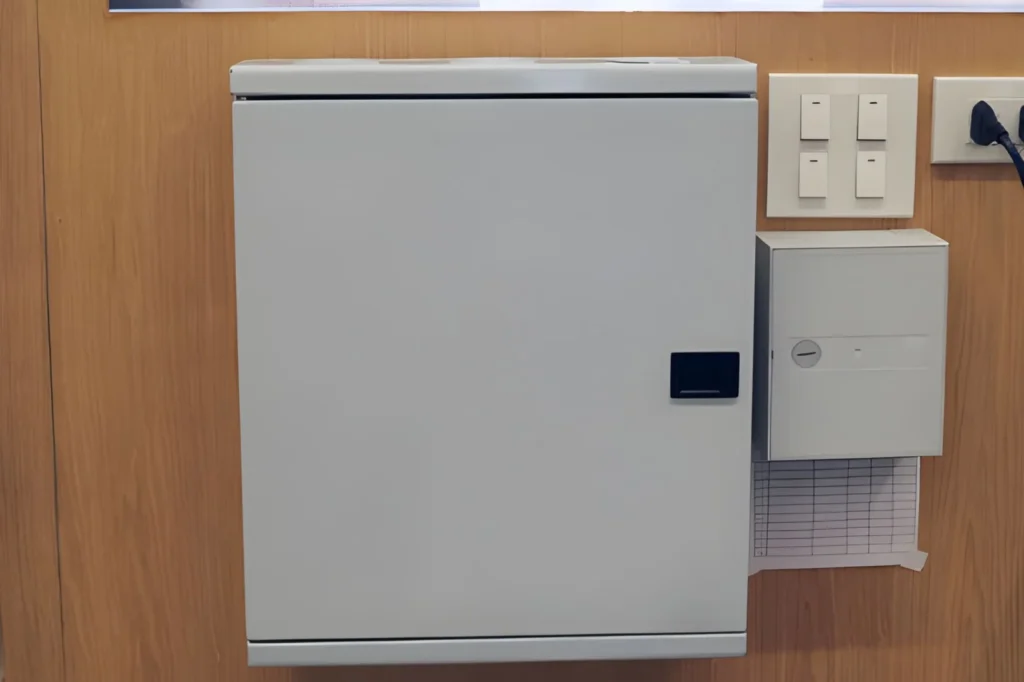
AC Distribution Box vs. DC Distribution Box
Table of Contents
In today’s electrical installations, selecting either an AC (alternating current) or a DC (direct current) distribution box plays an important role in system efficiency and operational safety.
Since each option is designed for different usage scenarios, understanding how they differ helps ensure the correct choice for a given power setup.
What is an AC Distribution Box?
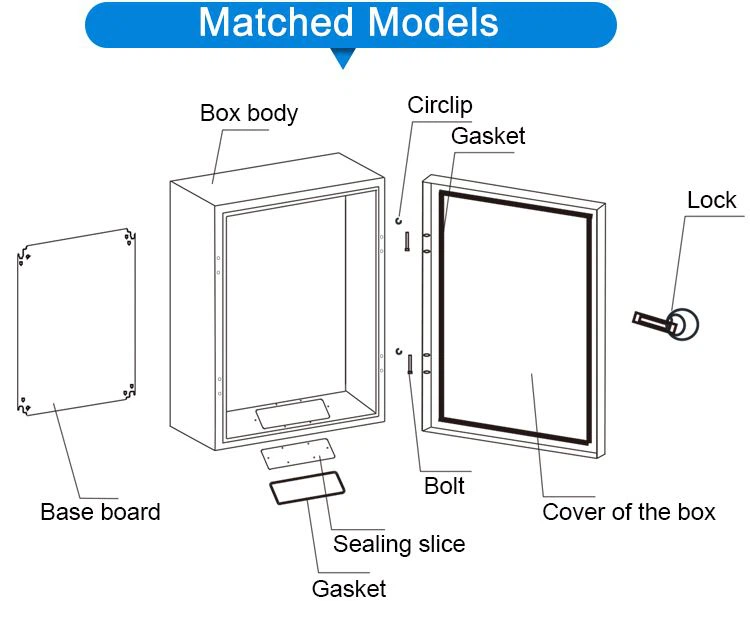
An AC distribution box is a device used to control and spread alternating current power across different electrical lines. It safely channels electricity from the main source into multiple branch circuits within a building or site.
An AC distribution box usually contains the following parts:
- Circuit breakers, which shut off power during overloads or faults.
- Switches, which allow users to turn circuits on or off manually.
- Fuses, which act as a backup protection against excess current.
This type of distribution box is widely applied in homes, offices, and industrial environments to support stable and safe power delivery.

What is a DC Distribution Box?
A DC distribution box is built to control and distribute direct current power within an electrical system. It gathers DC electricity from sources like batteries or solar panels and then sends it to different connected devices or circuits.
Common elements inside a DC distribution box include:
- Fuses, which protect the system from excess current in DC lines.
- Converters, which adjust voltage levels when needed.
- Surge protectors, which defend the system against sudden voltage increases.
DC distribution boxes are widely used in renewable energy setups, communication equipment, and electric vehicle systems where direct current power is required.
Key Differences Between AC and DC Distribution Boxes
Electrical Characteristics
- AC power changes its flow direction at regular intervals, which makes it easier to raise or lower voltage.
- DC power moves in a single, steady direction and delivers a fixed voltage output.
Design and Components
- AC distribution boxes normally use circuit breakers to stop overloads and may work with transformers to change voltage levels.
- DC distribution boxes rely mainly on DC-rated fuses and focus on keeping voltage stable throughout the system.
Applications
- AC distribution boxes are commonly installed in homes, factories, and commercial buildings.
- DC distribution boxes are mainly used in solar and battery systems, communication networks, and electric vehicle charging equipment.
Applications of AC Distribution Boxes
Residential Use
In homes, AC distribution boxes control and route electricity to different circuits and devices, helping maintain safe and dependable power supply throughout the house.
Industrial Use
Within industrial facilities, these boxes deliver power to large machines and high-load equipment, supporting continuous and stable production processes.
Commercial Use
In offices, shopping areas, and other commercial buildings, AC distribution boxes are used to organize and manage electrical distribution efficiently and safely.

Applications of DC Distribution Boxes
Renewable Energy Systems
In solar and wind power setups, DC distribution boxes handle the electricity produced and direct it efficiently to connected systems and storage units.
Telecommunications
Communication networks use DC distribution boxes to provide steady and dependable power to essential equipment, helping maintain continuous service.
Electric Vehicles
Within electric vehicle systems, DC distribution boxes manage the flow of energy between components, supporting safe and effective power use.
Advantages and Disadvantages of AC Distribution Boxes
Advantages
- Efficiency: Well suited for transmitting power over long distances because losses can be kept relatively low.
- Standardization: Widely adopted voltage standards make AC systems easy to apply in many different settings.
Disadvantages
- Power Losses: Electrical resistance can still cause energy loss, especially across extended transmission lines.
- Safety Risks: The changing nature of AC current can introduce safety concerns if not properly controlled.
Advantages and Disadvantages of DC Distribution Boxes
Advantages
- Energy Storage: Works well with batteries and renewable systems that rely on stored energy.
- Consistent Voltage: Provides a steady voltage output, which is helpful for delicate electronic equipment.
Disadvantages
- Voltage Transformation: Changing voltage levels is more complex than in AC systems.
- Safety: High-voltage DC can be more dangerous to handle and requires stricter protection measures.
Safety Considerations for AC and DC Distribution Boxes
Following safety rules is important for both AC and DC distribution systems. Typical protective measures include:
- Grounding, which helps reduce the risk of electric shock.
- Circuit protection, such as fuses or breakers, used to limit damage from excessive current.
- Insulation, which blocks accidental contact with energized parts and improves overall safety.
How to Choose Between an AC or DC Distribution Box
When deciding which type of distribution box to use, the following points should be reviewed:
- Review Power Needs: Identify whether your system requires alternating or direct current, as well as the necessary voltage levels.
- Check Installation Conditions: Consider whether the box will be placed indoors or outside and whether it needs protection from environmental factors.
- Get Professional Guidance: Ask qualified specialists for advice based on your system design to ensure the best operational outcome.
Ready to Choose Your AC Distribution Box?
Our AC Distribution Boxes meet industry standards for safety and efficiency. Find the right model for your application today.
Conclusion
Selecting an AC or DC distribution box requires a clear understanding of how each system works, where it is best used, and what benefits it offers.
By reviewing your technical needs and speaking with qualified experts, you can choose a solution that fits your operational goals.
Matching the distribution box to your project requirements and relying on professional advice will help ensure safe and efficient power distribution.
FAQ
Q: What is an AC Distribution Box used for?
A: An AC Distribution Box is used to safely distribute alternating current power from a main source to multiple electrical circuits in a building or system.
Q: How do I choose the right AC Distribution Box for my project?
A: You should consider your voltage level, load capacity, installation environment, and safety requirements, and consult a qualified electrician if needed.
Q: What is the difference between an AC and a DC Distribution Box?
A: An AC Distribution Box manages alternating current, while a DC Distribution Box handles direct current, commonly used in solar, battery, and telecom systems.
Q: Can an AC Distribution Box be used outdoors?
A: Yes, but it must be rated for outdoor use and have proper protection against moisture, dust, and temperature changes.
Q: Are AC Distribution Boxes safe?
A: Yes, when properly installed and maintained, they are safe and include protection such as circuit breakers, grounding, and insulation.
Q: Do AC Distribution Boxes require maintenance?
A: Periodic inspection is recommended to check for loose connections, wear, overheating, or damaged components.
Q: What standards should an AC Distribution Box comply with?
A: It should comply with relevant electrical and safety standards such as IEC, UL, or local regulatory requirements depending on the region.